


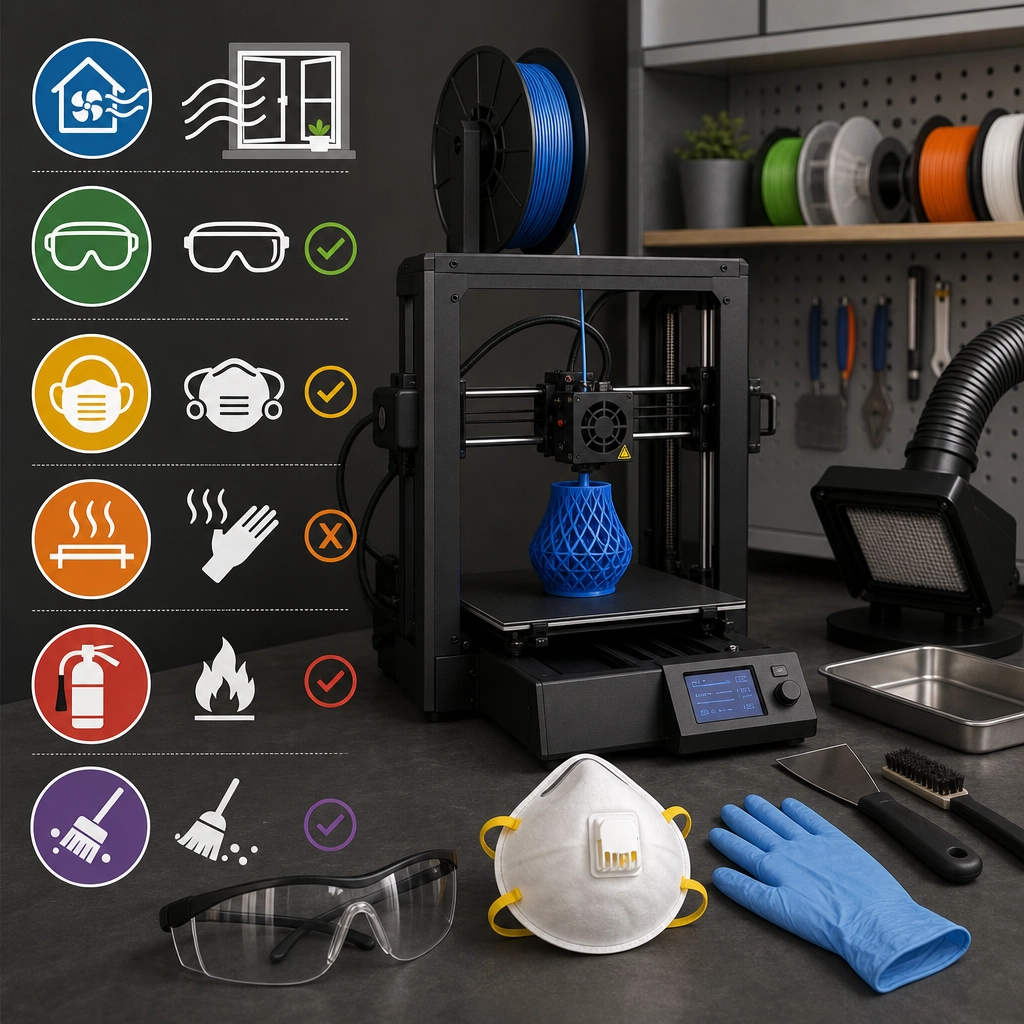
3D Printing Safety: Best Practices and Precautions
3D printing has revolutionized the way we think about fabrication, making it accessible to hobbyists, artists, and engineers alike. While the benefits of 3D printing are many, it’s essential to remember that with great power comes great responsibility! Just as you wouldn’t start cooking without first knowing how to handle a knife, jumping into the world of 3D printing requires an understanding of safety precautions and best practices. Let’s explore how to enjoy your 3D printing adventures while keeping safety at the forefront!
Familiarize Yourself with Your Printer
Before you even plug in your 3D printer, take some time to understand how it works. Different types of printers—like FDM (Fused Deposition Modeling) and SLA (Stereolithography)—each come with their own quirks and safety issues. Learn about the specific materials used in your printer and their characteristics. The manufacturer’s manual is your best friend here; don’t just skim through it—dive in!
Understand Materials and Their Risks
3D printing uses a variety of materials, and each can pose different risks. For example, when printing with plastics like ABS or PLA, be aware of the fumes emitted during the printing process. While PLA is generally considered safer and produces milder fumes, ABS can release potentially harmful volatile organic compounds (VOCs). It’s always a good idea to use your printer in a well-ventilated area or invest in an external ventilation system.
If you’re working with more advanced materials like resins or powder-based filaments, the safety measures ramp up even more—these substances can be more hazardous, often causing skin irritation or respiratory issues if not handled properly.
Wear Proper Personal Protective Equipment (PPE)
Just like you would wear safety glasses and gloves while handling chemicals, don’t skip the PPE when engaging in 3D printing. At a minimum, wearing gloves while handling filament is a good practice—especially with materials that are known to cause skin irritation. If you’re working with resin or any type of powder, a mask is essential to protect your lungs from inhalation of fine particles. Don’t forget about eye protection as well, especially when working with resin printers where splashes can occur.
Maintain a Safe Workspace
Create a dedicated area for your 3D printing ventures. This space should be free from flammable materials, as some filaments can catch fire. Ensure that your printer is placed on a stable, heat-resistant surface to mitigate any fire hazards while printing. Keep a fire extinguisher nearby (preferably a Class B extinguisher for flammable liquids) and familiarize yourself with its use.
In addition to fire safety, it’s also wise to avoid clutter. A clean environment not only contributes to safer printing but also enhances efficiency.
Monitor Your Print Jobs
While 3D printers can work endlessly on their own, it’s necessary to monitor the process—especially during those final minutes. Stay in the same room or check in regularly to ensure everything is running smoothly. If you notice odd sounds, unusual smells, or excessive heat from the printer, abort the print immediately.
Be Cautious with Hot Components
3D printers operate at high temperatures, and those hotends can reach upwards of 250 degrees Celsius! Always exercise caution when interacting with the printer during or immediately after a print job. Use tools like pliers or a spatula when removing prints to avoid burns or accidental finger injuries.
Store Materials Safely
Lastly, it’s essential to store your 3D printing materials properly. Filaments are often sensitive to moisture, so keep them in airtight containers when not in use. For resins, ensure they’re stored upright and away from direct sunlight, with their lids secured tightly. This not only preserves the quality of your materials but also minimizes any potential hazards.
While 3D printing opens a world of creativity and innovation, it’s crucial to approach it with a solid understanding of safety practices. By familiarizing yourself with your printer and materials, wearing appropriate protective gear, maintaining a clean working environment, monitoring your print jobs, and storing materials safely, you can enjoy the exciting experience of 3D printing while ensuring that safety remains a top priority. When you balance creativity with caution, you can unleash your imagination without compromising your well-being. Happy printing—safely!