


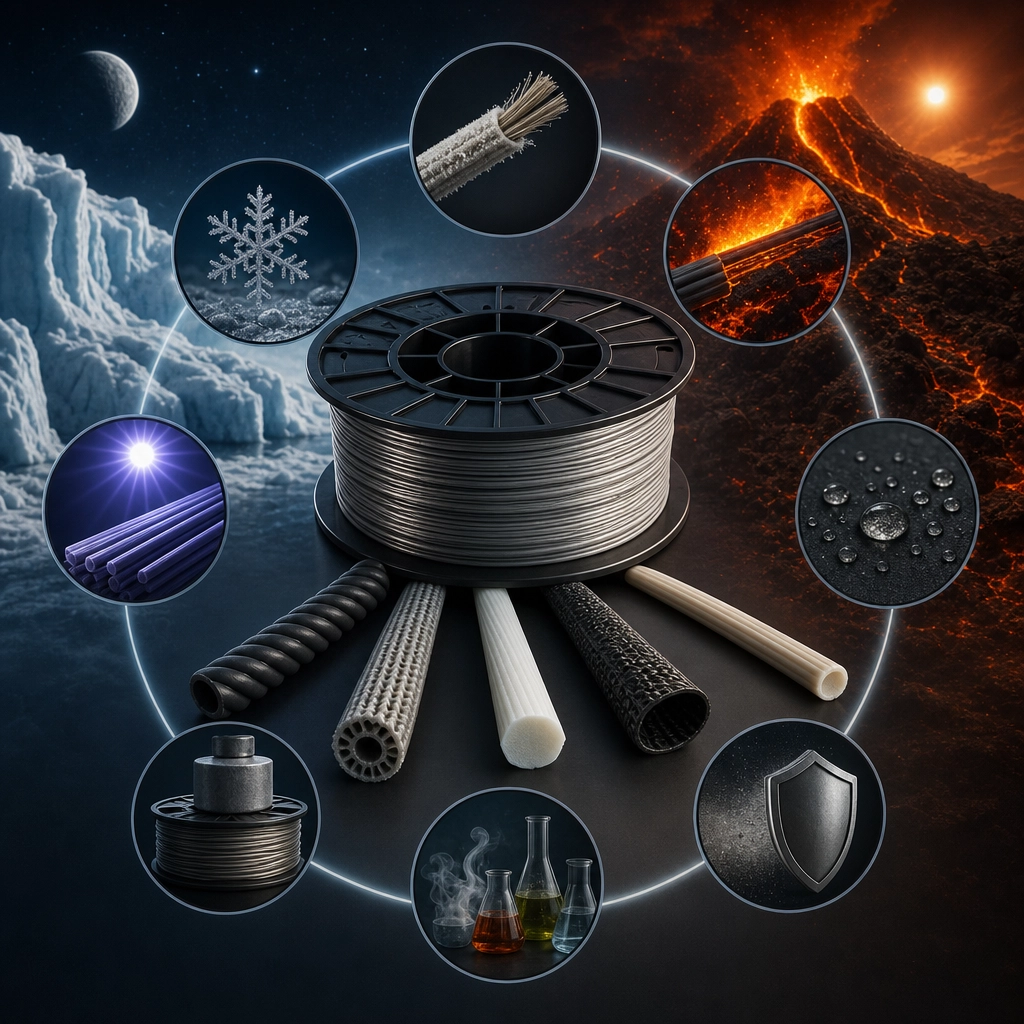
Prospective Filaments for Extreme Environments: What to Consider
When we think of extreme environments—whether they’re the depths of the ocean, the surface of Mars, or the blistering heat of industrial processes—our minds often race to how humans might survive in such places. But have you ever considered the fundamental materials that make our future endeavors possible? Enter filaments: the unsung heroes of many scientific advancements. As we gear up to explore these extreme settings, choosing the right filaments becomes paramount. Let’s dive deeper into what you should consider when selecting prospective filaments for these challenging environments.
Understanding Extreme Environments
Before we can talk about filaments, we need to understand what an extreme environment entails. Think back to your high school science classes. Remember discussing factors like temperature, pressure, radiation levels, and chemical reactivity? In extreme environments, these factors reach levels that can decimate most materials.
For instance, in space, outside of any protective bubble of atmosphere, materials endure extreme temperatures and intense radiation. Meanwhile, the depths of the ocean see crushing pressures that can obliterate standard materials. The right filament must withstand these conditions while retaining its functionality.
Mechanical Properties Matter
One of the critical aspects to consider is the mechanical properties of the filament you wish to use. For extreme environments, you need materials that won’t just break or deform under pressure. Think about the endurance of the material in question:
-
Tensile strength: How much tensile stress can a filament endure before it breaks? For instance, in deep-sea exploration, the filament must function well under high pressures.
-
Flexibility: In some applications—like robotics or cables—a filament needs to be flexible enough to bend without breaking. Filaments that can maintain their integrity while being subject to motion are invaluable.
-
Fatigue Resistance: Consider how often a filament will be subject to repeated stress or strain. Did you know that some materials can degrade from repeated cycles of tension and compression? Choosing a filament resistant to fatigue means you won’t have to worry about frequent replacements.
Thermal Stability
Temperature can fluctuate wildly in extreme environments. If you envision sending equipment to the surface of Venus, where temperatures can reach a scorching 900 degrees Fahrenheit (or around 475 degrees Celsius), you’ll need filaments that can withstand these conditions without deforming.
Thermal stability is paramount. Some filaments can maintain their structural integrity at high temperatures but may degrade in freezing conditions. Evaluating how a filament reacts across a wide temperature range ensures its effectiveness no matter the circumstances.
Chemical Resistance
In many extreme environments, exposure to harsh chemicals is a reality. Think about materials being used in various industrial applications, where they might come into contact with corrosive substances or extreme pH levels. Filament choice must also consider chemical resistance.
For example, fluoropolymers, known for their excellent chemical resistance, may be the ideal choice for filaments in chemical plants or marine environments where saltwater can be corrosive. Recognizing the specific chemicals your filament might encounter and selecting a material that can stand up to them is a critical decision.
Weight Considerations
When looking at filaments for extreme environments, especially in aerospace applications or underwater exploration, each gram counts. Light materials can prevent additional stress on structures and machinery. However, lighter doesn’t always mean weaker. Advanced composites may combine lightweight properties with strong mechanical characteristics.
Taking a close look at the weight-to-strength ratio helps ensure you’re not sacrificing capability for the sake of mass. Always evaluate material density along with its mechanical properties to strike an appropriate balance.
Future Innovations in Filament Technology
As technology evolves, so does the range of materials available to tackle these extreme challenges. With advancements in 3D printing and material science, new filaments are being developed that offer unprecedented properties. Innovations in nanotechnology and composites could lead to filaments with enhanced strength, flexibility, and resistance to heat and chemicals.
It’s fascinating to think that today’s science-fiction possibilities have a chance of becoming tomorrow’s reality. Researchers and engineers are continuously exploring options to produce durable filaments that could dramatically improve our ability to operate in extreme environments.
As we look ahead, considering these essential factors in filament selection positions industries to embark on new explorations and advancements. Whether we’re crafting exploratory robots for Mars or designing durable materials for the ocean’s abyss, the right filament is crucial to unlocking the mysteries of extreme environments and pushing the boundaries of human capability. As we embrace this journey into the unknown, the materials we choose will play a fundamental role in shaping our future.