


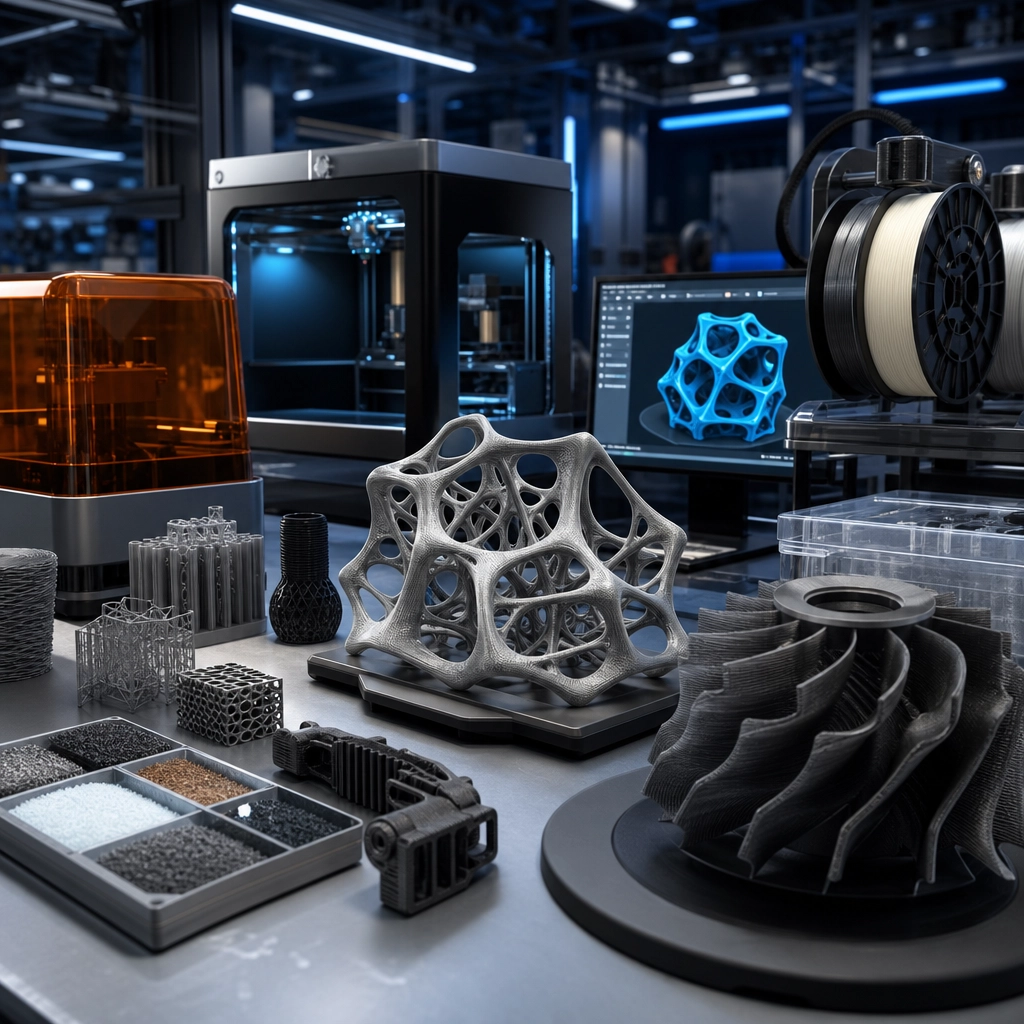
Exploring Advanced Techniques in 3D Printing for Professionals
3D printing has evolved from a niche hobby into a powerful tool impacting various industries, including aerospace, automotive, healthcare, and more. For professionals already familiar with the basics, understanding advanced techniques can elevate their projects and drive innovation. Whether you’re a designer, engineer, or manufacturer, exploring these cutting-edge 3D printing techniques can inspire new ideas and streamline workflows. Let’s dive into some of the most exciting advancements in the field!
Multi-Material Printing
Gone are the days when 3D printing only involved a single material at a time. Multi-material printing allows professionals to combine different materials, enhancing the functionality and aesthetic appeal of their printed objects. This technique is particularly beneficial in industries like healthcare, where medical devices often require distinct materials for different parts. For example, in prosthetics, you can print soft and flexible materials to mimic skin coupled with rigid structures for support. The ability to blend materials opens the door to imaginative solutions and dramatically improves product performance.
High-Resolution and Fine Detail Printing
When it comes to intricate designs, high-resolution printing techniques can make all the difference. Technologies like Stereolithography (SLA) and Digital Light Processing (DLP) provide the capacity to produce objects with astounding detail. These methods use light to harden resin layer by layer, creating finely detailed parts that can include complex geometries. This precision is especially valuable in the jewelry and dental industries, where every tiny facet counts. The result? End products that are not just functional but also visually stunning.
Metal 3D Printing
Metal 3D printing has revolutionized how professional industries approach manufacturing. Traditional subtractive methods can be wasteful, but with techniques like Selective Laser Melting (SLM) and Direct Metal Laser Sintering (DMLS), you can create complex, lightweight components from various metal alloys. This advancement has made it possible for sectors like aerospace to produce intricate parts optimized for performance while cutting down on material waste. The robustness that comes with metal 3D printing enables the production of components that can withstand extreme conditions, which is crucial in many professional applications.
Generative Design and Topology Optimization
Generative design is a game-changer for engineers and designers seeking to produce parts that are not only functional but also optimized for performance. By using algorithms and artificial intelligence, you can set parameters and let the software generate numerous design solutions that fulfill your criteria. Topology optimization goes hand-in-hand with this technique, allowing professionals to create lightweight structures without compromising strength. The resulting designs often look like they belong in a futuristic sci-fi movie, yet they fulfill real-world functionality and efficiency requirements.
Hybrid Manufacturing
As manufacturing technologies continue to advance, hybrid manufacturing techniques are entering the scene, combining traditional methods with 3D printing. Imagine using CNC machining to create a base component and then employing additive techniques to add features or functionalities afterward. This integrated approach maximizes efficiency and allows for the customization possible with additive manufacturing while still leveraging the precision of traditional methods. For professionals, this means greater flexibility in production processes and the ability to explore unique design possibilities without sacrificing quality.
Sustainable 3D Printing
Last but not least, sustainability is at the forefront of many professionals’ minds today. Advanced 3D printing techniques are evolving to promote sustainable practices and minimize waste. Techniques such as using biodegradable filaments or recycled materials are gaining traction. Additionally, companies are now embracing closed-loop systems where waste materials from one process become feedstock for another. For professionals, adopting these sustainable practices not only helps contribute to a greener planet but can also resonate positively with consumers who are increasingly making eco-conscious choices.
3D printing continues to open up new avenues for innovation and creativity in the professional world. Whether you’re exploring the potential of multi-material applications, honing in on fine detail and high resolution, or venturing into the realm of generative design, these advanced techniques can give you the edge in today’s fast-paced marketplace. The real magic lies in how you can blend different methods and philosophies to create solutions tailored to the unique challenges and demands of your industry. In the end, embracing these advancements not only amplifies your capabilities but also paves the way for the future of manufacturing. The possibilities are immense, so why not take the plunge and explore what’s next?