


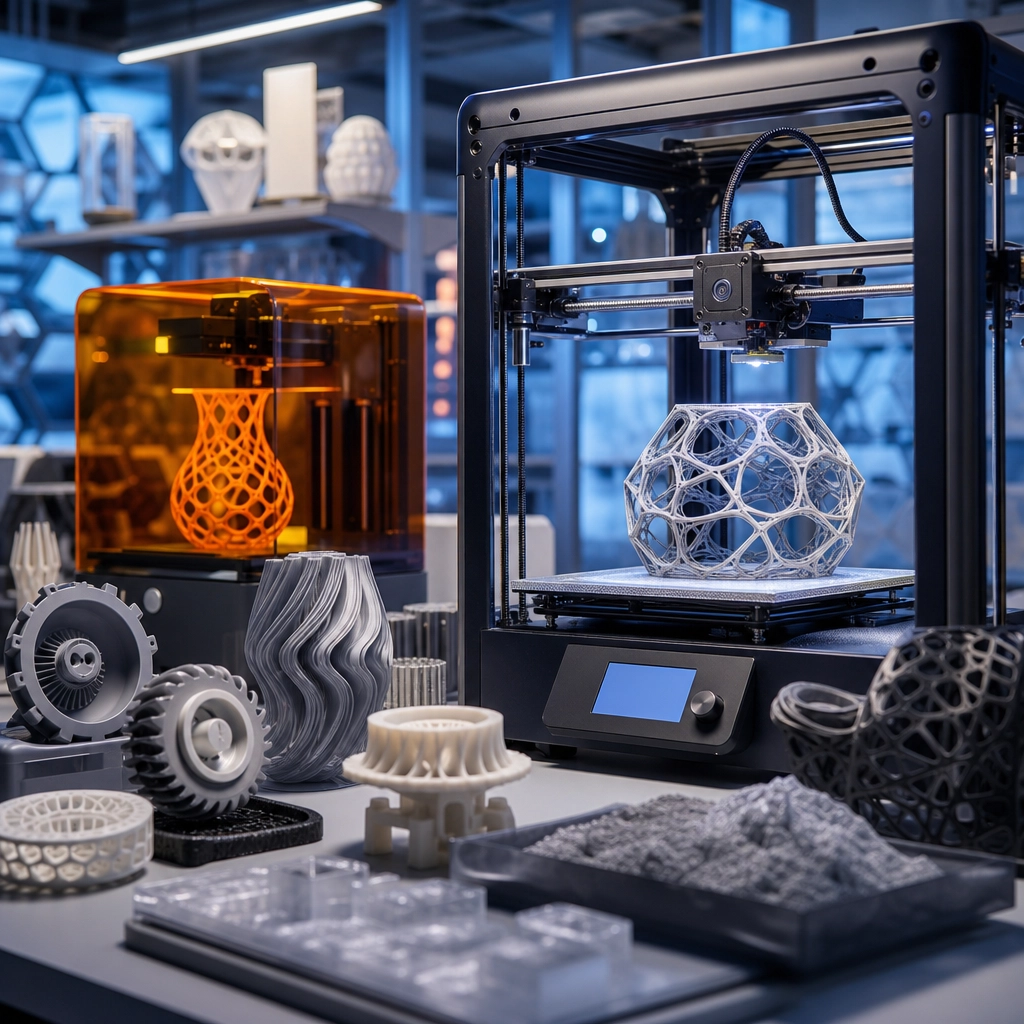
The Fascinating World of 3D Printing: Exploring New Technologies
The buzz around 3D printing is impossible to ignore these days. Whether you’re reading about it in an article, watching a video, or even hearing a friend talk about their latest project, this technology has infiltrated our conversations and imaginations. But what exactly is 3D printing, and why is it so captivating? Let’s dive into the world of additive manufacturing, explore new technologies, and look at how they’re changing the landscape of various industries.
At its core, 3D printing, or additive manufacturing, is the process of creating three-dimensional objects from a digital file. Unlike traditional subtractive manufacturing, where material is removed to create the final product, 3D printing builds items layer by layer. This allows for incredible precision and the ability to create complex shapes that would be difficult or impossible to achieve with conventional methods.
The Evolution of 3D Printing
3D printing isn’t as new as you might think. The first 3D printer was invented in the early 1980s, but it took a few decades for the technology to become accessible and affordable. Nowadays, thanks to advancements in software, materials, and hardware, the world of 3D printing is flourishing.
One of the most exciting developments in 3D printing technology is the variety of materials now available. We’ve moved beyond the standard plastics and are seeing innovations that include metals, ceramics, and even biological materials. Imagine creating a prosthetic limb tailored specifically to an individual’s body or developing bio-printed tissues that might one day assist with organ transplants. The possibilities seem endless!
Industries Transformed by 3D Printing
The impact of 3D printing can be felt across numerous sectors. Healthcare, for instance, has embraced this technology wholeheartedly. Not only are custom prosthetics being created, but 3D printing is also helping to produce surgical models, enhancing pre-operative planning. Surgeons can practice complex procedures on models that closely resemble the actual anatomy of their patients. This real-world application of 3D printing is undeniably transforming patient outcomes.
Another industry reaping the benefits is aerospace and automotive. Lightweight components produced through 3D printing can significantly reduce fuel consumption and improve the efficiency of aircraft and vehicles. Companies like Boeing and General Motors are leveraging this technology to develop parts that are not only lighter but also stronger than traditional materials.
Even fashion has gotten in on the act, with designers experimenting with 3D-printed garments and accessories. Imagine a dress that perfectly fits your body, made just for you, or jewelry intricately designed with patterns that would baffle even the most skilled artisans. As 3D printing becomes more mainstream, it raises intriguing questions about sustainability in fashion and how it can be leveraged to create one-of-a-kind items without the waste typically associated with mass production.
Innovations on the Horizon
As the technology continues to advance, we’re witnessing some amazing innovations. For instance, bioprinting is an exciting frontier where living tissues are printed using bio-inks made from cells. Research is ongoing into printing skin, blood vessels, and even organs! Imagine a future where organ donation lists are no longer necessary because we can create a heart or kidney on-demand.
Another area gaining attention is the use of sustainable materials for 3D printing. Companies are experimenting with biodegradable plastics and other eco-friendly options, aiming to reduce the environmental impact of traditional manufacturing processes. Although we’re still in the experimental stages, this is a promising direction that could help lead to a more sustainable future.
Then there’s the rise of desktop 3D printers, making the technology accessible to hobbyists and entrepreneurs alike. Individuals can create everything from educational models to intricate art projects right from their homes, promoting a culture of creativity and innovation. It’s a DIY revolution, and it’s thrilling to think about how this accessibility can inspire the next generation of inventors and makers.
The Future is Bright
The world of 3D printing is indeed a fascinating one. With possibilities expanding daily, it’s a space that invites curiosity and promises to redefine how we think about manufacturing, healthcare, art, and so much more. As we continue to explore the profound implications of this technology, we’re also challenged to think critically about its ethical considerations and the impact on jobs and industry.
Ultimately, whether you’re a seasoned professional, a curious hobbyist, or simply someone captivated by innovation, there’s no denying the excitement surrounding 3D printing. As we look toward the future, it’s thrilling to imagine what we might create next and how this technology will continue to shape our world in astonishing ways. Embracing this change could open doors to solutions we can’t even envision yet!