


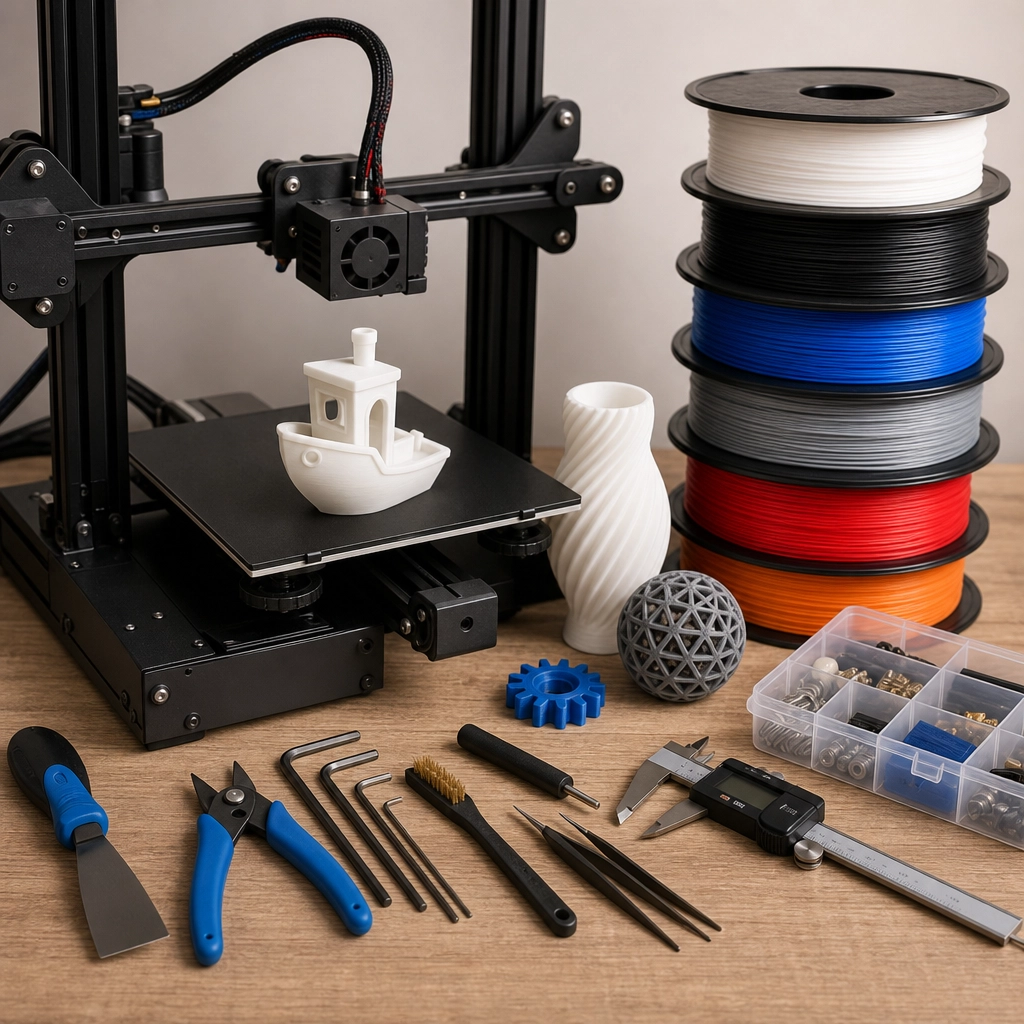
3D Printing for Beginners: Essential Tools and Filaments
Hey there, future 3D printing enthusiast! So, you’re curious about diving into the world of 3D printing? Well, you’re in for a fantastic journey filled with creativity and innovation. Whether you want to print unique designs, prototype products, or simply learn a new hobby, getting started with 3D printing can be both exciting and a little overwhelming. But don’t worry! I’m here to guide you through some essential tools and filaments that every beginner should consider.
Getting Started: The Basic Tools
Before you print your first object, let’s talk about the tools you’ll need. While it might seem like there’s a lot to gather, the essentials are actually pretty manageable.
1. 3D Printer
First and foremost, you’ll need a 3D printer. For beginners, a good choice is an FDM (Fused Deposition Modeling) printer. They’re widely available, relatively affordable, and ideal for a variety of projects. Popular models include the Prusa Mini, Creality Ender 3, and Anycubic i3 Mega. When researching models, pay attention to user reviews, as they can give you a great insight into the ease of use and reliability.
2. Computer and Software
Next up is your computer. Most 3D printers require slicing software, which converts 3D models into a format the printer can understand. Some popular slicing software options include Cura, PrusaSlicer, and Simplify3D. Many of these are user-friendly and free, making them perfect for beginners.
3. 3D Models
Now you need something to print! If you’re just starting out, you might want to explore websites that offer free 3D models to download, like Thingiverse or MyMiniFactory. You can also create your own designs using software like Tinkercad, which is intuitively built for beginners and allows for easy modeling with drag-and-drop features.
4. Build Surface and Tools
You’ll need a build platform like tape or a glass bed, often included with your printer, to ensure your prints stick and don’t warp. It’s also helpful to have a set of tools like scrapers, tweezers, and pliers for removing prints and cleaning up any mess. A good quality spatula or print removal tool can save you heaps of frustration!
Choosing the Right Filament
Now that you’ve got your tools sorted, a critical part of 3D printing is understanding filaments. The type of filament you choose will significantly affect the outcome of your prints.
1. PLA (Polylactic Acid)
PLA is the most common starter filament. It’s biodegradable and easy to print with, making it a perfect choice for beginners. PLA has a low melting temperature, which means fewer settings to worry about. It prints beautifully and comes in a rainbow of colors and finishes.
2. PETG (Polyethylene Terephthalate Glycol)
Once you’re comfortable with PLA, you might want to try PETG. It is more durable and offers better layer adhesion while still being user-friendly. It’s perfect for functional parts, as it handles heat and moisture better than PLA. Plus, it’s still easy to print!
3. ABS (Acrylonitrile Butadiene Styrene)
If you’re feeling adventurous, you could experiment with ABS. It’s the plastic used for LEGO bricks and is very strong! However, it does require a heated bed and better ventilation due to its fumes. Novices might find ABS a bit tougher to work with, mainly because of warping.
4. Other Filament Options
There are numerous other filament options out there, like TPU (flexible material) and even nylon! As you grow more comfortable with the basics of printing and design, exploring these can add unique properties to your projects.
The Fun Begins!
With your tools and filament sorted, you are well on your way to launching into the fascinating world of 3D printing! Embrace the learning curve—experimentation is key. You might face a few hiccups along the way (who hasn’t had a print fail?), but that’s all part of the adventure. Dive into forums or local makerspace communities for advice, tips, and support from fellow enthusiasts.
So grab your printer, pick out some filament, and let your imagination run wild! 3D printing offers a creative outlet like no other, allowing you to turn ideas into tangible objects. The only limit? Well, that’s really just your imagination!