


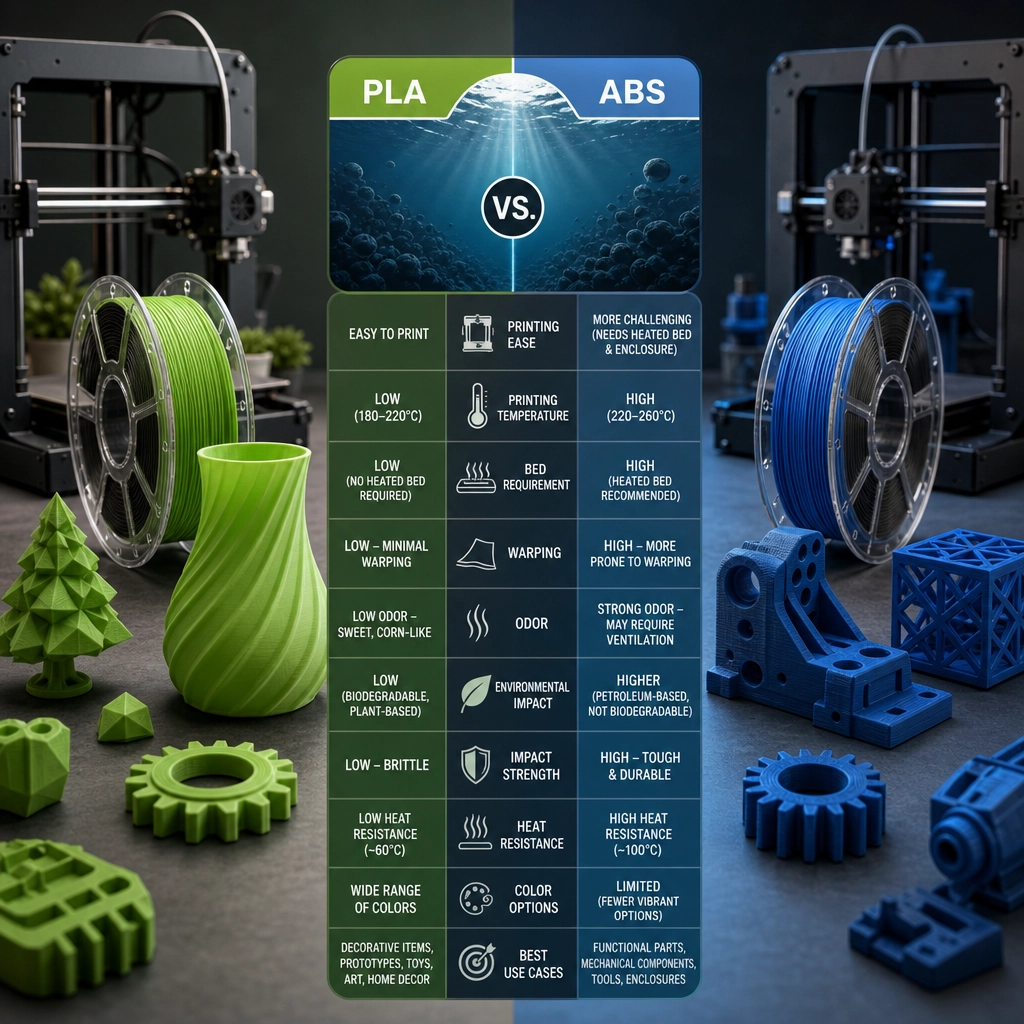
A Deep Dive into PLA vs. ABS Filaments for 3D Printing
3D printing has revolutionized the way we think about manufacturing and prototyping, allowing hobbyists and professionals alike to bring their ideas to life right from their desktops. At the heart of this exciting technology are the materials we use, and two of the most popular filament options are PLA (Polylactic Acid) and ABS (Acrylonitrile Butadiene Styrene). In this post, we’ll take a dive into both of these materials, discussing their properties, pros and cons, and ultimately helping you decide which one is right for your next project.
What is PLA?
PLA is a biodegradable thermoplastic made from renewable resources like cornstarch or sugarcane. It’s one of the most commonly used plastics for 3D printing, particularly due to its ecological benefits. PLA is known for its ease of use, making it a favorite among beginners and seasoned pros alike.
Pros of PLA
-
User-Friendly: PLA prints at lower temperatures (typically around 180-220°C), which makes it compatible with a lot of 3D printers straight out of the box. It also adheres well to the print bed.
-
Eco-Friendly: Since it’s derived from plant materials, PLA is biodegradable in industrial composting facilities, which is a huge plus for eco-conscious makers.
-
Great Finish: Prints made with PLA exhibit excellent detail and vibrant colors, making it perfect for intricate designs and aesthetic models.
-
Less Shrinkage: PLA doesn’t warp as much as other materials while cooling, allowing for better dimensional accuracy.
Cons of PLA
-
Heat Resistance: PLA has a lower heat threshold—around 60°C—meaning it can soften and deform if exposed to high temperatures.
-
Brittleness: While it’s fairly rigid, PLA can be more brittle than other materials, making it less suitable for functional parts that experience stress.
-
Limited Outdoor Use: PLA is sensitive to UV light and moisture, which can cause it to degrade over time when exposed outdoors.
What is ABS?
ABS is a well-established thermoplastic known for its strength and durability. It’s widely used in various industries, from automotive to consumer goods. If you’ve ever played with LEGO bricks, you’ve used ABS!
Pros of ABS
-
Durability: ABS is tough and impact-resistant, making it an excellent choice for functional parts that need to withstand wear and tear.
-
Temperature Resistance: With a higher heat tolerance (around 100°C), ABS can handle hotter environments without deforming.
-
Post-Processing Options: ABS can be smoothed using acetone, allowing for a smoother finish and the elimination of layer lines.
-
Versatile: It can be used for a wide range of applications, from toys to mechanical parts and prototypes that require considerable stress resistance.
Cons of ABS
-
Difficult to Print: ABS requires higher printing temperatures (around 220-260°C) and can be tricky to work with, often leading to issues like warping and cracking.
-
Fumes: The fumes released by ABS while printing can be unpleasant and potentially harmful, necessitating good ventilation in your printing space.
-
Adhesion Issues: ABS can have problems with bed adhesion, making it necessary to use heated beds or specialized adhesive solutions to prevent warping.
-
Environmental Impact: Unlike PLA, ABS is not biodegradable, which can be a concern for those looking to minimize their environmental footprint.
Making Your Choice
When deciding between PLA and ABS, consider the specific needs of your project. If you’re a beginner or looking to create an aesthetically pleasing model, PLA might be your best bet. It’s easier to work with and offers a beautiful finish with fewer headaches.
On the flip side, if you need a robust, heat-resistant part that can endure rough handling, ABS is more suitable. Just be prepared to deal with a steeper learning curve and possibly some odor management.
At the end of the day, the best filament for your 3D printing journey may even depend on the type of project you’re tackling. As you experiment with both materials, you’ll gain a deeper understanding of their strengths and limitations. Embrace the learning process, and you’ll find joy in creating wonderful, tangible innovations with your 3D printer!