


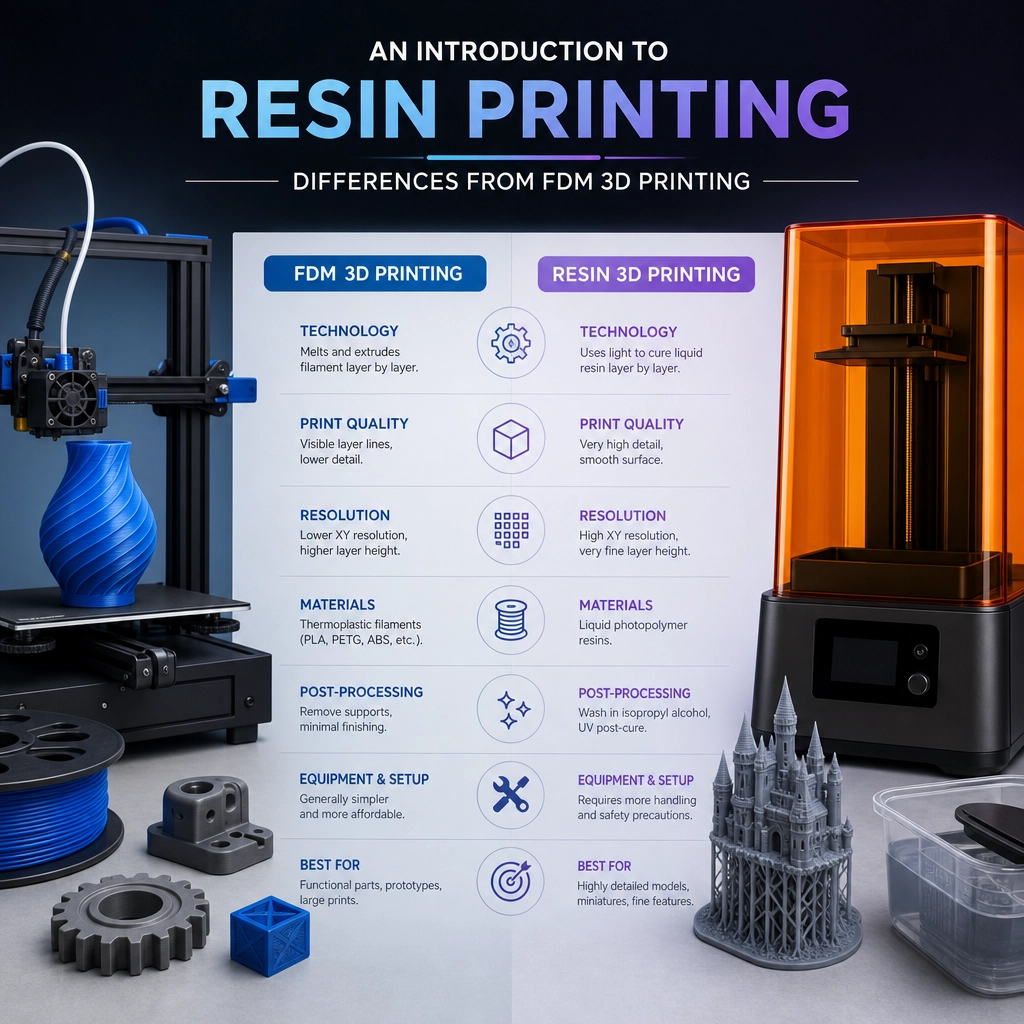
An Introduction to Resin Printing: Differences from FDM 3D Printing
In the world of 3D printing, two of the most popular methods are resin printing and Fused Deposition Modeling (FDM). If you’re just dipping your toes into the 3D printing pool, understanding the differences between these two technologies can help you decide which one best suits your needs. Let’s explore the fascinating realm of resin printing, how it differs from FDM printing, and what makes each unique.
What is FDM Printing?
FDM printing is perhaps the most recognizable method among hobbyists and enthusiasts. It works by melting a thermoplastic filament and extruding it layer-by-layer to build an object from the ground up. Think of it like a hot glue gun that moves in precise patterns, gradually adding material until your desired shape emerges. FDM printers are typically user-friendly, widely available, and generally more affordable, making them a popular choice for beginners.
One of the major benefits of FDM printing lies in the variety of materials available. From PLA (polylactic acid), which is biodegradable and great for safe toys or prototypes, to tougher materials like ABS (acrylonitrile butadiene styrene), the options are endless. However, while versatility is definitely a plus, FDM prints often come with a compromise on detail. The layer lines can be quite visible, making smooth finishes a little tricky without post-processing.
What is Resin Printing?
Resin printing, on the other hand, offers a whole different bucket of perks. This technique, often associated with SLA (Stereolithography) printers, involves curing liquid resin using a UV light source, typically a laser or a resin projector. This method allows for incredible detail and smooth finishes that are often unattainable with FDM. If you’re after intricate designs, miniatures, or even dental models, resin printing may just be your new best friend.
Resin printers can produce wildly complicated geometries and sharper details, making them perfect for applications in fields like jewelry making or industries requiring precise parts. However, this precision comes at a price—literally. Not only can resin printers cost more upfront than FDM machines, but the cleaning materials and post-processing steps also add to the overall expense.
Key Differences Between Resin and FDM Printing
Print Quality and Detail
When it comes to print resolution and smoothness, resin printing triumphs. Because it cures liquid resin layer-by-layer, you can achieve incredibly fine details, sharp edges, and smoother surfaces than most FDM prints can provide. If you’re printing intricate models, figures, or prototypes where accuracy is crucial, resin printers often shine.
Material Variety
While FDM printers offer a wide range of filament materials that can withstand various conditions (temperature, flexibility, etc.), resin printers primarily work with photopolymer resins. Although there are specialty resins out there (like flexible or tough resins), the overall selection isn’t as diverse as FDM options. If material versatility is a significant factor for your projects, FDM might be the way to go.
Speed and Print Time
FDM printers usually take longer to print larger objects due to their layered approach and the need for precise extrusion. In comparison, depending on the type of resin printer, you might find that they can sometimes print faster—especially if you’re using a printer with a full build plate curing system. However, keep in mind that the overall print time can vary widely based on the complexity of the model and the printer settings you choose.
Post-Processing
Both printing methods require some level of post-processing, but resin printing involves a bit more. After printing, cured resin prints need to be cleaned (often using isopropyl alcohol) to remove any uncured resin, followed by additional curing under UV light. In contrast, FDM prints require sanding and trimming, but cleaning up is generally more straightforward.
Safety and Comfort
Using a resin printer can require a little more caution. Resins can be toxic and require the use of personal protective equipment, such as gloves and masks, during handling. Adequate ventilation is also necessary. On the other hand, FDM filaments like PLA are generally much safer and more pleasant to work with, making them ideal for beginners or casual crafters.
As you venture into the world of 3D printing, understanding the unique strengths and weaknesses of resin versus FDM printing can help you determine which method aligns best with your project goals. While resin printing stands out for its intricate details and elegant finishes, FDM printing remains a reliable, versatile option perfect for a wide array of applications. Whether you’re looking to craft a detailed miniature or a robust mechanical part, each printing method has its own charm waiting to be explored. The journey into 3D printing can be as fascinating as the designs you’ll create!