


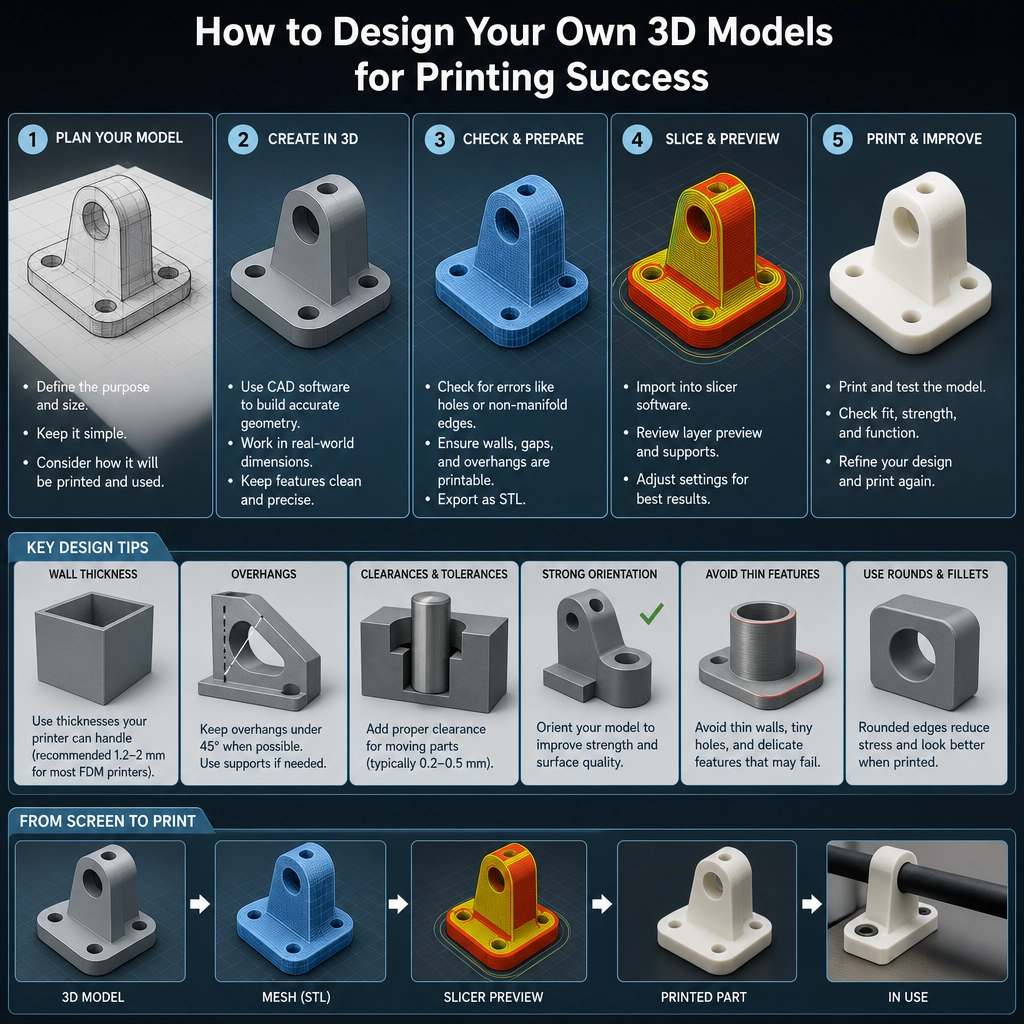
How to Design Your Own 3D Models for Printing Success
3D printing has revolutionized the way we create, prototyping everything from jewelry to automotive parts. But before you can hit that glorious print button, you need a solid blueprint. Designing your own 3D models might seem daunting at first, but with a bit of practice and the right tools, you’ll be cranking out impressive designs in no time. Let’s dive into the world of 3D modeling and explore how to create designs that will print successfully.
Getting Started: Choose the Right Software
First things first—picking the right software can make a world of difference. If you’re a beginner, consider trying out user-friendly programs like Tinkercad or SketchUp. Both offer an intuitive interface and a plethora of tutorials that guide you through the basics. For those ready to level up, more advanced software like Fusion 360 or Blender provides powerful tools for more intricate designs. Just remember, higher complexity can also mean a steeper learning curve.
Understand Your Printer’s Capabilities
Not all 3D printers are created equal, and understanding your specific printer’s capabilities will help you design effectively. From the type of filament it uses to its maximum build size, these factors will dictate what you can create. If you’re using an FDM (Fused Deposition Modeling) printer, for instance, be mindful of layer height, infill density, and support structures. Reviewing your printer’s specifications will set you up for success from the get-go.
Design for Printability
One of the key things to keep in mind while designing is printability. Here are a few tips to optimize your designs:
-
Wall Thickness: Ensure your walls are thick enough to hold shape without being overly bulky. A good rule of thumb is to keep them at least 1-2 mm thick, depending on your material.
-
Avoid Overhangs: Support structures can be a pain. To minimize them, try to avoid overhangs greater than 45 degrees. If you must include them, consider redesigning the model to either include supports or ensure it can stand adequately on its own.
-
Details Matter: While it can be tempting to add intricate details, remember they may not translate well in your print. Fine features can get lost or may not be durable enough, so strike a balance between style and practicality.
-
Assembly Considerations: If your design is complex and includes multiple parts, plan how they will be assembled post-print. Keeping parts interlocking or using screws can make life easier during assembly.
Test and Iterate
Once you’ve created your first design, it’s time to test it out! Don’t be discouraged if your first print isn’t perfect. Iteration is part of the design process. You may need to tweak dimensions, adjust support structures, or change materials based on how your print goes. Keep a notebook or digital record of what works and what doesn’t to streamline your learning process.
Embrace the Community
The 3D printing community is vibrant and full of innovators eager to share their knowledge and experiences. Joining forums like Reddit’s r/3Dprinting or various Discord servers can expose you to valuable tips and feedback. You can also find countless resources, such as blogs, YouTube channels, and online courses that cater to all skill levels.
Resources for Design Inspiration
Sometimes, staring at a blank screen can be the hardest part of making something new. To spark your creativity, browse repositories like Thingiverse or MyMiniFactory. While these sites offer ready-to-print models, they can also serve as inspiration for your unique creations. You can take elements from existing designs and put your twist on them. Just remember to give credit where it’s due if you borrow ideas!
Final Thoughts
Designing your own 3D models for printing isn’t just about making something functional; it’s an opportunity to unleash your creativity and experiment with new ideas. By choosing the right software, understanding your printer’s capabilities, ensuring printability, and engaging with the community, you’ll cultivate a skill set that allows your imagination to run wild. So, dive in, have fun, and embrace both the triumphs and challenges that come with 3D design—it’s all part of the exciting journey to creating something amazing! Happy printing!