


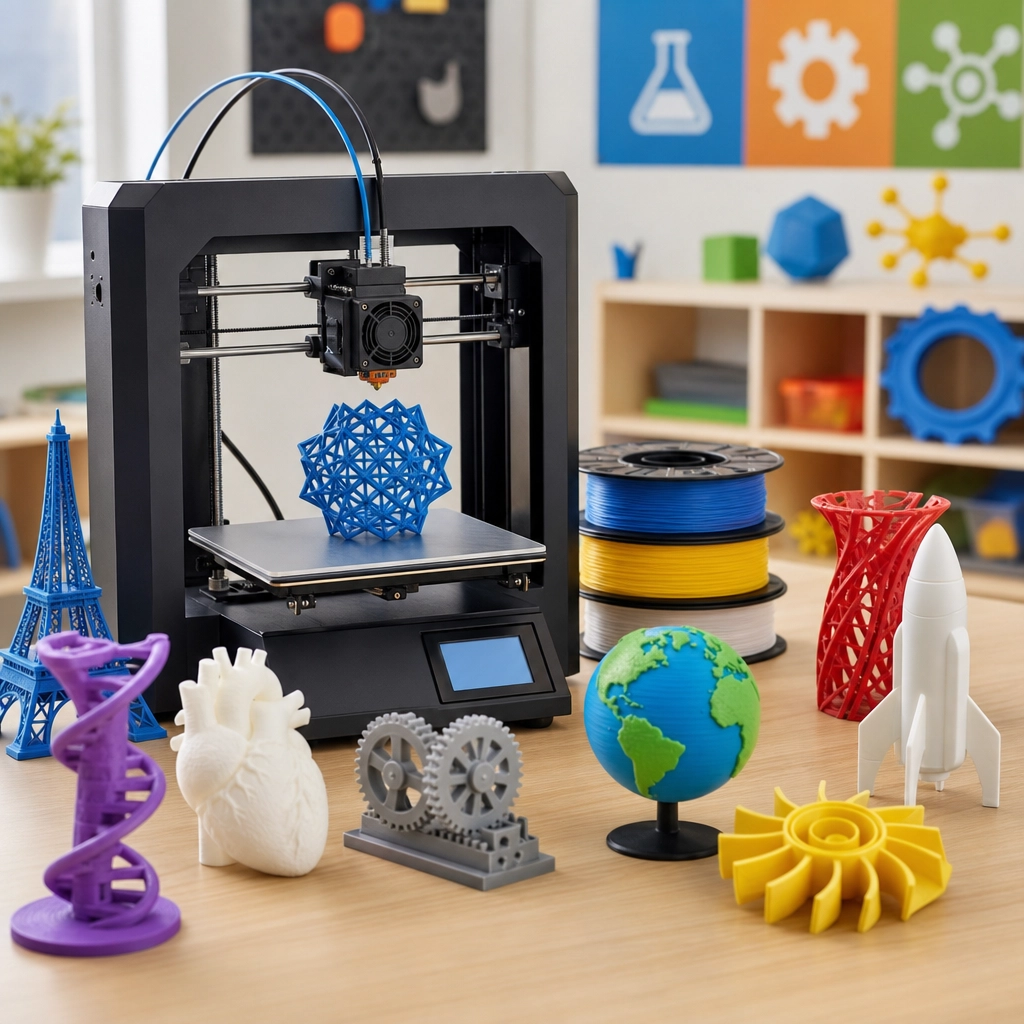
3D Printing for Education: Engaging Students in STEM
With the rapid advancements in technology, 3D printing has emerged as a transformative tool in various sectors, and education is no exception. Imagine students walking into a classroom not just to learn but to create, innovate, and let their imaginations run wild. That’s the power of 3D printing! It’s more than just a futuristic trend; it’s revolutionizing how we approach teaching STEM (Science, Technology, Engineering, and Mathematics) subjects, making learning more interactive and hands-on.
Why 3D Printing?
So, why is 3D printing a game-changer for education? First off, it brings abstract concepts to life. Students can visualize and manipulate objects that once existed only in their textbooks. For example, instead of reading about the solar system, they can design and print their own models of planets, giving them a tangible connection to the subject matter. This hands-on approach fosters deeper understanding and retention of knowledge, which is essential in STEM education.
Moreover, 3D printing encourages creativity. Students have the freedom to turn their ideas into physical objects. Whether it’s designing a prototype of an engineering project or creating a historical artifact, the possibilities are endless. This creative outlet not only boosts engagement but also promotes problem-solving skills as students encounter and overcome challenges during the design and printing processes.
Engaging Students in STEM
Integrating 3D printing into the curriculum can significantly enhance student interest in STEM fields. Here are a few ways this innovative technology is sparking enthusiasm:
1. Real-World Applications
Imagine students in a physics class designing and printing a bridge that must withstand weight. They apply principles like tension and compression in a practical way. Through trial and error, they learn the importance of testing, measuring, and refining their designs — skills that are crucial in engineering and technology professions.
2. Collaborative Projects
3D printing encourages teamwork. Students can collaborate on projects, combining their strengths and perspectives. They learn to communicate effectively, compromise, and work towards a common goal. These skills are not just vital in school but also in future workplaces. Plus, there’s something incredibly satisfying about seeing a team’s collective design come to life!
3. Personalized Learning
Everyone learns differently, and 3D printing caters to this variability. Some students may grasp concepts better through visuals, while others might excel in tactile experiences. With 3D printing, educators can tailor projects to meet diverse learning styles, ultimately helping each student to thrive. This customization makes learning more equitable and engaging.
4. Fostering Innovation
By encouraging students to brainstorm and create, 3D printing fosters a culture of innovation. They become true problem solvers, not just passive recipients of information. As they face design challenges, they learn resilience and adaptability — traits that are essential in our ever-evolving world. Students may even come up with solutions to real-world problems, sparking initiatives that could lead to community improvements or environmental sustainability.
5. Interdisciplinary Learning
3D printing allows for the blending of subjects. A project can tie in art, history, science, and technology seamlessly. For instance, a student might create a 3D model of an ancient structure while incorporating lessons on history, mathematics, and artistic design. This interdisciplinary approach not only enriches learning but also helps students see the connections between different fields, preparing them for a multidisciplinary future.
Tools for Success
To get started with 3D printing in the classroom, teachers don’t need to break the bank. Many affordable 3D printers are available, along with free or low-cost design software that is accessible even to beginners. A plethora of online resources, tutorials, and communities exist to support educators and students alike in their 3D printing journey.
Additionally, schools can collaborate with local makerspaces or tech organizations that offer workshops on 3D printing technology. Such partnerships foster a sense of community and enhance students’ skills while creating networks that may last beyond their school years.
Embracing 3D printing in education isn’t just about adopting a trend; it’s about cultivating a generation of thinkers, creators, and innovators. By bridging the gap between theory and practicality, students become active participants in their learning journey. As they harness the power of 3D printing, they’re not only preparing for future STEM careers but also igniting a passion for discovery that could lead to remarkable contributions in various fields. The future of education is here, and it’s designed in 3D!