


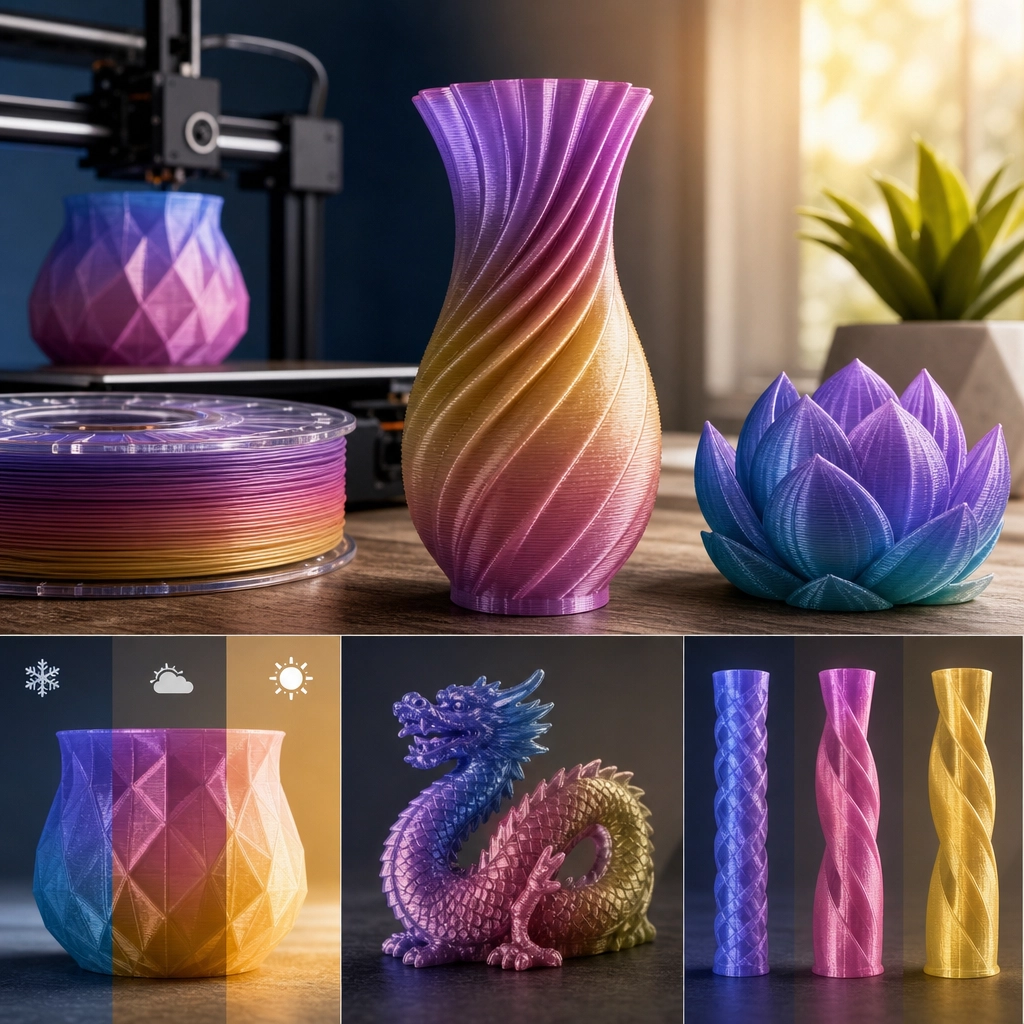
Exploring Color Changing Filaments: Add a New Dimension to Your Prints
If you’re into 3D printing, you probably know that one of the most exciting aspects of this hobby is the endless array of materials available. From flexible filaments to metal-infused plastics, there’s no shortage of creativity you can unleash with your printer. But have you ever considered the magic of color changing filaments? These unique materials can elevate your prints in ways you might not have thought possible, transforming not just the look of your project but also the experience of creating it.
What Are Color Changing Filaments?
At their core, color changing filaments are special types of thermoplastics that change color in response to specific stimuli, typically heat or UV light. For instance, a temperature-sensitive filament might shift from one color at room temperature to another when it’s heated up. This fascinating technology adds a new layer of interaction to your printed pieces, making them not just objects but experiences.
One of the most popular options out there is thermochromic filament. This filament changes color with temperature changes—like a mood ring for your 3D prints! You might print a sleek, black coffee mug that brightens to a lovely shade of red when filled with hot liquid. Not only does this look stunning, but it’s also a fun and practical feature that impresses guests and makes everyday items feel a little more special.
The Science Behind the Color Change
So, what makes these filaments tick? The secret lies in the pigments mixed into the polymer matrix. These pigments contain molecules that respond to heat or light, shifting their structure and, in turn, their color. When you heat the filament during the printing process or expose it to heat after printing, the molecules rearrange themselves, reflecting different wavelengths of light. Voila! You have a color change effect that can be triggered by something as simple as warm air or sunlight.
Getting Started with Color Changing Filaments
If you’re itching to try color changing filaments, here are a few pointers to help you get started:
-
Choose the Right Printer Settings: Filaments like PLA and ABS behave differently, and color changing variants may have specific requirements. Always check the manufacturer’s guidelines for optimal temperature settings, as they may differ from standard filaments.
-
Experiment with Designs: Not all models work equally well with color changing filaments. Designs that allow for gradual changes in temperature, like mugs or vases, tend to showcase the effects better. Think about how temperature will interact with the printed object.
-
Mix and Match: Don’t be afraid to experiment! You can combine color changing filaments with other filaments to create stunning multi-colored prints. Imagine a print with sections that change once heated or one that incorporates a base color and a thermochromic overlay. The possibilities are limitless!
-
Post-Processing Techniques: Some post-processing methods can enhance the color change effect. For example, giving your print a warm wash or using a heat gun carefully can bring out the different colors more vividly.
Where to Use Color Changing Filaments
The beauty of these filaments lies in their versatility. Here are some creative applications:
-
Home Decor: Imagine printing decorative items that change color with the seasons or with the temperature of the room. You could create coasters that reveal a design when a cup is placed on them.
-
Toys and Gadgets: Kids (and adults!) will love toys that change color with their environment. It adds a fun interactive element that can make their playtime even more thrilling.
-
Functional Items: Consider kitchen items like measuring spoons that alert you to temperature changes or plant pots that signal when your plant needs watering—these can all be possible with color changing technologies.
-
Fashion Accessories: Hats, bags, or jewelry made from these filaments can serve as a conversation starter and make your wardrobe dynamic.
As we dive into the future of 3D printing, color-changing filaments are paving the way for more interactive and engaging creations. Beyond practical applications, they add a playful twist to the things we design and use daily, reminding us that technology can blend beautifully with creativity. With just a little experimentation and a splash of creativity, you can transform ordinary prints into extraordinary ones that amaze and inspire. So, dust off that 3D printer, fire it up, and let the colors flow!