

Exploring the World of Flexible and Specialty Filaments
In the rapidly evolving world of 3D printing, filaments have taken center stage, allowing creatives, engineers, and hobbyists alike to bring their ideas to life. Among the various types of filaments available, flexible and specialty filaments are shining stars that unlock a myriad of possibilities. If you’re venturing into this fascinating realm, buckle up! We’re about to dive into the functional and fun world of flexible and specialty filaments.
The Basics of Filaments
Before we get into the nitty-gritty, let’s quickly touch on what filaments are. In 3D printing, especially Fused Deposition Modeling (FDM), filaments are the materials used to create three-dimensional objects. The most common type is PLA, easily recognized and favored by beginners due to its user-friendly nature. But as we become more adventurous, we discover a world bursting with textures, colors, and functionalities that can meet specific needs.
Understanding Flexible Filaments
First up, flexible filaments! As the name suggests, these filaments can bend, stretch, and compress, making them perfect for objects requiring elasticity. Think about phone cases, wearable materials, or even toys—any item that needs a touch of flexibility can benefit from these filaments.
The most common types include Thermoplastic Polyurethane (TPU) and Thermoplastic Elastomers (TPE). TPU is highly durable and can withstand wear and tear, while TPE offers enhanced flexibility and a softer touch. These properties enable designers to create functional parts that maintain shape while providing comfort and convenience.
Benefits of Flexible Filaments
-
Durability: Many flexible filaments exhibit tremendous resistance to various conditions, including chemicals and abrasion. This makes them suitable for parts that wear out quickly.
-
Comfort: Products like wearable tech can benefit immensely from flexible materials, offering a more comfortable fit against the skin.
-
Versatility: You can create everything from custom grips for tools, flexible gaskets, to even intricate art pieces. The possibilities are endless!
Challenges of Flexible Filaments
However, it’s not all sunshine and rainbows. Printing with flexible filaments can pose a challenge, especially for newcomers. They require specific printer settings and sometimes a direct drive extruder to ensure the material feeds correctly without jamming. Additionally, the printing speed often needs to be slower to achieve better layer adhesion. So, it’s essential to have patience and fine-tune your 3D printer settings to get the best results.
Delving Into Specialty Filaments
Now, let’s rattle the creative cages with specialty filaments! These are the quirky members of the filament family, offering unique features and functionalities that traditional materials like PLA or ABS don’t.
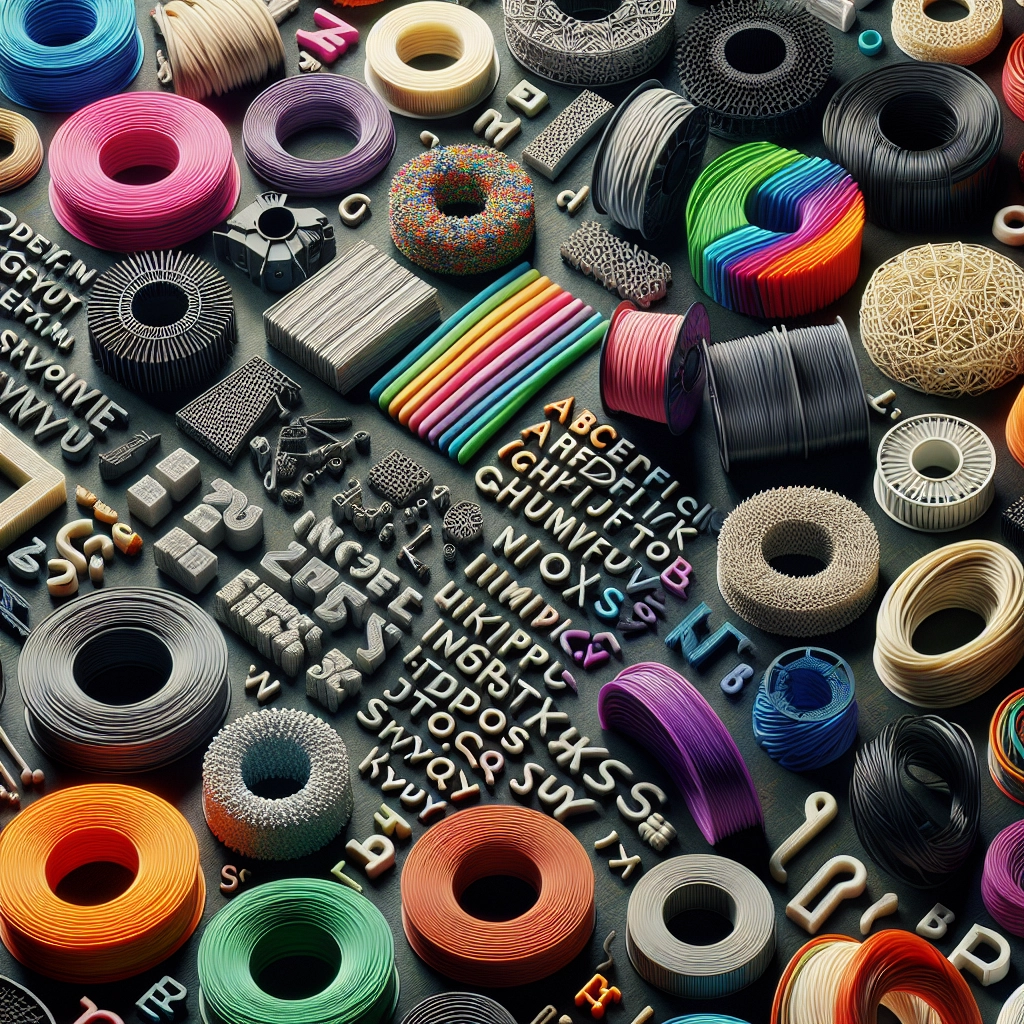
Specialty filaments come in numerous varieties—some even blending materials to create innovative results. Here are a few popular ones you might want to consider:
-
Carbon Fiber Reinforced Filament: This filament is infused with carbon fibers, offering incredible strength while keeping the weight low. It’s perfect for producing lightweight yet sturdy parts.
-
Metal Filaments: Want an object with a metallic finish? Consider metal-infused filaments. They give your prints a stunningly realistic metallic appearance, which can be polished and even used for artistic accents.
-
Glow-in-the-dark Filaments: Let’s talk about fun! These filaments charge in the light and glow beautifully in the dark. Perfect for decorative items or functional pieces like bedside lamps.
-
Wood Filaments: If you love the natural look and feel, you can find filaments made from PLA combined with wood particles, giving your prints a lovely wooden finish and scent.
Innovations and Applications
With advancements in technology, the variety of specialty filaments continues to grow. We’re seeing a rise in biodegradable options, biodegradable composites, and even filaments that can change color with temperature. This means the applications are expanding rapidly—from prototyping to final products in industries like automotive, medical, and consumer goods.
As more people explore 3D printing, the creativity around specialty filaments increases, allowing for unique designs and innovative solutions to emerge.
Final Thoughts
Diving into the world of flexible and specialty filaments is like stepping into a treasure trove of potential creations. Whether you’re a hobbyist looking to make something cool or a professional who needs durable parts, there’s a filament out there for you. Remember, each filament type can present its own challenges, but that’s part of the fun!
So, the next time you fire up your 3D printer, think about the creative paths you can take with flexible and specialty filaments. Who knows? You might just discover your next big project!