


How to Store and Care for Your 3D Filaments
3D printing is an exciting and innovative endeavor that opens up endless possibilities, from creating custom home gadgets to prototyping intricate designs. But once you get your hands on those colorful filaments, you might wonder: how do you keep them in tip-top shape? Proper storage and care of your 3D filaments can make a world of difference in print quality and longevity. Let’s dive into some best practices to ensure your filaments stay fresh and perform beautifully!
Know Your Materials
Before we get into the nitty-gritty of storage, it’s important to understand the different types of filaments and their unique needs. Common materials include:
- PLA (Polylactic Acid): This biodegradable filament is user-friendly but can absorb moisture, leading to poor print quality.
- ABS (Acrylonitrile Butadiene Styrene): Known for its strength and durability, ABS is also hygroscopic, which means it can pick up moisture from the air.
- PETG (Polyethylene Terephthalate Glycol): A tough material that also attracts moisture, PETG is often lauded for its ease of use.
- Nylon: This filament is famous for its strength and flexibility but can be particularly prone to absorbing moisture.
Understanding these characteristics will help you tailor your storage plan accordingly.
Ideal Storage Conditions
When it comes to storing your 3D filaments, the aim is to keep them dry and protected from environmental factors. Here are some solid tips for practical storage:
1. Cool and Dry
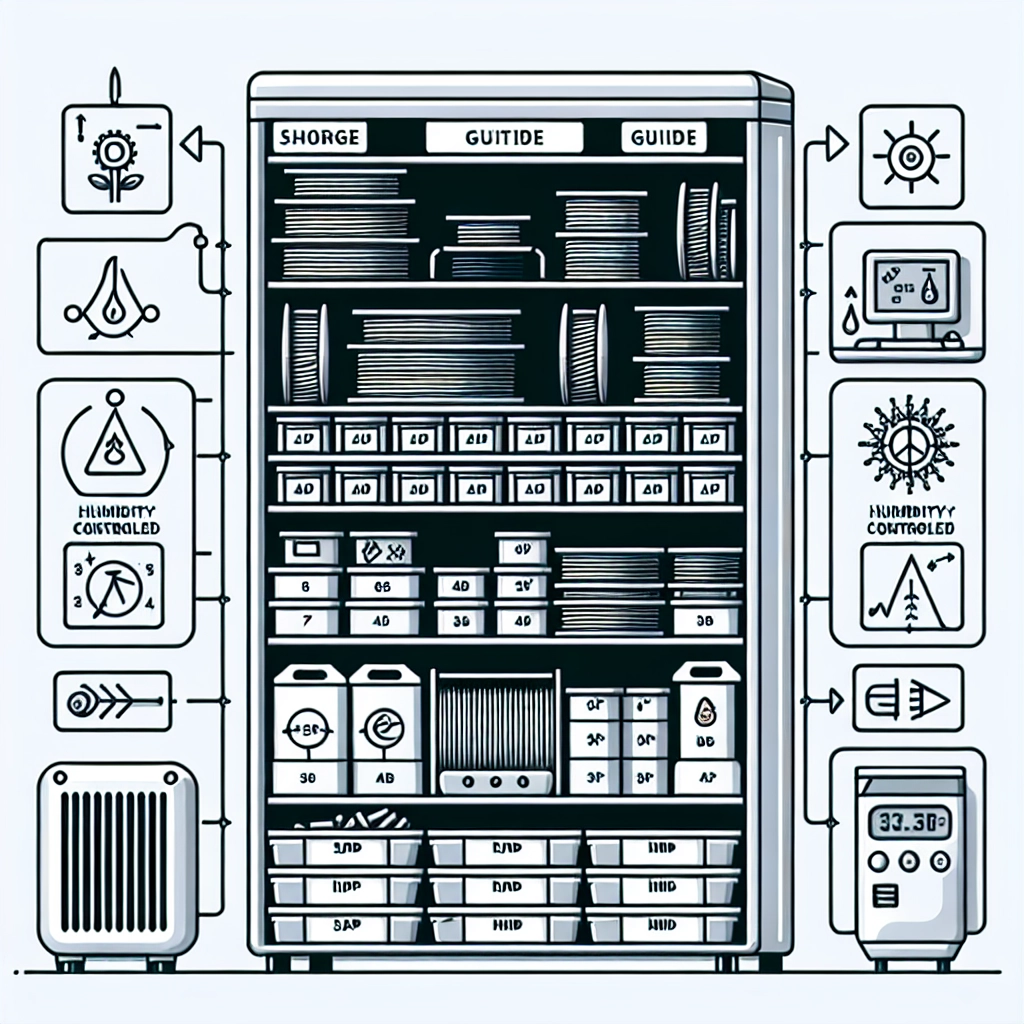
Aim for a temperature between 15°C to 25°C (59°F to 77°F) and relatively low humidity (ideally under 40%). A cool, well-ventilated area is perfect for keeping your filaments safe from warping and moisture contamination.
2. Sealed Containers
Investing in airtight containers or vacuum-sealed bags can work wonders. These not only keep moisture out but also protect against dust and direct sunlight, which can degrade your filaments over time. Desiccants (like silica gel packets) can be a great addition; they absorb excess moisture and keep everything nice and dry.
3. Avoid Sun Exposure
Direct sunlight can degrade the color and quality of your filament. Keep your storage containers in a cabinet or on a shelf away from windows. Even if they’re in sealed bags, harmful UV rays can affect certain materials.
4. Organize by Type and Color
An organized setup can save you a lot of time and frustration during the printing process. Label your containers by type and color so you can quickly grab what you need without sorting through a tangled mess.
Handling Your Filaments
Once you have your storage figured out, you also need to think about how you handle your filaments. Here are a few tips:
1. Limit Exposure to Air
Try to minimize the amount of time your filaments are exposed to air. When you take a spool out for printing, roll it back up and secure it in its container as soon as you can. This is particularly crucial for sensitive materials like Nylon.
2. Check for Moisture
Before printing, it’s a good idea to perform a quick inspection. If the filament feels brittle or has visible moisture beads, it may have absorbed too much humidity. In those cases, drying your filaments in a dedicated filament dryer can help restore them to working condition.
3. Keep Spools Clean
Dust and debris can make their way onto your spools, leading to clogs and uneven extrusion while printing. A quick wipe with a dry cloth can help eliminate dust and keep your spools in working order.
When the Time Comes to Print
Even with the best care, you might notice that sometimes your filament isn’t performing as expected. Occasionally, this can happen. If you encounter issues with adhesion or clogging, remember to calibrate your print settings for the specific filament you’re using. Different materials require different temperature settings and print speeds, so a little bit of tweaking can often fix any issues.
In summary, maintaining your 3D filaments is all about creating a supportive environment and handling them with care. With a little attention and dedication, you’ll not only extend the life of your filaments but also improve the quality of your prints. As you embark on your 3D printing journey, remember that the right preparation today means even more creativity for tomorrow! Happy printing!