


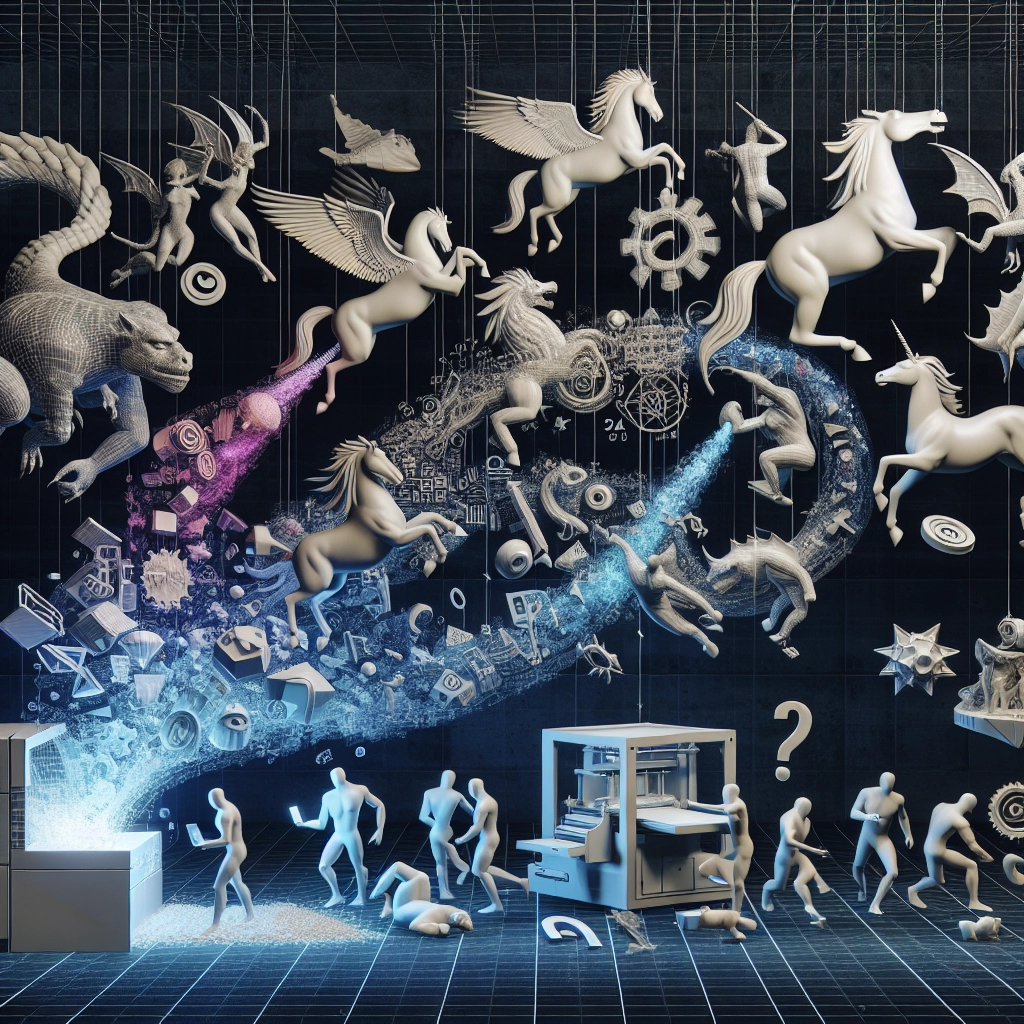

3D Printing Myths Debunked: Separating Facts from Fiction
Ah, 3D printing! It’s the futuristic technology that seems to show up in every sci-fi movie. But as intriguing as it might seem, it’s also surrounded by a cloud of myths and misconceptions. With increasing excitement about the potential of 3D printing, it’s essential to sift through the facts and fiction. Let’s dive in and explore some of the most common myths surrounding this revolutionary technology!
Myth 1: 3D Printing is Only for Engineers and Experts
Many folks believe that 3D printing requires extensive technical know-how and an engineering degree to even take a stab at it. While it’s true that having some technical background can be beneficial, you don’t need to be a rocket scientist to get started with 3D printing. There are now user-friendly software options available that allow virtually anyone to design and print objects. Plus, communities like Thingiverse and MyMiniFactory provide countless ready-to-print designs, so you can jump right in without needing to create your own models from scratch.
Myth 2: 3D Printing is Just a Fad
Look around! You’ve likely seen a surge in 3D printing applications in recent years, from rapid prototyping in industries to even bio-printing human tissues. The technology is here to stay and continually evolving. Companies like Tesla and Nike are already utilizing 3D printing for manufacturing parts and prototypes, operational efficiencies, and customization. As the material options expand and the technology becomes more sophisticated, 3D printing is becoming an integral part of various sectors, indicating that its relevance will only grow in the future.
Myth 3: 3D Printing is Inexpensive
While 3D printing can save money in specific applications, it isn’t always a low-cost manufacturing solution. The initial investment in a good-quality 3D printer can be significant, often ranging from a few hundred to several thousand dollars, depending on the model and capabilities. Plus, materials like filament or resin aren’t cheap either! If you’re looking at it as a business venture, you’ll need to consider all costs, including maintenance, operational expenses, and potential overhead fees. So, while 3D printing can cut costs in some scenarios, it’s not a universal money-saving solution.
Myth 4: 3D Printing is Dangerous
You might have heard rumors that 3D printing can be hazardous, perhaps due to the fumes released during printing or concerns over the materials used. While it’s always important to follow safety guidelines and use materials that are non-toxic and meant for your specific printer, when used properly, 3D printing is quite safe. High-quality 3D printers typically come with features that ensure user safety, including enclosed chambers that minimize exposure to hazardous fumes. Just remember also to print in well-ventilated areas and avoid using materials that you’re unsure about!
Myth 5: 3D Printing is Slow
This misconception likely stems from early 3D printing technologies, which could take hours (or even days) to create a single object. However, advancements in technology have significantly increased speed. High-end printers can now turn out complex designs in a matter of hours. Moreover, with multiple print heads and enhanced software, printing speed is continuously improving. So while it’s true that complex projects can take time, many simpler designs can be cranked out in a snap.
Myth 6: 3D Printed Items are Weak and Not Durable
When 3D printing first entered the mainstream, many doubted the strength and durability of 3D printed objects, assuming they would be fragile or unreliable. That couldn’t be further from the truth! With the right materials and proper design techniques, 3D printed items can be incredibly strong and durable. Materials like nylon and certain composites offer excellent strength, making 3D printed products viable options for a variety of applications, from functional tools to end-use parts.
3D printing has a transformative potential that’s hard to ignore. As we peel back the layers of myths surrounding it, we see that like any technology, it comes with its own set of challenges and immense benefits. The key takeaway? Don’t buy into the hype or the fear—get informed! Whether you’re a hobbyist eager to personalize your items or an entrepreneur ready to innovate, understanding the true capabilities of 3D printing will only enrich your experience and open up a world of possibilities. It might just lead you to create something amazing!


