
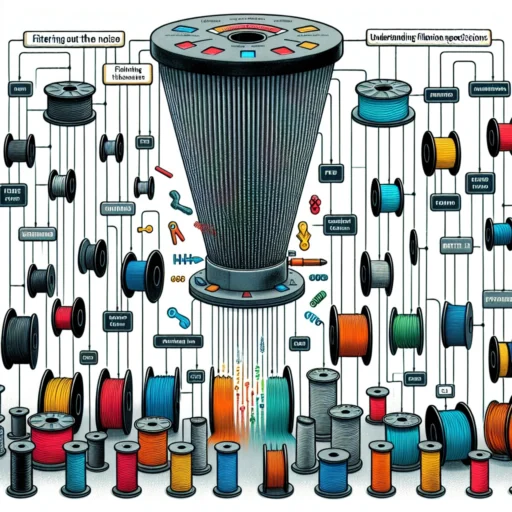
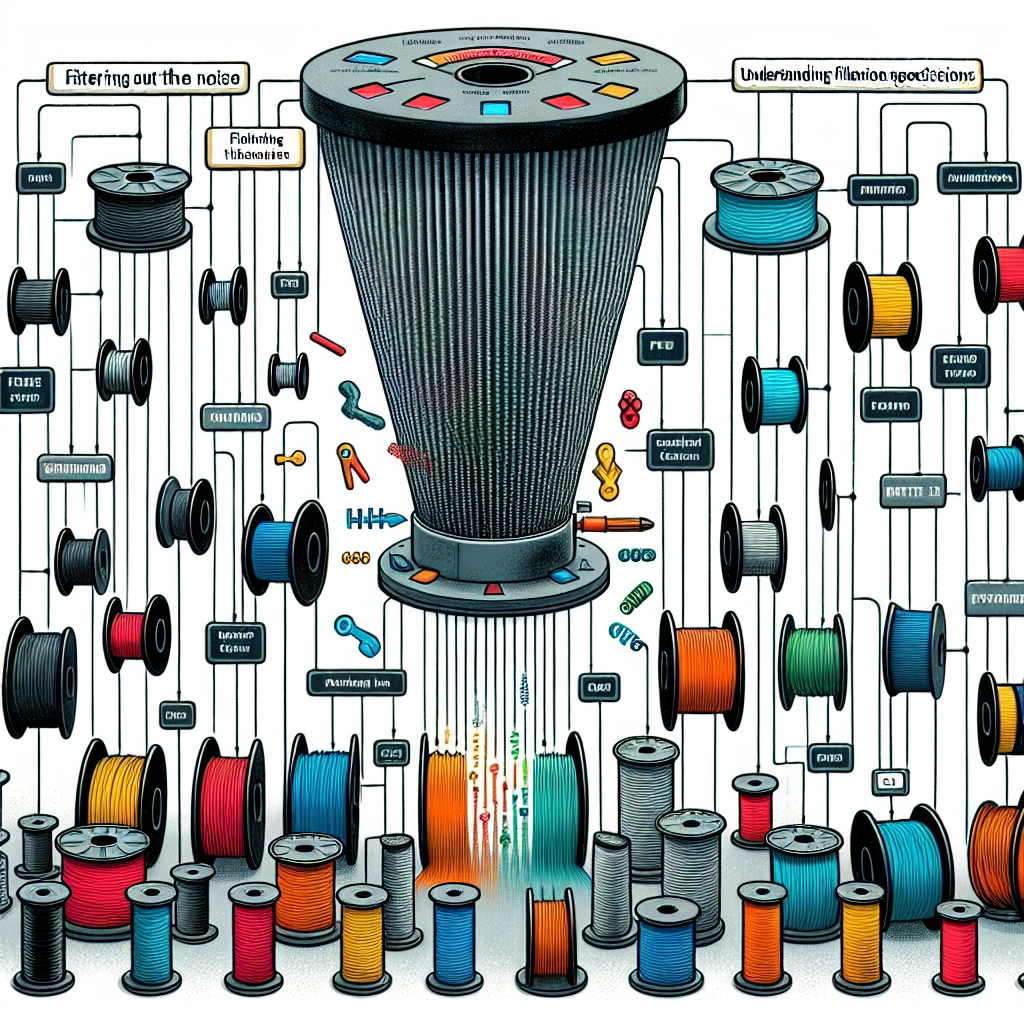

Filtering Out the Noise: Understanding Filament Specifications
In the thrilling world of 3D printing, the filament you choose can make or break your project. With a plethora of options swirling around, it can feel overwhelming to decode all those specifications. But don’t worry! We’re here to demystify filament specifications so you can make informed decisions and unleash your creativity with confidence.
What Are Filament Specifications Anyway?
When diving into the realm of 3D printing, filament specifications essentially refer to the properties and dimensions of the materials you’ll use for printing. Think of it as reading the label on your favorite snack. Just like you want to know if it’s gluten-free or has too much sugar, understanding filaments will help you determine what works best for your specific projects.
Key Filament Types and Their Specs
Let’s start by exploring a few common filament types and their specifications:
PLA (Polylactic Acid)
- Diameter: Most commonly 1.75mm or 3mm. This is like the size of the straw you use for your bubble tea—choose the right size for your printer!
- Temperature Range: Typically extrudes at 180-220°C. It’s a starter-friendly option thanks to its lower melting temperature, making it perfect for newbies.
- Strengths: It’s biodegradable, safe, and doesn’t warp easily, which means you can expect a smooth printing experience.
- Limitations: It does tend to be less heat-resistant compared to some other materials, so if you’re creating something that will see high temperatures (hello, kettle!), PLA might not be your best bet.
ABS (Acrylonitrile Butadiene Styrene)
- Diameter: Just like PLA, you’ll usually find it available in 1.75mm or 3mm.
- Temperature Range: Extrudes at around 210-250°C. Keep in mind that ABS has a higher melting point, which can be a bit tricky if you’re just starting out.
- Strengths: Known for its durability and heat resistance. It’s commonly used in industrial applications, making it a reliable choice for functional parts.
- Limitations: It emits a somewhat strong odor when heated, so ventilation is essential. Plus, it can warp when not printed on a heated bed, so be prepared for a little more TLC compared to PLA.
PETG (Polyethylene Terephthalate Glycol)
- Diameter: Available in the same sizes as the others.
- Temperature Range: It prints nicely at around 220-260°C.
- Strengths: PETG strikes a great balance between the ease of use of PLA and the durability of ABS. It’s also known for being food-safe (but check labels!) and resistant to impact.
- Limitations: While it’s less prone to warping, it can string when printing delicate details, so some fine-tuning is required.
Less Common, Yet Important Filaments
While the big three—PLA, ABS, and PETG—often steal the limelight, don’t forget about other exciting materials:
-
TPU (Thermoplastic Polyurethane): Great for flexible projects. Its specifications may vary, but it’s generally more challenging to print due to its elasticity. Ideal for items that need some give, like phone cases.
-
Nylon: Extremely strong and flexible, though it can absorb moisture and may require special setups like enclosed printers for successful printing.
Beyond Basics: Consider the Additives
Another layer of complexity is the additives used in filaments. Some filaments come infused with carbon fiber, wood, or even metal powders, which can alter their printing characteristics. These can enhance the final aesthetic and properties of your print, making it tougher or giving it a unique look. Just remember: these can also change how your printer responds, possibly leading to more wear on your nozzle—so smother that nozzle in care!
Navigating the Noise
With all this information, it’s easy to get lost in the sea of specifications. Here’s a tip: don’t dive in headfirst; start with a filament that matches your current project goals and printer capabilities. As you gain experience, experiment with different materials. Each filament has its unique quirks and surprises, much like the friends in your circle!
When you take the time to understand filament specifications, you’ll not only enhance your 3D printing experience but also open the door to new possibilities. Building that perfect 3D model takes a combination of knowledge, creativity, and a little patience. With the right filament in your arsenal, your ideas can take shape in ways you never imagined. So, filter out the noise, choose wisely, and happy printing!