


The Evolution of 3D Printing: Where Technology Meets Imagination
Imagine a world where the very fabric of reality could be shifted with a few clicks of a button. A world where your custom-designed coffee cup could be brought to life in mere hours instead of days. Sounds like science fiction, right? Well, welcome to the fascinating realm of 3D printing, where technology and imagination intertwine to create something truly remarkable.
A Brief History of 3D Printing
3D printing, also known as additive manufacturing, has come a long way since its inception in the early 1980s. The first 3D printing technology, Stereolithography (SLA), was developed by Chuck Hull. He used ultraviolet light to create a solid object layer by layer from a vat of liquid resin. It was such a groundbreaking innovation that it paved the way for a myriad of other techniques.
Fast forward a few decades, and by the 1990s, several methods of 3D printing had emerged—like selective laser sintering (SLS) and fused deposition modeling (FDM). These innovations made the technology more accessible and diversified the materials that could be used, ranging from plastics to metals, and even bio-materials.
Today, thanks to advancements in computer-aided design (CAD) and printing materials, 3D printing finds itself in multiple fields, including healthcare, construction, automotive, and even food. Each sector uses 3D printing in exciting ways that challenge the limits of what we can create.
Revolutionizing Healthcare
One of the most awe-inspiring applications of 3D printing is in the healthcare industry. Imagine a prosthetic limb specifically tailored to fit a patient’s residual limb, crafted in a matter of hours rather than weeks. That’s the power of 3D printing.
In addition to prosthetics, 3D printing is advancing medical implants, dental models, and even bioprinting tissues and organs. These innovations not only improve the quality of life for patients but also substantially reduce costs associated with manufacturing traditional medical devices.
Transforming Manufacturing and Design
The manufacturing landscape is also undergoing a seismic shift thanks to 3D printing. Traditional manufacturing often requires costly and time-consuming processes, but additive manufacturing allows for rapid prototyping. Designers can create models, test them, and make adjustments all in a fraction of the time it would take using conventional methods.
For small businesses and startups, this opens up a world of opportunities. With an affordable 3D printer and some design know-how, they can bring their ideas to life without the hefty price tag often associated with traditional manufacturing.
Sustainable Solutions
As awareness of environmental issues grows, 3D printing presents sustainable solutions that traditional manufacturing often lacks. Reducing material waste is a fundamental trait of 3D printing; instead of cutting away excess material from a solid block, it adds only what is necessary layer by layer.
Furthermore, many companies are exploring the use of recycled materials in the 3D printing process. Imagine turning a plastic bottle into a beautiful piece of art or even practical household items. The potential for repurposing waste into useful products is a promising step toward a more sustainable future.
The Future is Here
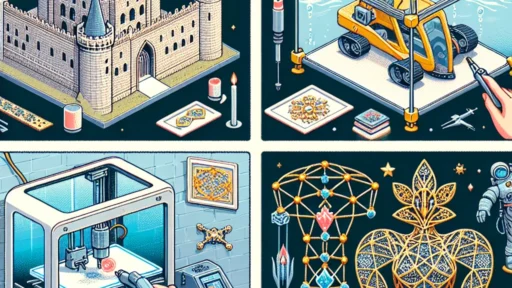
While we’ve already seen tremendous advancements, the future of 3D printing is undoubtedly more diversified. From the international space station contemplating the idea of 3D printing tools and parts to how artists are experimenting with the medium to express their creativity, the possibilities seem endless.
Moreover, as technology continues to evolve, we can anticipate breakthroughs in bioprinting—perhaps even growing organs for transplants directly from a patient’s cells.
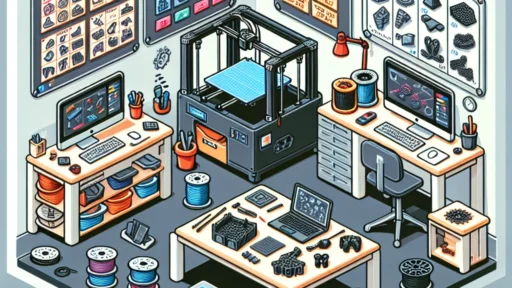
And let’s not forget the ever-growing trend of DIY enthusiasts embracing 3D printing at home. As innovation spreads to our personal spaces, it encourages us to think creatively about our everyday objects. Want a new lamp? Why not design it yourself and print it? Just imagine walking into your living room one day and thinking, “I made that.”
Bridging the Gap Between Imagination and Reality
3D printing represents more than just a technological advancement; it’s a bridge between our imagination and reality. As technology becomes more sophisticated and accessible, it breaks down barriers, allowing anyone with a spark of creativity to produce tangible results.
Whether it’s designing the next fashion statement, creating a unique piece of furniture, or saving lives with custom medical devices, 3D printing holds incredible promise for the future. So, as we look ahead, let’s harness our imagination and push the boundaries of what we believe is possible—after all, the only real limit may well be our creativity.