

An Overview of 3D Printing Hardware Essentials
If you’ve ever marveled at the concept of printing a three-dimensional object right from your home, then you might already be on the path to exploring the exciting world of 3D printing. It’s not just a futuristic idea anymore; it’s a rapidly growing hobby and industry that’s bringing creativity and innovation into everyone’s hands. But before your enthusiasm catapults you into online shopping for a shiny new printer, let’s break down the essential hardware you’ll need to get started with 3D printing.
1. The 3D Printer
First things first, you’ll need a 3D printer, of course! But with the myriad options available today, how do you choose the right one?
FDM Printers
Fused Deposition Modeling (FDM) printers are the most common type, especially for beginners. They work by extruding melted plastic filament layer by layer to build your design. They are typically more affordable, with prices ranging from a few hundred to a couple thousand dollars depending on size, features, and quality. Popular models include the Creality Ender series and the Prusa i3.
SLA Printers
Then there’s Stereolithography (SLA), which uses a liquid resin that is cured by a UV light source. SLA printers are known for their precision and can produce incredibly detailed prints. However, they come with additional costs since you’ll need resin and special handling equipment to manage the post-processing. Some well-regarded SLA options include the Anycubic Photon and the Elegoo Mars series.
The Right Fit
When selecting a printer, consider your budget, what you plan to print, and how much space you have. Don’t forget to look at the online community and support options for each model; it can really help when you hit a snag.
2. Filament and Resin
Once you’ve got your printer, you’ll need the right printing material to bring your visions to life.
Filament for FDM Printers
For FDM printers, the most popular materials are PLA (Polylactic Acid) and ABS (Acrylonitrile Butadiene Styrene). PLA is great for beginners due to its ease of use and lower temperature requirements, while ABS is more durable and suited for functional parts. Make sure to stock up on different colors and types as you experiment!
Resin for SLA Printers
If you’re going the SLA route, resin can be a bit more specialized. There are various types of resin, including standard, tough, and flexible options, each suited for different applications. Remember, it’s important to use resin in a well-ventilated area and wear protective gear — safety first!
3. Print Bed and Build Surface
The build surface is where your 3D print will actually come to life, so ensuring it’s adequately set up is key. Standard options are glass, metal, or specialized sheets designed to help with adhesion. A heated print bed is a great feature to look for as it helps minimize warping and ensures better adhesion for your prints.
Leveling the Bed
One of the most crucial aspects of using a 3D printer is bed leveling. Most printers require you to level the build plate before each session so that the nozzle can maintain the optimal distance from the bed. Some more advanced printers even feature auto-bed leveling systems, which take a bit of the guesswork out of the process.
4. Additional Accessories
To ensure your 3D printing journey is as smooth as possible, there are some handy accessories you might want to consider:
Tools and Software
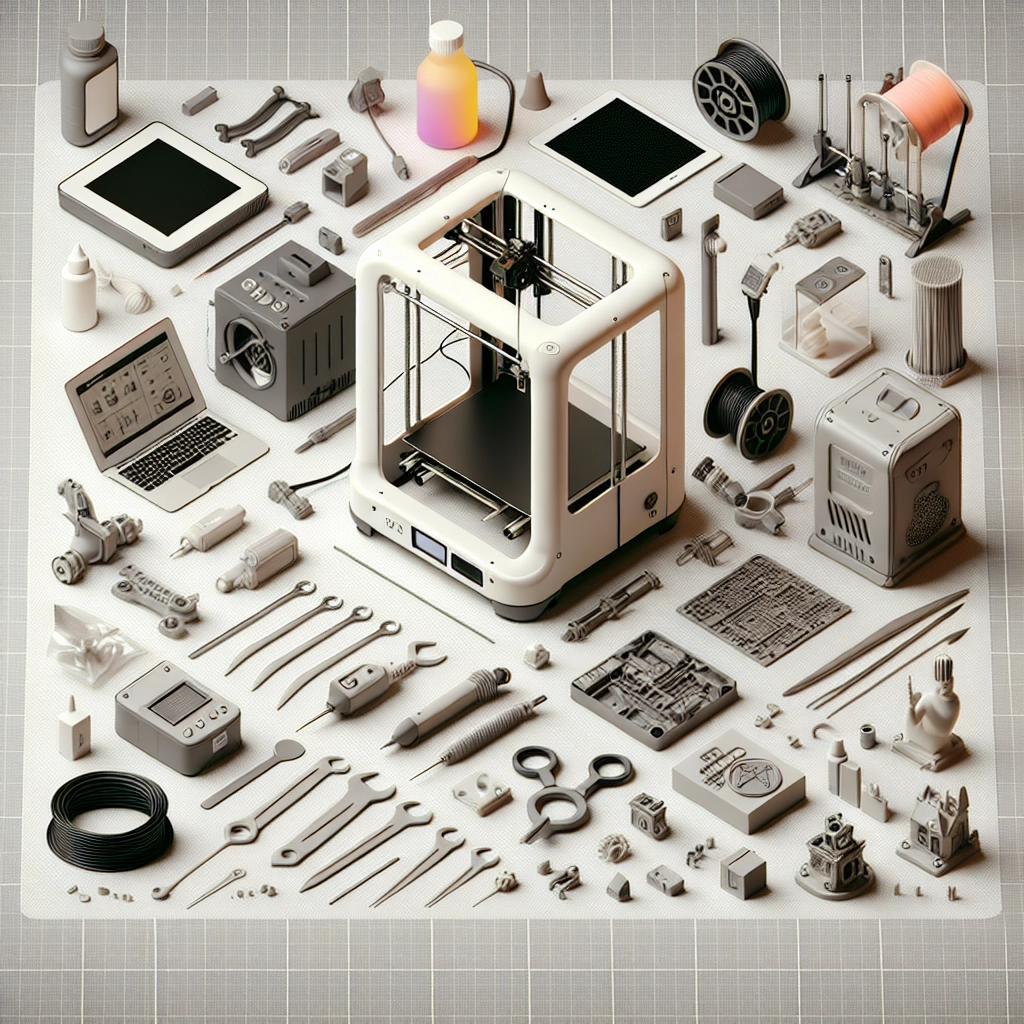
Having the right tools makes for a seamless experience. Basic tools like scrapers, tweezers, and pliers will come in handy for post-processing your prints. Software is another key component; programs like Cura or PrusaSlicer allow you to prepare your designs for printing by slicing them into the appropriate format for your printer.
Filament Storage
Don’t overlook filament storage, either! Filaments can be sensitive to moisture, which can lead to poor printing results. Consider airtight containers with desiccants to keep your materials fresh.
Safety Gear
If you’re working with high temperatures or resin, always prioritize safety. Gloves, goggles, and a mask can protect you from fumes and accidental spills.
Let’s Get Printing!
As you can see, diving into 3D printing does require some essential hardware and a bit of a learning curve. However, with the right printer, materials, and accessories, you’ll be well on your way to creating custom designs that can be functional, artistic, or anything in between. The key is to take it step by step, learn from the community, and, most importantly, have fun with the process! Soon enough, the excitement of turning a digital idea into a tangible object will make every bit of that effort worth it. Happy printing!