

3D Printing for Education: How Bambu Lab and Creality Can Inspire Learning
Imagine walking into a classroom where students are not just passively absorbing information but actively creating and building their own projects. This vibrant picture becomes a reality with 3D printing, and two major players in this field—Bambu Lab and Creality—are making significant waves in education.
The Revolution of 3D Printing in Classrooms
3D printing is transforming how educators deliver lessons and how students engage with learning material. It’s not just about printing fun objects; it’s about creative problem-solving, innovation, and hands-on learning. The technology allows students to turn their theoretical knowledge into tangible objects, helping to reinforce concepts in a meaningful way.
Bambu Lab and Creality are at the forefront of this educational revolution. Both companies offer a range of 3D printers that cater to various educational needs and budgets. By integrating their technology into classrooms, educators can inspire a new generation of makers, thinkers, and inventors.
Why Choose Bambu Lab and Creality?
Bambu Lab has made a name for itself with its high-performance printers that are user-friendly and fast. Known for their remarkable speed and print quality, Bambu Lab printers can help streamline the learning process. Whether students are working on complex science projects that require precision or creative art installations, these printers can keep pace with excitement and experimentation.
On the other hand, Creality has been a mainstay in the 3D printing community, particularly known for their affordability and accessibility. They offer a variety of models that cater to educators at different levels, ensuring that financial constraints don’t hinder creative exploration. Their printers are not only economical but also come with a supportive community that can help educators find resources and tutorials to get started.
Hands-On Learning Beyond Textbooks
So, how exactly can these 3D printers be utilized in education? The possibilities are almost as endless as the creativity of the students.
-
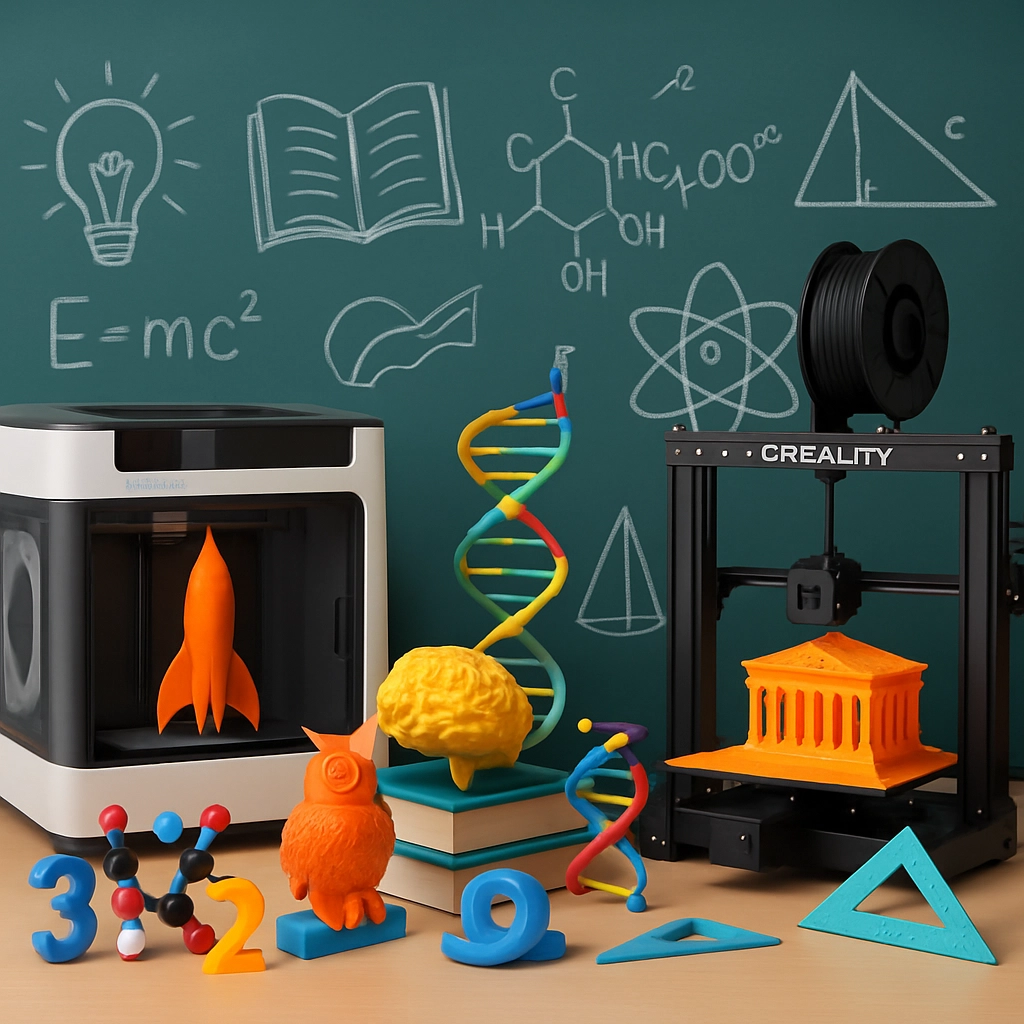
STEM Projects: Students can design and print prototypes for science projects, enhancing their understanding of engineering principles and scientific methods. Imagine a group of students designing a Mars rover model! By utilizing 3D printing, they can test and refine their designs swiftly.
-
Art and Design: In art classes, students can explore the intersection of technology and creativity. They can design intricate sculptures or functional items, allowing them to express their creativity in innovative ways. With the right software, the transition from digital design to physical object can be seamless.
-
History and Geography: How about printing historical artifacts or recreating geographical features? This can make history and geography lessons more immersive and engaging. Students could build and handle models of ancient structures or landforms, providing a tactile learning experience that textbooks simply can’t match.
-
Custom Learning Tools: Educators can create custom tools and aids that cater specifically to their lesson plans. Whether it’s anatomical models for biology students or geometry tools for math classes, tailoring learning resources can significantly enhance student engagement and understanding.
Fostering Collaboration and Problem-Solving
3D printing also nurtures collaboration among students. Many projects require teamwork, encouraging students to communicate effectively and work toward a common goal. In today’s job landscape, these soft skills are just as vital as technical skills.
Furthermore, working with a 3D printer involves troubleshooting and problem-solving when things don’t go as planned. This experience empowers students to think critically, adapt to challenges, and develop persistence. They learn that failure is part of the process—a vital lesson for future endeavors.
Inspiring the Next Generation of Innovators
As we look to the future, integrating 3D printing into education will continue to inspire creativity, innovation, and a love for learning. Bambu Lab and Creality are amplifying the voice of the next generation by providing them with the tools to express their ideas and bring them to life.
Incorporating these technologies into classrooms shows students that learning doesn’t have to be confined to traditional methods. By engaging with 3D printing, students develop a hands-on competency that equips them for future challenges—whether they’re pursuing careers in science, design, or technology.
Ultimately, 3D printing isn’t just about making objects; it’s about inspiring a mindset that sees problems as opportunities to create and innovate. In a world that values creativity more than ever, the impact of Bambu Lab and Creality extends far beyond the classroom; it shapes the innovators of tomorrow, one printed layer at a time.