
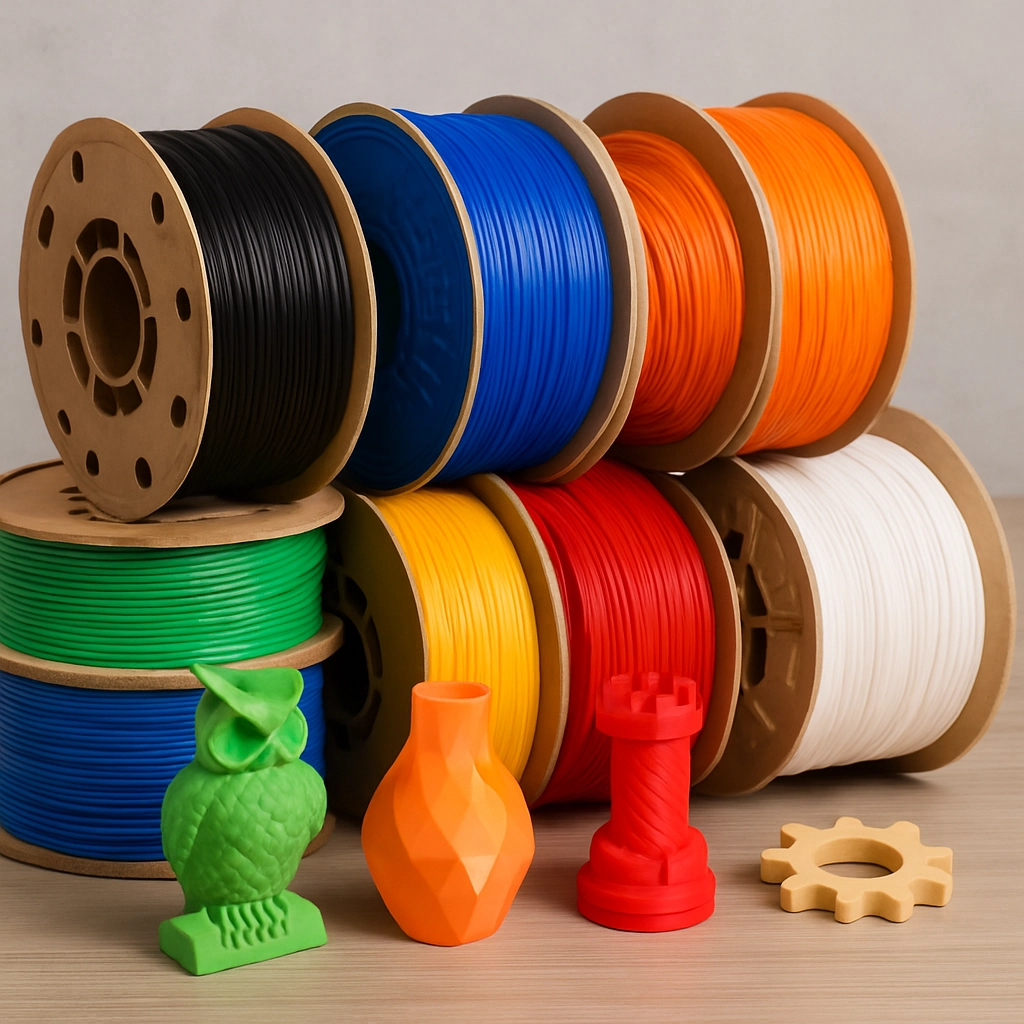

The Best 3D Filaments for Every Project
Understanding the different types of 3D filaments available can feel like stepping into a candy store—there’s just so much to choose from! Whether you’re a seasoned 3D printing pro or just starting your crafting journey, knowing which filament to use for your specific project can make all the difference in achieving the best results. From creating artistic designs to functional parts, there’s a filament suited for each need. So, let’s dive into the most popular 3D filaments and discover which one is right for your next project!
PLA: The Friendly Beginner
If you’re just dipping your toes into the world of 3D printing, PLA (Polylactic Acid) is where you want to start. This biodegradable filament is made from cornstarch or sugarcane, making it not just user-friendly, but also eco-friendly.
PLA is known for its ease of use—if you’re printing at home, it can work beautifully on almost any printer with minimal settings tweaks. Plus, you can achieve vibrant colors and a shiny finish, which makes it ideal for prototypes, gifts, or decorative objects. It’s particularly favored for small, intricate designs, as it holds details exceptionally well. The only downside? PLA tends to be less heat-resistant, so keep that in mind if your project will be exposed to high temps.
ABS: The Tough One
For projects that demand strength and durability, ABS (Acrylonitrile Butadiene Styrene) is a champion. This robust filament is commonly used in a variety of industries, from automotive to consumer products.
ABS is perfect for creating functional parts that need to withstand wear and tear, such as mechanical components, phone cases, or toys. It’s known for its higher heat resistance, making it a fantastic option for items that may be subject to warmth or rough usage. The only catch? ABS can warp during printing, so it’s best suited for those with a bit more experience or a printer equipped with a heated bed. Also, keep your workspace well-ventilated when printing, as the fumes can be a bit strong (and not in a good way!).
PETG: The Best of Both Worlds
If you’re looking for a middle ground between PLA and ABS, PETG (Polyethylene Terephthalate Glycol) is the way to go. Easy to print like PLA but more durable and temperature-resistant like ABS, PETG is becoming increasingly popular among 3D printing enthusiasts.
Not only is it strong and flexible, but it also has the added benefit of being resistant to moisture and chemicals, making it perfect for projects that require sturdiness, like kitchenware or outdoor tools. Plus, it adheres well to various surfaces, so forget about warping—well, mostly! It has impressive clarity and can produce beautiful transparent prints, which opens up tons of creative possibilities.
TPU: Flexibility and Rubber-like Qualities
If your project demands flexibility, look no further than TPU (Thermoplastic Polyurethane). This filament offers a unique rubber-like quality, making it great for prints that need to be both durable and bendable, such as phone cases, wearables, or gaskets.
Printing with TPU can be a bit tricky since it tends to be more flexible than other filaments, meaning it can sometimes get stuck in the extrusion system if you’re not careful. However, when properly printed, the results can be incredibly rewarding. Its elasticity gives you the freedom to create something that has a unique, tactile quality—perfect for specialized designs!
Nylon: The Heavyweight Champion
For those projects that require the ultimate strength, Nylon could be your best bet. This filament boasts impressive durability and flexibility but has a steep learning curve, making it better suited for advanced users.
Nylon is great for industrial applications where strength really matters, such as gears, bearings, and even clothing. It’s also naturally water-resistant, though it can absorb moisture, so proper storage is essential to keep it in good shape. Its adaptability truly shines when you need parts that can endure stress and strain.
Conclusion
Choosing the right 3D filament can elevate your project from good to outstanding. Whether you want to create beautiful decorative pieces, functional parts, or flexible components, there’s a filament tailor-made for your vision. As you experiment with each type, you’ll discover your favorites and perhaps even develop a unique style. So, grab your printer, select your filament, and let your creativity flow. Happy printing!