


The Future of Printing: Innovations in 3D Technology
When you think about printing, what comes to mind? Perhaps it’s your trusty inkjet churning out your latest reports, or maybe those sleek brochures you got for a big event. But wait—there’s a whole new world of printing that’s turning the conventional idea on its head, and it’s called 3D printing. From revolutionizing manufacturing to creating jaw-dropping art pieces, 3D printing is shaping the future, one layer at a time.
The Basics of 3D Printing
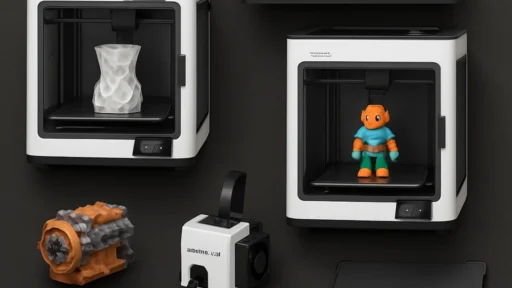
At its core, 3D printing, or additive manufacturing, is the process of creating three-dimensional objects from a digital file. The process involves laying down successive layers of material until the final shape is complete. You might be picturing large machines humming away in factories, but there are now 3D printers available for personal use that can fit right on your desk!
Different materials can be used in 3D printing, ranging from plastics and metals to ceramics and even food. That’s right—people are literally printing everything from geeky collectibles to gourmet pizza!
Innovations Shaping the Future of 3D Printing
As technology evolves, so does the 3D printing landscape. Here are some exciting innovations that are redefining what’s possible.
1. Enhanced Speed and Efficiency
One major drawback of traditional 3D printing has always been speed. However, advancements such as Continuous Liquid Interface Production (CLIP) have dramatically boosted printing speeds. By utilizing light and oxygen to create layers continuously rather than one at a time, companies can produce parts in mere minutes instead of hours or days. This could be a game-changer for industries that rely on rapid prototyping.
2. Bioprinting: A Glimpse into Medicine’s Future
Imagine a world where organs can be custom-made for transplant patients—science fiction, right? Not anymore! Bioprinting is revolutionizing the medical field by using living cells to print tissues and even organs. Although we are still in the experimental phase, researchers are already printing patches of skin for burn victims and creating simpler structures to test drug efficacy. The potential for solving organ donation shortages or improving personalized medicine is staggering.
3. Sustainability Through 3D Printing
With a growing focus on sustainability, 3D printing is also stepping up. Traditionally, manufacturing processes can generate a lot of waste. In contrast, 3D printing is additive, meaning materials are only used where needed. Moreover, innovative bioplastics and recycled materials are being developed for use in 3D printers. Imagine replacing plastic straws or single-use items with printed alternatives that are both eco-friendly and tailored to your specifications!
4. Customization Like Never Before
We live in a world that craves uniqueness, and 3D printing caters to that desire beautifully. Whether it’s creating custom-fit eyeglasses, jewelry designed just for you, or home decor pieces that fit your style, 3D printing allows for high levels of personalization. In the design world, this means breaking free from mass production’s limitations and exploring what true bespoke craftsmanship can look like.
5. 3D Printed Housing
As urban populations swell and the need for affordable housing rises, 3D printing is stepping up to the plate with innovative construction techniques. With machines capable of printing entire homes in a matter of days, this technology holds the promise of reducing construction time and costs while minimizing waste. Companies are already creating prototype homes that are not only eco-friendly but aesthetically pleasing. It’s a win-win!
6. Education and Accessibility
3D printing technology is becoming increasingly accessible, not just for businesses but also for schools, hobbyists, and anyone with a curious mind. Makerspaces and educational programs are popping up worldwide, allowing individuals to learn and experiment with 3D design and printing. This democratization of technology means that more people can unleash their creativity, potentially leading to the next big innovation we haven’t even dreamt up yet.
Imagining the Future
So what’s next for 3D printing? While it’s impossible to predict every twist and turn, one thing is clear: we’re on the brink of an exciting era. Innovations are constantly emerging, and as we embrace this change, it’s crucial to remain mindful of the implications—both positive and negative—that come along with it.
As we delve deeper into the world of 3D printing, we might just discover that it’s not just a new way to print but a whole new way to think about the relationship between design, manufacturing, and sustainability. Who knows? Your next favorite item or even a groundbreaking medical breakthrough could be 3D printed, personalized, and entirely unique—just like you!