



The Evolution of 3D Filament Technology: What’s Next?
3D printing has come a long way since its inception, evolving from a niche hobby into a revolutionary technology that’s transforming industries. A significant player in this journey has been the development of 3D filament technology. As we delve into the history and future prospects of 3D filaments, it’s exciting to consider just how far we’ve come and where we’re headed.
A Brief History of 3D Filament
To understand the evolution of 3D filament technology, let’s rewind to the early days of 3D printing. The first material used in 3D printing was a photopolymer resin, typically employed in stereolithography. While effective, this was a cumbersome process, and the materials available were limited. The landscape changed dramatically with the introduction of Fused Deposition Modeling (FDM) technology developed by Stratasys in the 1980s. FDM utilized thermoplastics that melted when heated and solidified upon cooling. This breakthrough led to the birth of various filament types, most notably PLA (Polylactic Acid) and ABS (Acrylonitrile Butadiene Styrene).
PLA became the go-to choice for beginners. It’s derived from renewable resources like corn starch, making it a biodegradable option—perfect for eco-conscious creators. ABS, on the other hand, gained popularity for its toughness, but it required specific conditions to print successfully due to its tendency to warp.
Diversification of Materials
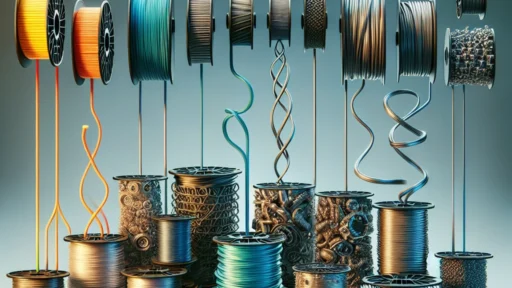
Fast forward to today, and the filament market is a kaleidoscope of materials, each boasting unique properties tailored to specific applications. Beyond PLA and ABS, enthusiasts now have access to a range of specialty filaments—including PETG, Nylon, TPU (Thermoplastic Polyurethane), and even composites infused with wood, metal, and carbon fibers.
This diversification has not only fueled creativity among makers and engineers but has also opened up avenues for industrial applications. For instance, Nylon is favored for its strength and flexibility, making it ideal for functional prototypes. Meanwhile, materials like carbon fiber-reinforced filaments offer significant strength-to-weight ratios, appealing to professionals in automotive and aerospace sectors.
The Role of Accessibility and Customization
Accessibility has played a crucial role in the evolution of 3D filaments. With the advent of affordable 3D printers, a growing community of makers and hobbyists has flocked to the technology. In response, filament manufacturers have made significant strides to provide high-quality materials at lower prices. Furthermore, a vibrant ecosystem of online resources has sprung up: tutorials, user reviews, and troubleshooting forums make it easier than ever for newcomers to pick up the craft.
Customization is another trend that’s taking the filament world by storm. Innovative companies now offer filament on request, allowing users to specify colors, blends, and even materials tailored to their specific needs. This level of personalization is revolutionizing product development and propelling new ideas forward.
What’s Next for 3D Filament Technology?
Looking to the future, several exciting trends are emerging that have the potential to shape the next phase of 3D filament technology.
Biodegradable and Sustainable Options
As environmental concerns take center stage, there is a growing demand for eco-friendly filaments. Companies are actively exploring biomaterials beyond PLA, developing composites that blend natural fibers with thermoplastic resins. These advancements aim to minimize the carbon footprint associated with 3D printing, making the process even more sustainable.
Smart Filaments and Embedded Technology
Imagine filaments that can sense and respond to their environment. Research is ongoing into so-called "smart" filaments, which may contain sensors or conductive materials. These advancements could enable the printing of objects that can monitor temperature, pressure, or even light—opening doors to innovative applications in health care, robotics, and consumer electronics.
Enhanced Printing Techniques
Enhanced printing techniques, including multi-material and gradient material printing, are poised to add another layer of complexity and potential to filament usage. These methods allow for the combination of different materials in a single print, resulting in objects that possess diverse properties that can be tailored for specific functionalities.
Community Collaboration
Finally, the DIY fabrication community is likely to continue driving innovation in filament technology. Platforms that allow users to share filament designs and recipes can foster a culture of experimentation, leading to new materials and techniques developed collaboratively.
As we ponder the future of 3D filament technology, it becomes evident that the journey is only just beginning. With creativity, innovation, and a focus on sustainability at the forefront, we’re on the brink of an era where the possibilities of 3D printing are limited only by our imaginations. Whether for personal tinkering or high-tech applications, the only constant is change—making the future of 3D filament technology a thrilling frontier to watch.