

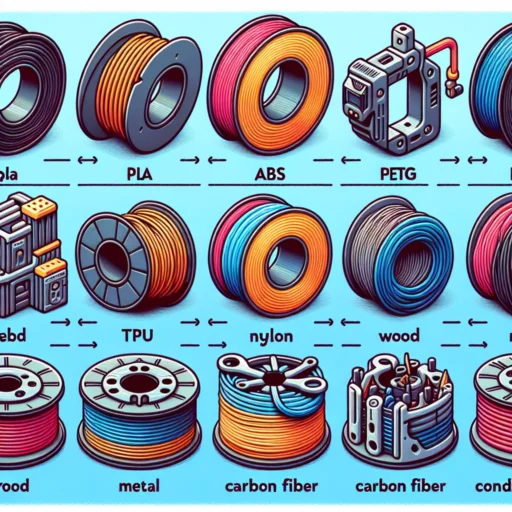


Top 10 3D Filament Types You Should Know About
If you’ve dipped your toes into the world of 3D printing, you’re likely aware that the type of filament you use can make or break your project. With so many options out there, it can be both thrilling and a bit overwhelming. Fear not! Whether you’re a seasoned pro or just starting out, let’s break down the top 10 filament types you should know about, spotlighting their unique properties and potential uses.
1. PLA (Polylactic Acid)
Let’s start with the rock star of 3D printing: PLA. This biodegradable filament is a favorite for newbies because it’s easy to work with, requires low printing temperatures, and produces good detail. Plus, it’s made from renewable resources like cornstarch. However, it does have a lower heat resistance, so keep that in mind if you’re planning on printing items that might get hot.
2. ABS (Acrylonitrile Butadiene Styrene)
ABS is what many of us think of when we envision 3D printing. Known for its toughness and impact resistance, it’s the same material used in LEGO bricks! This filament requires a bit more finesse to print, often needing a heated bed and a well-ventilated area (due to fumes). If you’re after durable parts or prototypes, ABS is a solid choice.
3. PETG (Polyethylene Terephthalate Glycol-modified)
If you’re looking for something that balances ease of use and durability, look no further than PETG. This filament is strong, flexible, and resistant to impact and moisture. A bonus? It’s food safe! While it’s slightly trickier to print than PLA, many find the results worth the effort, especially for functional items and containers.
4. TPU (Thermoplastic Polyurethane)
Need something flexible? TPU is your best buddy. This rubbery filament is great for printing parts that require elasticity, like phone cases, toys, or intricate designs that need to bend without breaking. Just a heads up, though: TPU can be a bit challenging to work with due to its flexible nature, which can sometimes lead to feeding issues on standard printers.
5. Nylon
Nylon is known for its incredible strength and flexibility, making it ideal for functional parts that undergo a lot of wear and tear. It can be a bit tricky to print with, as it absorbs moisture easily, which can lead to warping. However, if you’re looking to create robust gears, mechanical parts, or even durable tools, nylon is worth considering.
6. ASA (Acrylonitrile Styrene Acrylate)
If you love ABS but want something that holds up better against UV exposure and weathering, ASA is your answer. Perfect for outdoor applications, it provides similar mechanical properties to ABS while being better able to handle the elements. Think outdoor utility boxes or automotive parts that need to withstand sun exposure.
7. HIPS (High Impact Polystyrene)
HIPS is gaining popularity as both a printing material and a support material for ABS prints. Its low absorption rate of moisture makes it easy to work with, and it has good impact resistance too. Plus, HIPS can be dissolved in limonene, which makes removing supports a breeze!
8. PVA (Polyvinyl Alcohol)
Speaking of supports, here comes PVA – the golden standard for water-soluble support material. It’s perfect for complex prints with overhangs, and once your primary print is complete, you simply soak the PVA in water to remove the support structures. It’s biodegradable and non-toxic, which is an added bonus!
9. Carbon Fiber Filament
For those looking to go high-performance, carbon fiber filaments are a dream come true. These filaments combine traditional materials like PLA or nylon with tiny strands of carbon fiber, creating incredibly strong and lightweight prints. It’s often used for making parts that need to withstand stress while keeping the weight down. Just remember that they require a hardened nozzle to prevent wear.
10. Wood Filament
For a unique aesthetic, wood filament is your go-to choice. Made from a mix of PLA and wood particles, it allows you to achieve a natural wood appearance in your prints. This filament is great for decorative pieces, and many users love the smell when printed! Keep in mind that you may need to tweak your printer settings to achieve the best results.
From the beginner-friendly PLA to the specialized carbon fiber filaments, there’s a world of options out there for every project. Understanding the unique properties of each filament type can help you choose the right material for your specific needs. Whether you’re crafting intricate prototypes or just having fun with designs, each filament brings its own flair to the table. Happy printing!


