
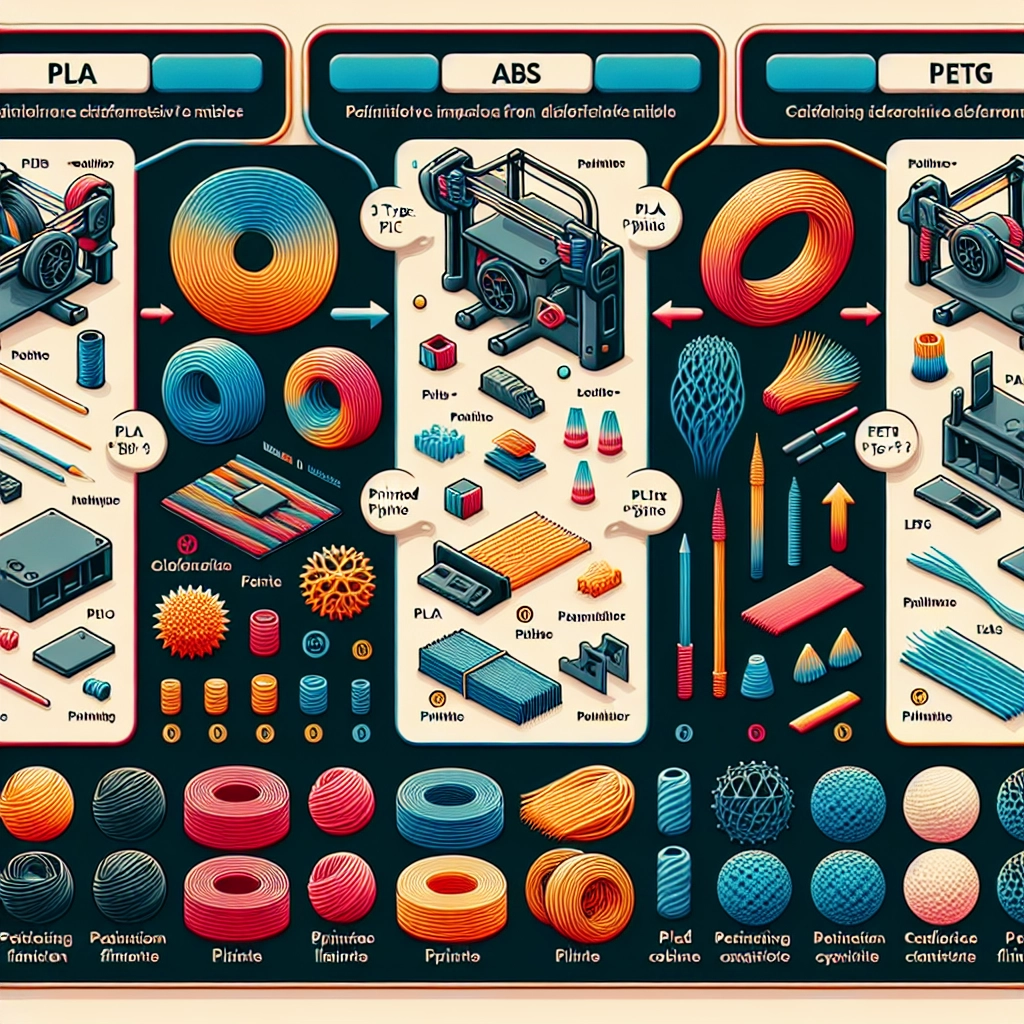

When you dive into the world of 3D printing, one of the most exciting—and sometimes overwhelming—decisions you’ll face is choosing the right filament. With a vast array of materials out there, it’s easy to get bogged down in details. Today, let’s break down three of the most popular filaments: PLA, ABS, and PETG. Each has its pros and cons, and by the end, you’ll have a good sense of which one is right for your 3D printing project.
PLA (Polylactic Acid)
Right off the bat, PLA comes out swinging as the most user-friendly filament. Made from biodegradable materials like cornstarch, it’s an eco-conscious choice for those who care about the environment and want a guilt-free printing experience.
Pros:
- Easy to Print: If you’re a newbie, PLA is your friend. It sticks well to the print bed and is forgiving of a range of printing conditions. You can even get away with printing without a heated bed (although it helps).
- Low Odor: Compared to other filaments, the smell is pretty mild—sweet, even—making it a great option for home printing.
- Detail and Finish: PLA generally produces prints with excellent detail and a smooth surface finish, making it perfect for intricate designs and prototypes.
Cons:
- Heat Sensitivity: PLA has a low glass transition temperature, meaning it doesn’t fare well in heat. If you leave a PLA print in a hot car, you might find it bending or warping.
- Brittleness: While it’s great for most applications, PLA can be a bit fragile, especially for functional parts.
PLA is great if you’re creating decorative items or prototypes that won’t face too much stress. Think of it like the dependable first car: easy to handle and great for getting you where you need to go.
ABS (Acrylonitrile Butadiene Styrene)
Next up is ABS, the go-to filament for many seasoned 3D printing veterans. If you’re after toughness, this one might be calling your name.
Pros:
- Durable and Strong: ABS is incredibly strong and can withstand higher temperatures without deforming. This makes it an excellent choice for functional parts and prototypes.
- Post-Processing: One of the highlights of working with ABS is the ability to smooth out parts with acetone vapor, giving your prints a polished look.
- Good Layer Adhesion: Prints with ABS tend to bond well, making it less likely to suffer from layer separation.
Cons:
- Fumes: ABS does emit strong fumes while printing, so it’s essential to have good ventilation, or better yet, a printer with an enclosure.
- Warping: It’s notorious for warping if not printed with the right conditions, so a heated bed is almost a requirement, along with a good enclosure to maintain temperature.
Using ABS is like stepping into the rugged world of off-roading: you need to be prepared and equipped, but the rewards can be significant.
PETG (Polyethylene Terephthalate Glycol)
Finally, we have PETG, a bit of a middle-ground filament that combines the best aspects of PLA and ABS. If you’re looking for versatility, PETG offers a great balance of ease and durability.
Pros:
- Resistance and Durability: PETG is strong, and its flexibility makes it less prone to snapping or breaking than PLA. It also has excellent chemical and moisture resistance.
- Fewer Fumes: While it might not be odorless like PLA, PETG emits fewer fumes compared to ABS, making for a more pleasant printing experience.
- Easy to Print: It has good adhesion to the print bed (less warping than ABS) and is relatively simple to work with.
Cons:
- Stringing: Depending on your settings, PETG can produce stringing between features. A bit of tinkering may be required to achieve a clean print.
- Surface Finish: While it adheres well, the surface finish may not have the same crispness as PLA.
PETG is like the versatile friend who’s always down for an adventure. It can handle both casual outings and more demanding tasks, making it an excellent all-around option for various projects.
So, Which One Should You Choose?
Choosing between PLA, ABS, and PETG ultimately comes down to what you’re planning to print. If you’re just starting or working on aesthetic models, PLA is your best bet. For more durable and functional full-fledged projects that need to withstand wear, ABS is your top pick. If you want something in between—durable, easier to print than ABS, and with fewer chemical concerns—then PETG is where you should land.
No matter which filament you choose, there’s a whole world of creativity waiting for you. Get out there, experiment, and most importantly, enjoy the process of bringing your ideas to life! Happy printing!