
Material Spotlight: The Best Filaments for Your 3D Printer
In the thrilling world of 3D printing, the magic often lies in the materials we use. Whether you’re a seasoned maker or a curious beginner, picking the right filament can make all the difference in the success of your project. With so many options available, each boasting unique properties and intended applications, it’s easy to feel a bit overwhelmed. Fear not—as we delve into the best filaments for your 3D printer, we’ll help clarify some of your choices and tips for getting the most out of your 3D printing experience.
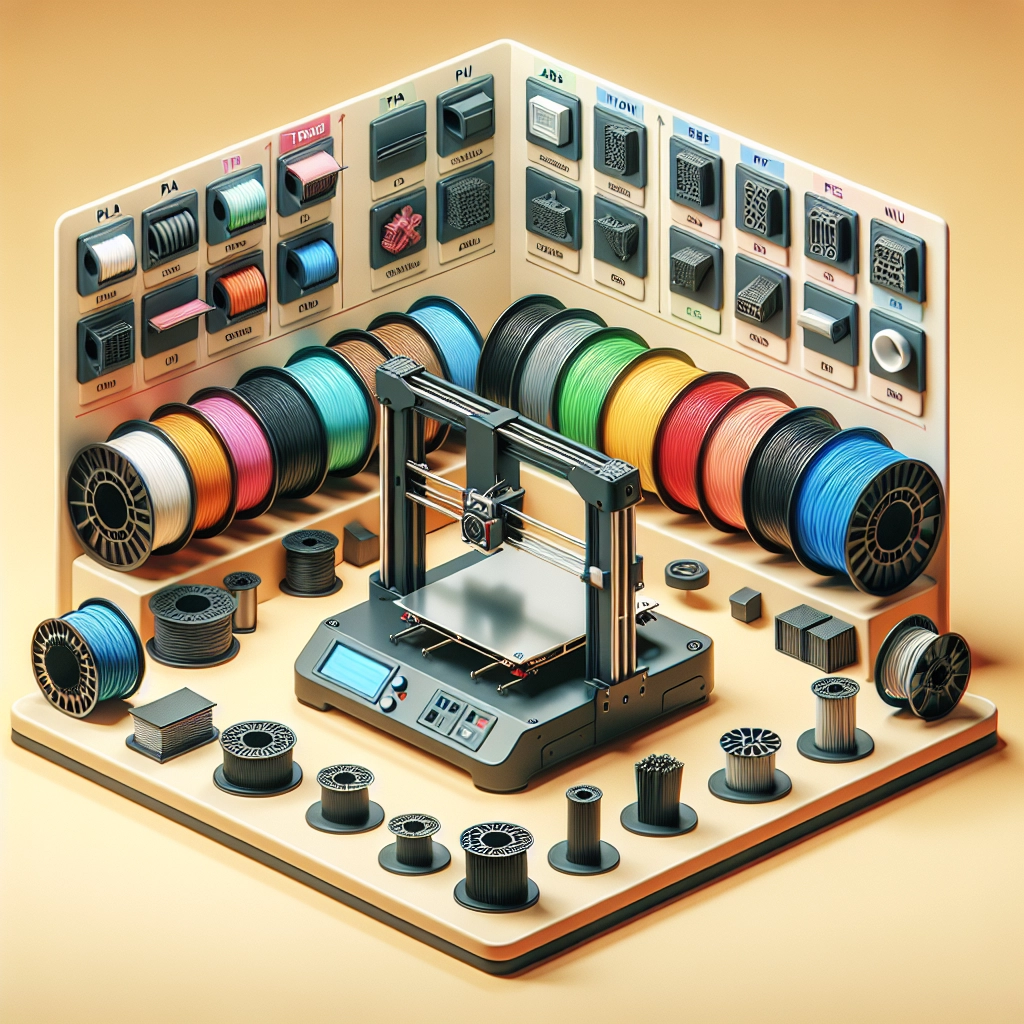
PLA (Polylactic Acid)
Starting off strong, we have PLA, the hero of the beginner’s printing journey. PLA is a biodegradable filament made from natural resources like corn starch and sugarcane. It’s incredibly popular for a reason: it’s easy to print with, has a low likelihood of warping, and comes in a rainbow of vibrant colors.
If you’re new to 3D printing, PLA is your best companion. It holds detail beautifully and adheres well to the print bed, making it a reliable choice for intricate designs. What’s more, it gives off a sweet, almost candy-like smell when extruding, which is a pleasant bonus! However, it is worth noting that PLA isn’t the best choice for high-temperature applications or outdoor use, as it can become soft under heat.
ABS (Acrylonitrile Butadiene Styrene)
If you’re looking for durability, ABS is the heavy-lifter you want on your side. Known for its impressive toughness and heat resistance, ABS is frequently used in industrial and commercial applications. Think of LEGO bricks and car parts—yep, they’re often made from ABS.
While ABS does offer great resilience, it can be a bit tricky for beginners. It has a tendency to warp, so it’s best printed with a heated bed and in a well-ventilated area due to fumes that can be released during printing. However, once you perfect your technique, this filament can yield sturdy and functional pieces that can stand up to wear and tear.
PETG (Polyethylene Terephthalate Glycol-Modified)
Moving along, we arrive at PETG, which is a favorite for those seeking the best of both worlds—it’s a savvy mix of PLA’s ease of use and ABS’s toughness. PETG is known for its good adhesion during printing and its resistance to impact and various chemicals. It’s also food-safe when printed correctly, making it a hit for containers and other kitchen-related projects.
One of the standout features of PETG is its incredible layer bonding, which translates to high-quality prints with less need for post-processing. If you’re someone who falls somewhere in between a novice and seasoned user, PETG might just be your go-to filament.
TPU (Thermoplastic Polyurethane)
For those venturing into flexible printing, TPU is the way to go. This filament opens up a realm of possibilities in creating soft, rubber-like objects. From phone cases to wearable tech, TPU is incredibly versatile.
However, printing with TPU does come with its challenges. The flexibility can make it a bit tricky to feed through standard print heads, so having a direct drive extruder can significantly improve your experience. Once you get the hang of it, you’ll be able to produce some truly innovative designs that combine function and adaptability.
Nylon
Now, let’s talk about Nylon, the underdog of 3D printing materials. Known for its strength and flexibility, it’s often favored in industrial settings for functional parts. Nylon has excellent durability and wear resistance, making it perfect for items that will see heavy use, like gears or mechanical parts.
That being said, Nylon can be a bit temperamental—requiring higher temperatures and more moisture control. It’s hygroscopic, meaning it absorbs moisture from the air, so proper storage is essential to avoid print failures. But if you’re patient and willing to put in the effort, Nylon can yield fantastic results.
Explore and Experiment
With so many options at your disposal, the best filament for you ultimately depends on your specific project needs, your level of experience, and what you hope to achieve. Whether you’re crafting delightful decorations with PLA, engineering top-notch prototypes with ABS, or creating flexible designs with TPU, each filament opens up a world of creativity.
So, dive in, explore, and don’t be afraid to experiment. Each print is a chance to learn and refine your skills. Happy printing!