
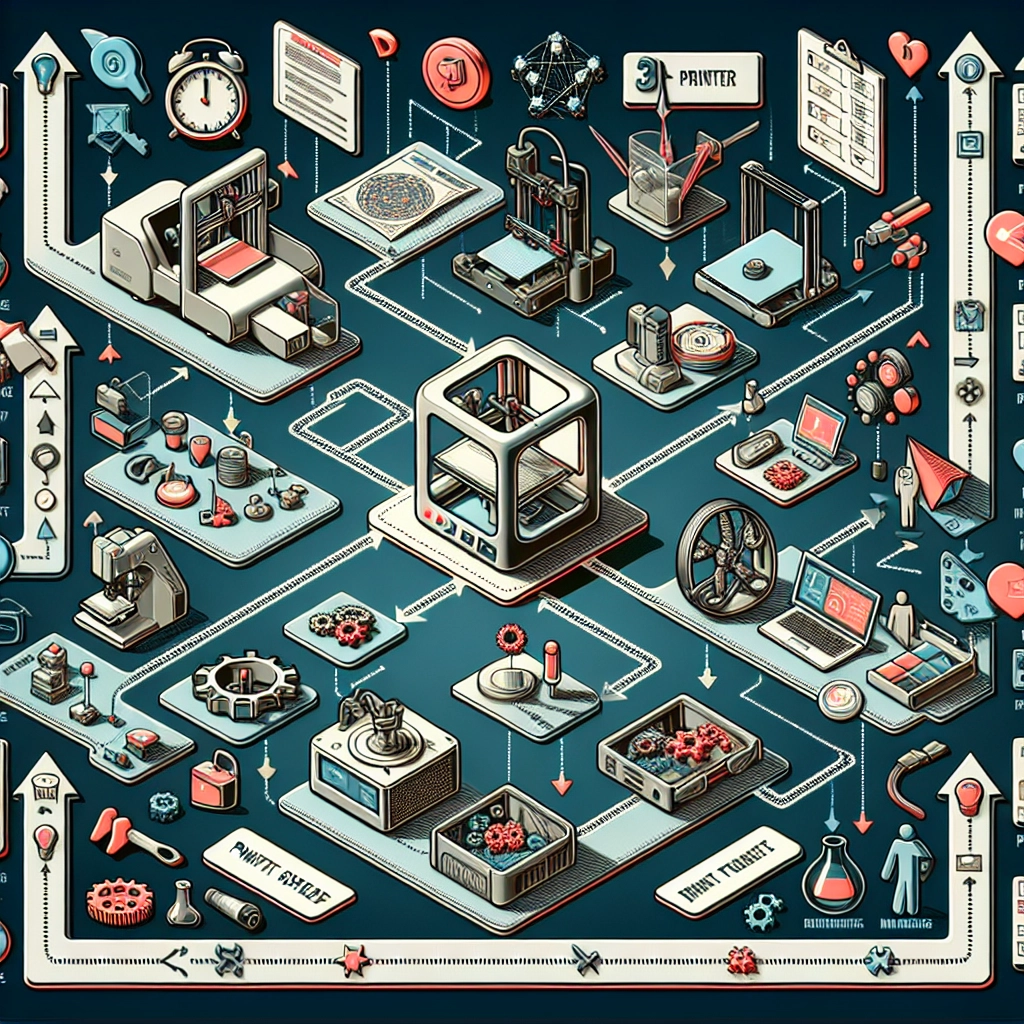

How to Choose the Right 3D Printer for Your Needs
Choosing the right 3D printer can feel like navigating a maze, especially when you’re faced with countless options that all seem to promise the world. Whether you’re a hobbyist, a professional, or simply someone curious about the magic of 3D printing, it’s essential to determine which printer best suits your needs. So, let’s dive in and explore what you need to consider before clicking “buy.”
Understand Your Purpose
Before you even look at models and specifications, it’s vital to pinpoint why you want a 3D printer in the first place. Are you interested in creating small models for fun, or are you looking to produce functional prototypes for a business? Perhaps you’re a parent wanting to dive into STEM projects with your kids. Understanding your primary goal will help narrow down the options.
Types of 3D Printing
Most 3D printers fall into specific categories based on their technology:
-
Fused Deposition Modeling (FDM): This is the most common method, where melted plastic is extruded layer by layer. It’s user-friendly and perfect for beginners.
-
Stereolithography (SLA): This technology uses a laser to cure resin into a solid. SLA printers often produce highly detailed pieces but can be messier and more challenging to work with.
-
Selective Laser Sintering (SLS): Similar to SLA but often used for industrial applications. It uses a laser to fuse powdered material, providing strong and durable prints.
Considering which method aligns with your intended projects is a critical first step in the decision-making process.
Budgeting Wisely
The price range for 3D printers can swing from a few hundred to several thousand dollars. Setting a budget will help focus your search. Remember to account for the ongoing costs—materials (like filament or resin), maintenance, and upgrades can add up.
If you’re just starting out, consider investing in an entry-level FDM printer, which will likely be more affordable and forgiving for beginners. As you become more familiar with the technology, you can always upgrade later.
Print Volume
Think about the size of the objects you want to create. Each printer has a maximum build volume, and if you plan on printing larger models, ensure the printer can accommodate that. On the other hand, if you’re mostly focusing on small to medium projects, a compact model will suffice, saving you space and potentially money.
Material Compatibility
Different 3D printers work with different types of materials. Most FDM printers use thermoplastics like PLA and ABS, which are relatively affordable and easy to use. If you’re interested in more advanced materials, like flexible filaments or specialty resins, you’ll need a printer that supports these options.
Research the materials you plan to use and make sure your potential printer can handle them well. Printing with the wrong material can lead to frustrating results.
Print Quality and Speed
It’s all well and good to have a feature-rich printer, but print quality and speed are where the magic happens. Look for reviews or user experiences to get an idea of what to expect. Generally, printers that offer adjustable settings can provide better quality, allowing you to fine-tune according to the complexity of your projects.
Speed is another consideration—some printers can churn out models quickly, but this may come at the expense of detail. If accuracy is crucial for your projects, it’s worth investing in a machine that prioritizes quality over speed.
Community and Support
Lastly, consider the support and community around the printer you choose. A strong support network can make a significant difference, especially for beginners. Forums, online groups, and customer support can provide immediate assistance and a wealth of shared experiences. Opt for a brand that is known for good customer service and has an active community.
Final Thoughts
In summary, choosing the right 3D printer boils down to understanding your needs, budget, and preferences. Once you have a clear picture, you’ll be well on your way to finding a printer that not only fits your requirements but also inspires creativity. Don’t be afraid to ask questions, read reviews, and even reach out to current users. The right 3D printer can open up a multitude of possibilities, transforming your ideas into tangible creations. Happy printing!