

In-Depth Review: Thermoplastic Filaments for 3D Printing
3D printing has come a long way since its inception, evolving from a niche hobby to a revolutionary technology embraced by industries and individuals alike. Central to this transformation is the variety of filaments available for 3D printing, each with unique properties and applications. Among these, thermoplastic filaments stand out as incredibly versatile choices for both amateur makers and professional manufacturers. In this deep dive, we’ll explore what thermoplastic filaments are, their types, characteristics, and considerations when selecting the right one for your 3D projects.
What Are Thermoplastic Filaments?
Thermoplastic filaments are materials made from polymers that become moldable upon heating and solidify upon cooling. This property makes them ideal for 3D printing, as they can be easily extruded through a printer’s nozzle and then shaped into complex designs that harden as they cool. The adaptability of thermoplastics not only allows for intricate designs but also enables the production of functional parts suitable for a range of applications—from prototypes to end-use components.
Common Types of Thermoplastic Filaments
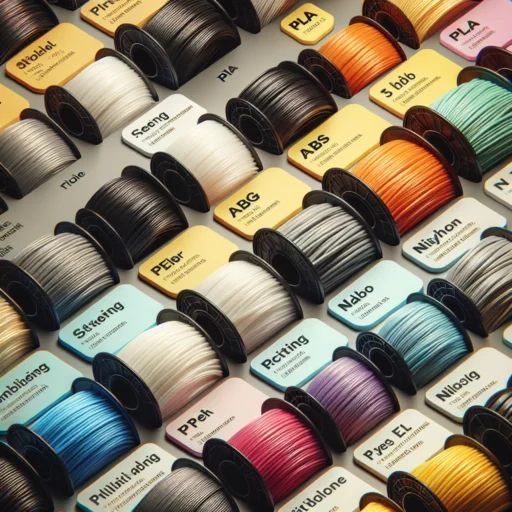
PLA (Polylactic Acid)
PLA is arguably the most popular thermoplastic filament, especially among newcomers to 3D printing. Made from renewable resources like cornstarch, PLA is biodegradable and offers excellent print quality with bright colors and a smooth finish. It is easy to work with, has a low warping tendency, and is suitable for indoor projects. However, it’s worth noting that while PLA is great for prototypes and decorative items, it may not be the best choice for functional parts subjected to heat or mechanical stress, as it tends to be more brittle than other filaments.
ABS (Acrylonitrile Butadiene Styrene)
Next up is ABS, a tougher alternative to PLA. Known for its durability and impact resistance, ABS is a common choice for functional parts and prototypes that require strength. It’s also the material used in LEGO bricks! However, printing with ABS can be a bit of a hassle— it requires higher temperatures, which means a heated bed is necessary to combat warping. Additionally, the fumes emitted during printing can be unpleasant, so proper ventilation is important.
PETG (Polyethylene Terephthalate Glycol)
If you’re looking for a filament that strikes a balance between ease of printing and strength, PETG is an excellent option. It is known for its excellent layer adhesion and flexibility, making it resistant to impact and ideal for functional applications. PETG is also food-safe and doesn’t emit harmful fumes, making it a safer choice for indoor printing. It can handle a range of temperatures and is less prone to warping compared to ABS, making it suitable for both beginners and advanced users.
Nylon
Nylon is a high-performance thermoplastic known for its strength, flexibility, and durability. It is an excellent choice for parts that need to withstand heavy loads or flex without breaking, such as mechanical components and gear systems. However, printing with nylon can be a bit tricky due to its high moisture absorption, which can lead to print failures. It often requires a heated bed and can benefit from an enclosure to maintain consistent temperatures throughout the printing process.
TPU (Thermoplastic Polyurethane)
For those seeking elastic properties, TPU is the go-to filament. It’s a flexible material that’s fantastic for creating rubber-like prints, making it perfect for items like phone cases, wearables, and other applications requiring resilience and stretchability. However, working with TPU can take some practice due to its flexibility, as it can sometimes jam in the printer nozzle if not set up correctly.
Choosing the Right Filament for Your Project
With such a variety of thermoplastic filaments available, selecting the right one for your project can seem daunting. Start by considering the following factors:
-
Purpose: Are you creating a prototype, decorative piece, or a functional part? This will help determine the strength, durability, and finish required.
-
Printer Compatibility: Ensure your 3D printer is compatible with the filament type you choose. Some materials require specialized nozzles or heating elements.
-
Ease of Use: If you’re just starting, you might want to stick with PLA or PETG, known for being user-friendly.
-
Temperature and Environment: Consider the conditions your print will be subjected to. If it needs to survive heat or mechanical stress, ABS, nylon, or PETG may be your best bets.
-
Features: Some filaments offer unique attributes, like UV resistance or food safety, which may be critical depending on your application.
Wrapping It Up
Thermoplastic filaments provide a remarkable range of options for 3D printing enthusiasts and professionals. From the biocompatibility of PLA to the rugged durability of nylon, every filament has its strengths and ideal applications. Knowing how to choose the right material can significantly enhance your 3D printing experience, allowing for creativity and innovation in projects, no matter the scale. So, whether you’re dreaming up your next creation or tackling a practical task, there’s likely a thermoplastic filament just waiting to bring your ideas to life!