


Choosing Between Direct Drive and Bowden Extruders for Your 3D Printer
When it comes to 3D printing, one of the most debated topics among enthusiasts is the choice between direct drive and Bowden extruders. Whether you’re new to the world of 3D printing or you’re a seasoned maker looking to optimize your setup, understanding the differences between these two types of extruders can make a significant impact on your printing experience and results. So, let’s dive in and explore the pros and cons of both!
What Are Direct Drive and Bowden Extruders?
To set the stage, let’s quickly clarify what we’re talking about. At the heart of 3D printing lies the extruder, which is responsible for feeding filament into the hot end of the printer, where it gets melted and deposited layer by layer to create your 3D object.
-
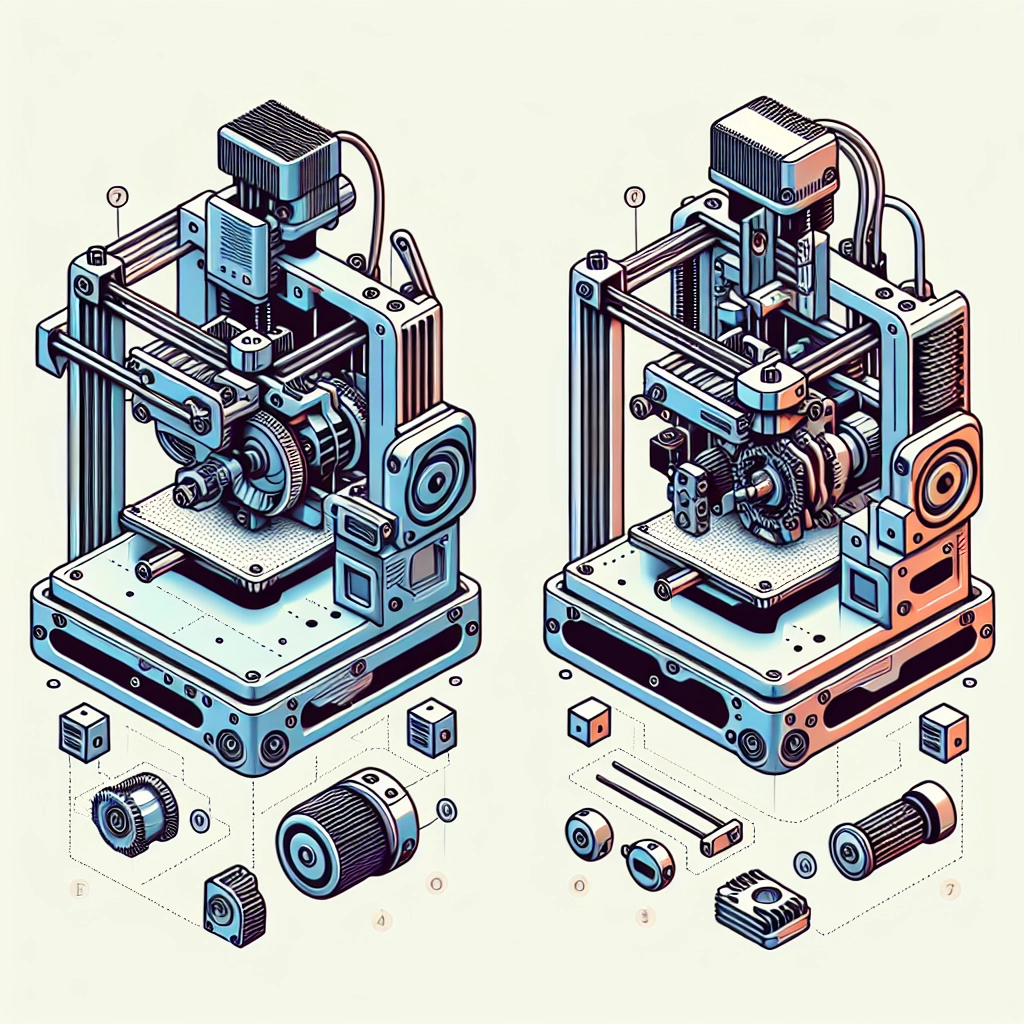
Direct Drive Extruder: In a direct drive setup, the extruder is mounted directly on the print head. The filament is pushed straight from the extruder into the hot end, which leads to less potential for flexing or misfeeding.
-
Bowden Extruder: In contrast, a Bowden extruder has the extruder body mounted away from the print head, generally nearer to the frame of the printer. The filament is fed through a tube (the Bowden tube) that guides it to the hot end, making it a bit more distance apart from the print head.
Now that we have the basics down, let’s take a closer look at the merits and disadvantages of each system.
The Sameness: What They Share
Both direct drive and Bowden systems accomplish the same fundamental task of feeding filament to the hot end and producing amazing prints. They can both print with various filament types, including PLA, ABS, PETG, and more. However, their performance does vary based on their design, and this leads us to their unique strengths.
Advantages of Direct Drive Extruders
-
Precision and Control: Because the extruder is so closely connected to the hot end, direct drives typically offer improved control over filament extrusion. This can be particularly advantageous for flexible filaments, which tend to be trickier in a Bowden setup.
-
Ideal for Flexible Filaments: If you plan on working with flexible materials like TPU, a direct drive extruder is often the better choice. The minimized distance and direct path reduce the chance of the filament bending or kinking, leading to fewer printing errors.
-
Quick Response Times: With a direct drive, there’s less lag or delay in filament feeding, meaning prints can be produced with finer detail and quicker turnaround.
Disadvantages of Direct Drive Extruders
-
Weight and Speed: The added weight of the extruder on the print head can slow down printing speeds and may limit your ability to print intricate designs at higher speeds. Some users report that heavier print heads can create artifacts in prints.
-
Limited Build Volume: Those who desire larger print sizes might find direct drive setups a bit more restrictive compared to Bowden systems.
Advantages of Bowden Extruders
-
Lightweight Setup: Since the extruder is located away from the print head, Bowden systems can be lighter in terms of dynamic weight. This often allows for higher printing speeds and smoother motion, especially for larger prints.
-
Potential for Larger Build Volumes: The design of Bowden extruders can sometimes afford you a bit more freedom with the print size and shape.
-
Minimal Retraction Issues: The longer distance from the hot end in a Bowden extruder setup typically means less stringing, making it easier to achieve cleaner prints overall, especially when set up correctly.
Disadvantages of Bowden Extruders
-
Flex Filament Challenges: For those interested in printing flexible materials, Bowden setups can be problematic, as the filament can bend within the tube, resulting in jams and failures.
-
Delayed Response: The longer path from the extruder to the hot end can sometimes lead to lags in filament feeding, which can compromise print quality and precision if not properly calibrated.
Making the Right Choice
Ultimately, the decision between direct drive and Bowden extruders often comes down to personal preference and specific project needs. Are you aiming to print intricate designs with flexible filaments? A direct drive might be your best bet. Do you want to push the speeds with larger, more rigid prints? A Bowden extruder might fit the bill.
As you weigh your options, consider your typical printing projects, the materials you plan to use, and your printer’s capabilities. No matter the choice you make, both direct drive and Bowden extruders can produce impressive results when paired with the right setup and care. Happy printing!


