


Top 10 3D Filaments for Every Project
3D printing has taken the world by storm! It’s amazing to see how this technology has transformed creativity and invention, allowing us to turn our ideas into physical realities. However, one key component determines whether a 3D project soars to new heights or flops flat: the filament. Choosing the right filament can be daunting with so many options on the market today. To make your decision easier, I’ve put together a list of the top 10 3D filaments suitable for various projects, from hobbyists to professionals.
1. PLA (Polylactic Acid)
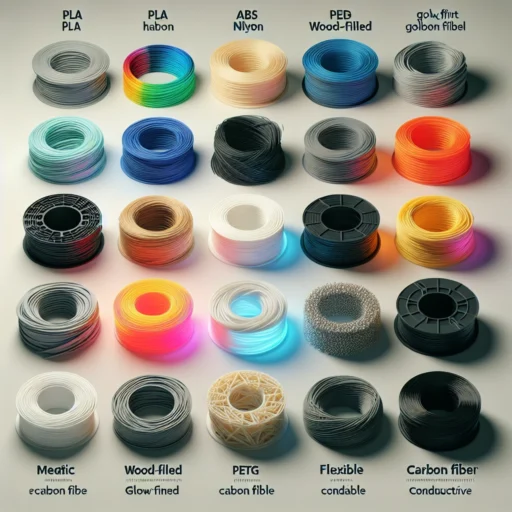
PLA is the go-to filament for most beginners and seasoned 3D printing enthusiasts alike. Made from renewable resources like cornstarch or sugarcane, it’s an eco-friendly option. PLA is easy to use, produces minimal odors, and comes in a rainbow of colors. It’s perfect for creating toys, decorative items, and prototypes. Just keep it away from high temperatures, as it can warp.
2. ABS (Acrylonitrile Butadiene Styrene)
ABS is stronger and more durable than PLA, making it ideal for functional parts, like phone cases or mechanical components. It has better thermal resistance, which is why many professional-grade prints use ABS. However, it tends to emit fumes while printing, so it’s best to use it in a well-ventilated area or with an enclosure on your 3D printer.
3. PETG (Polyethylene Terephthalate Glycol)
Combining the best of both PLA and ABS, PETG is a favorite for many intermediate users. It offers excellent layer adhesion and is food safe, making it suitable for kitchenware. PETG is also known for its impact resistance and flexibility, so it’s perfect for creating protective equipment or mechanical parts.
4. TPU (Thermoplastic Polyurethane)
If you’re looking for flexibility, TPU is your best friend! This filament is rubber-like, making it excellent for prints that need to bend or stretch. Think phone cases, gaskets, or even custom shoes. However, TPU can be tricky to print with, so it’s recommended that you have a good understanding of your 3D printer’s settings before diving in.
5. Nylon
Nylon is a strong, durable filament known for its toughness. It’s great for functional prototypes or mechanical parts that require flexibility and strength. However, it absorbs moisture quickly, so you’ll have to store it in a dry place, and the printing process can be a bit finicky if you’re not accustomed to it.
6. ASA (Acrylonitrile Styrene Acrylate)
If you want the robustness of ABS but need extra UV resistance, ASA is your answer. This filament is often used for outdoor applications thanks to its ability to withstand the elements. It’s perfect for garden tools or outdoor signage. Just like ABS, it does emit fumes, so safety precautions are necessary.
7. HIPS (High Impact Polystyrene)
HIPS is commonly used as a support material for ABS prints because it can be dissolved in limonene. However, it’s also a great standalone filament thanks to its light weight and toughness. It’s perfect for models, texturing, or prototyping due to its smooth finish and ease of use.
8. Wood Fill Filament
This unique filament combines PLA with wood fibers, allowing you to print projects that look and feel like real wood. Imagine creating beautiful furniture pieces or intricate decorative items that you can stain or sand just like real wood! It offers a warm, natural finish, making your prints feel extra special.
9. Metal Fill Filament
For projects that need to shine, metal-fill filaments (like bronze or copper) are fantastic. Combining PLA with metal powders, this filament allows you to create parts with a striking metallic finish that can be polished for an even more luxurious appearance. Great for jewelry or artistic sculptures!
10. Carbon Fiber Reinforced Filament
For those heavy-duty projects, carbon fiber reinforced filaments can’t be beaten. They’re composed of a base polymer (like nylon) combined with tiny carbon fibers, making them incredibly strong and lightweight. Perfect for drone parts, tool handles, or performance racing car components!
In the world of 3D printing, the choice of filament plays a pivotal role in the success of your project. Each filament has its unique characteristics and is suited for different applications, whether that’s a simple toy, a functional prototype, or a sculptural masterpiece. By understanding the various options available, you’ll be well-equipped to choose the perfect filament for your next endeavor. So go ahead, unleash your creativity, and happy printing!