
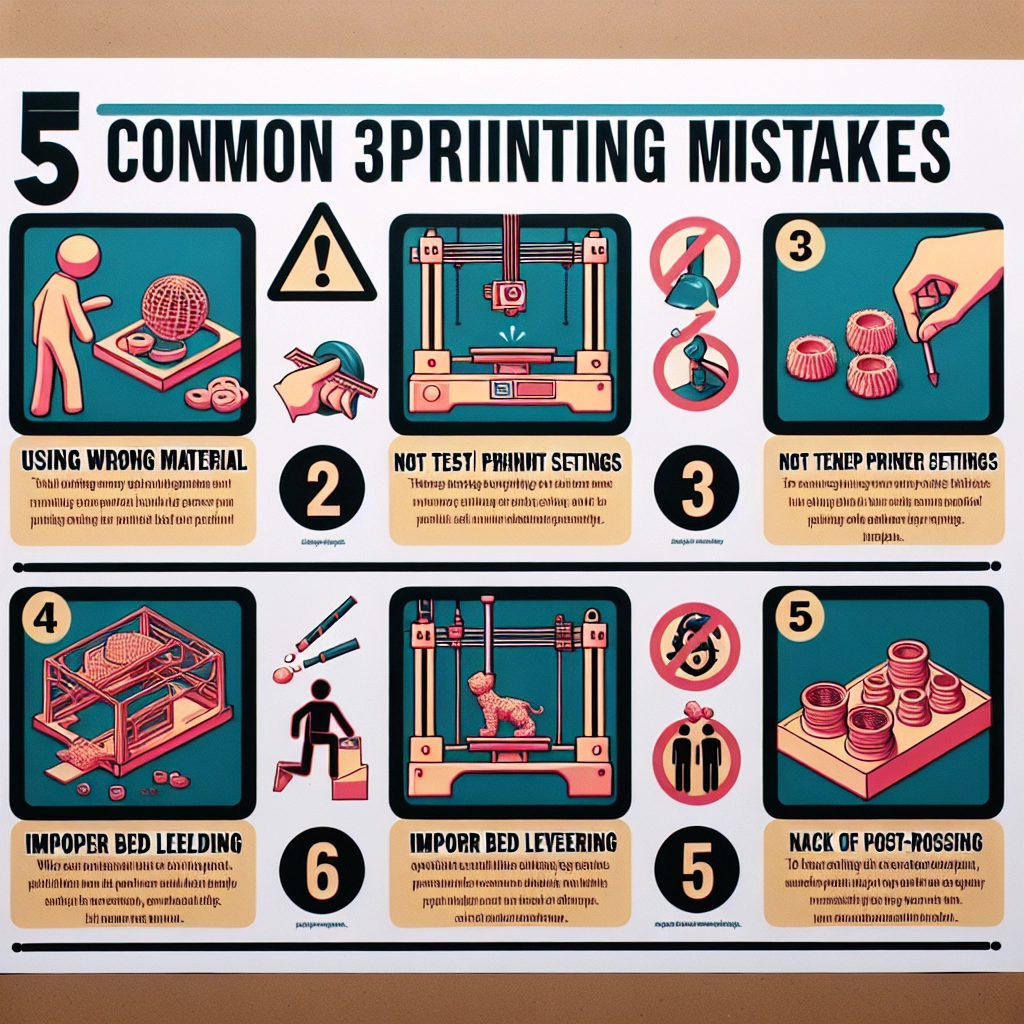

5 Common 3D Printing Mistakes and How to Avoid Them
3D printing is an exciting technology that opens up a world of creative possibilities, whether you’re printing a one-off prototype, crafting a unique gift, or diving into complex engineering projects. However, stepping into the realm of 3D printing can sometimes feel like navigating a labyrinth, especially for beginners. Many aspiring makers encounter common pitfalls along the way. Let’s explore five frequent mistakes and how to avoid them so you can bring your ideas to life with confidence!
1. Poor Bed Adhesion
One of the most frustrating challenges in 3D printing is when your print doesn’t stick to the build plate. This can lead to warping or failed prints, which is enough to make anyone pull their hair out! The root cause often stems from an uneven print bed or improper temperature settings.
How to Avoid It:
Ensure that your print bed is leveled correctly before starting. Many printers come with auto-leveling features, but if yours doesn’t, take the time to level it manually. A good practice is to use a piece of paper to check the distance between the nozzle and the bed—it should provide a slight resistance when you slide it between them. Additionally, using a suitable adhesive like glue stick or painter’s tape, or opting for a heated bed, can help your prints stick better.
2. Inaccurate Settings for Print Speed and Temperature
Every filament type has its sweet spot when it comes to print speed and extrusion temperature. Using incorrect settings can result in a range of issues, from layer separation and stringing to more severe problems like clogs in your nozzle.
How to Avoid It:
Always refer to the manufacturer’s specifications for your filament. For example, PLA typically prints well at around 190-220°C, whereas ABS might need 220-250°C. Experimenting with temperature settings can help you find the ideal range. Similarly, assessing your print speed based on the complexity of your design can make a world of difference. Slower speeds tend to produce better quality for detailed prints.
3. Neglecting Filament Quality
Not all filaments are created equal. If you’re using lower-quality materials, you might encounter issues like inconsistent extrusion, poor layer adhesion, or visible defects in the final product. Cheap filaments can lead to headaches that take time and material to resolve.
How to Avoid It:
Invest in filament from reputable brands. While it may be tempting to go for the cheapest options, remember that quality often delivers better results and saves you time in the long run. If possible, read reviews or ask for recommendations within online 3D printing communities before making a purchase.
4. Ignoring Calibration
Just like a well-tuned instrument, your 3D printer needs proper calibration to perform at its best. Failing to calibrate your printer regularly can lead to prints that are not dimensionally accurate, ultimately defeating the purpose of 3D printing!
How to Avoid It:
Regularly check the calibration of your printer’s axes, flow rate, and temperature settings. Most printers have a calibration process that includes printing a test object like a calibration cube. These small tests can help you catch potential problems early on. If your prints are consistently off, don’t hesitate to dive into tutorials to learn how to adjust those settings and get your printer humming in the right direction.
5. Skipping the Slicing Software
Before your 3D model can become a physical object, it has to go through slicing software. Skipping this step or using the default settings without understanding them can lead to disappointing results.
How to Avoid It:
Take time to familiarize yourself with the slicing software you’re using, whether it’s Cura, PrusaSlicer, or another option. Customize settings for layer height, infill density, and support structures based on your print’s requirements. It might seem overwhelming at first, but investing time in learning these tools will elevate the quality of your prints significantly.
As you embark on your 3D printing journey, remember that mistakes are part of the learning process! By recognizing these common pitfalls and applying the suggestions provided, you’ll find yourself on a smoother path toward creating impressive 3D printed projects. Embrace the trial and error, and soon enough, you’ll be crafting masterpieces that once lived only in your imagination. Happy printing!