

Essential Safety Tips for 3D Printing at Home
3D printing has become one of the most exciting advancements in technology, enabling us to create everything from intricate models to useful household items right from the comfort of our own homes. However, while it can be a thrilling hobby, it also comes with its own set of safety considerations. Whether you’re a seasoned pro or just starting out, it’s crucial to keep safety at the forefront of your 3D printing journey. Here are some essential safety tips to help you navigate the world of home 3D printing.
1. Know Your Materials
The first step in ensuring safety while 3D printing is to familiarize yourself with the materials you’re using. Common filament types like PLA, ABS, and PETG each have unique properties and potential hazards. For instance, while PLA is often regarded as one of the safest materials to use, ABS can release harmful fumes when heated. Always check the manufacturer’s specifications and safety data sheets for any material you plan to use, and consider sticking to filaments that are designed to be more user-friendly and less toxic.
2. Ventilation is Key
When you’re working with 3D printers, especially those that utilize materials that emit fumes (like ABS), proper ventilation is essential. To minimize exposure to potentially harmful vapors, try to set up your printer in a well-ventilated area. If that’s not an option, consider investing in a fume extractor or a dedicated air purifier designed to filter out volatile organic compounds (VOCs). Opening windows and using fans can also help improve airflow in the workspace.
3. Keep a Clean Work Area
A tidy workspace isn’t just about aesthetics; it’s also a safety measure. Keep your printing area free of clutter and debris to minimize the risk of accidents. Filament spills, tools, and even dust can lead to mishaps or hinder your printer’s performance. Make it a habit to clean up after each session and ensure that your printer and workbench are organized and ready for your next creation.
4. Mind the Heat
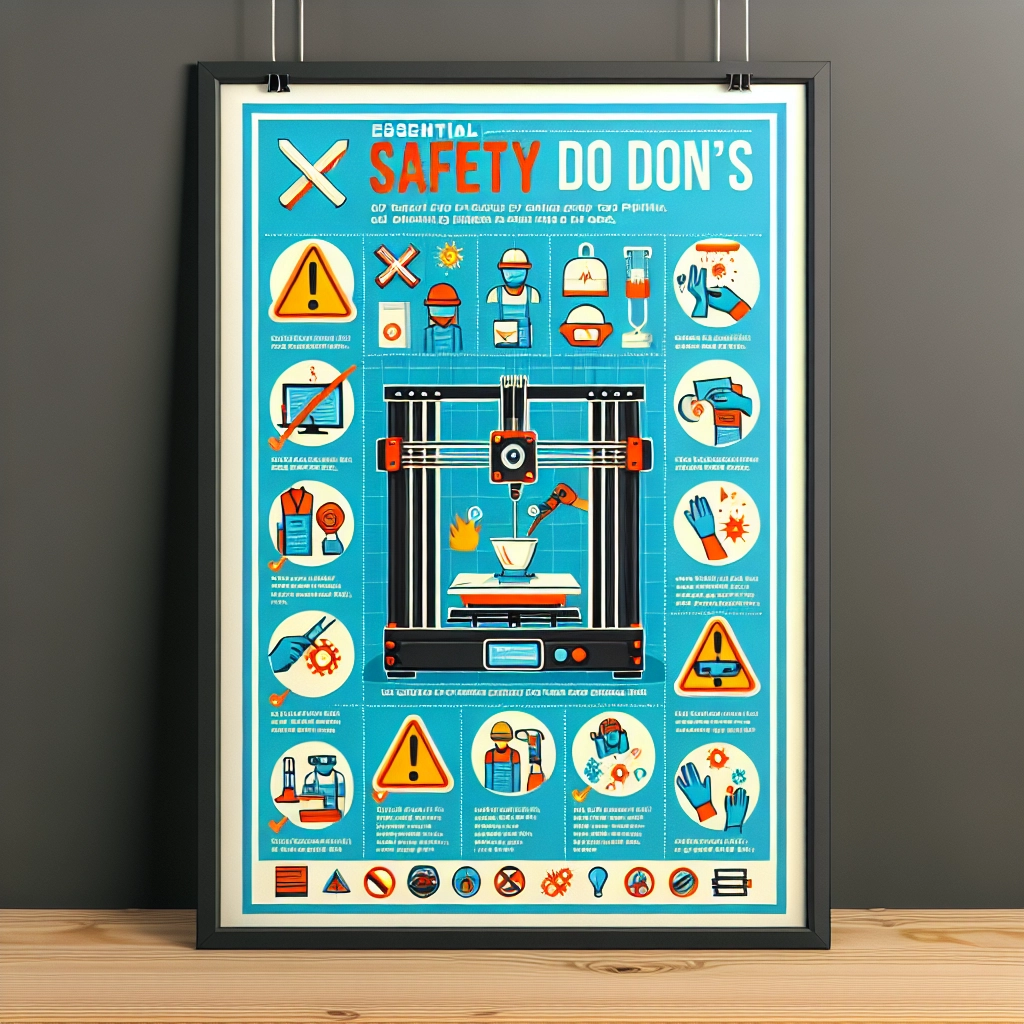
3D printers operate at high temperatures, especially the nozzle and the heated bed. Always exercise caution when working with equipment that can burn or scald. Avoid touching these components while the printer is in operation—it’s best to wait until it has cooled down completely. Additionally, consider placing your printer in a location that is not easily accessible to pets or children during operation.
5. Use Protective Gear
While 3D printing is generally safe when done correctly, it doesn’t hurt to be prepared. Wearing safety glasses can protect your eyes from any small particles that might break off during the printing process. If you’re working with exotic filaments, particularly those that might release harmful particles during filament changes or cleaning, consider using a face mask. And don’t forget gloves! Some printing materials may require handling with extra precaution.
6. Monitor the Printing Process
Never leave your 3D printer unattended while it’s operating. While most modern printers come equipped with safety features, there’s always a small risk of fire or other issues. Keeping an eye on your project ensures that you can act quickly if something goes wrong. Setting up a camera to monitor your printer from another room can provide peace of mind, so you can do other tasks while still keeping a watchful eye on your creation.
7. Maintain Your Printer Regularly
Just like any other machine, 3D printers need regular maintenance to function safely and effectively. This includes cleaning the nozzle, checking for loose wires, lubricating moving parts, and ensuring that everything is in good working order. By taking the time to maintain your printer, you’ll not only enhance its lifespan but also reduce the likelihood of accidents.
8. Educate Yourself
Finally, take the time to learn about the specific dangers associated with your printer model and the materials you’re working with. Join online forums or communities, read articles and watch videos, and connect with other 3D printing enthusiasts. The more you know, the better prepared you’ll be to handle any challenges that come your way.
3D printing can be an exhilarating hobby, filled with endless possibilities for creativity and innovation. By following these essential safety tips, you can ensure that your 3D printing experience is as enjoyable and safe as possible. So dive into your projects with confidence, knowing you’re equipped to handle the adventure ahead!