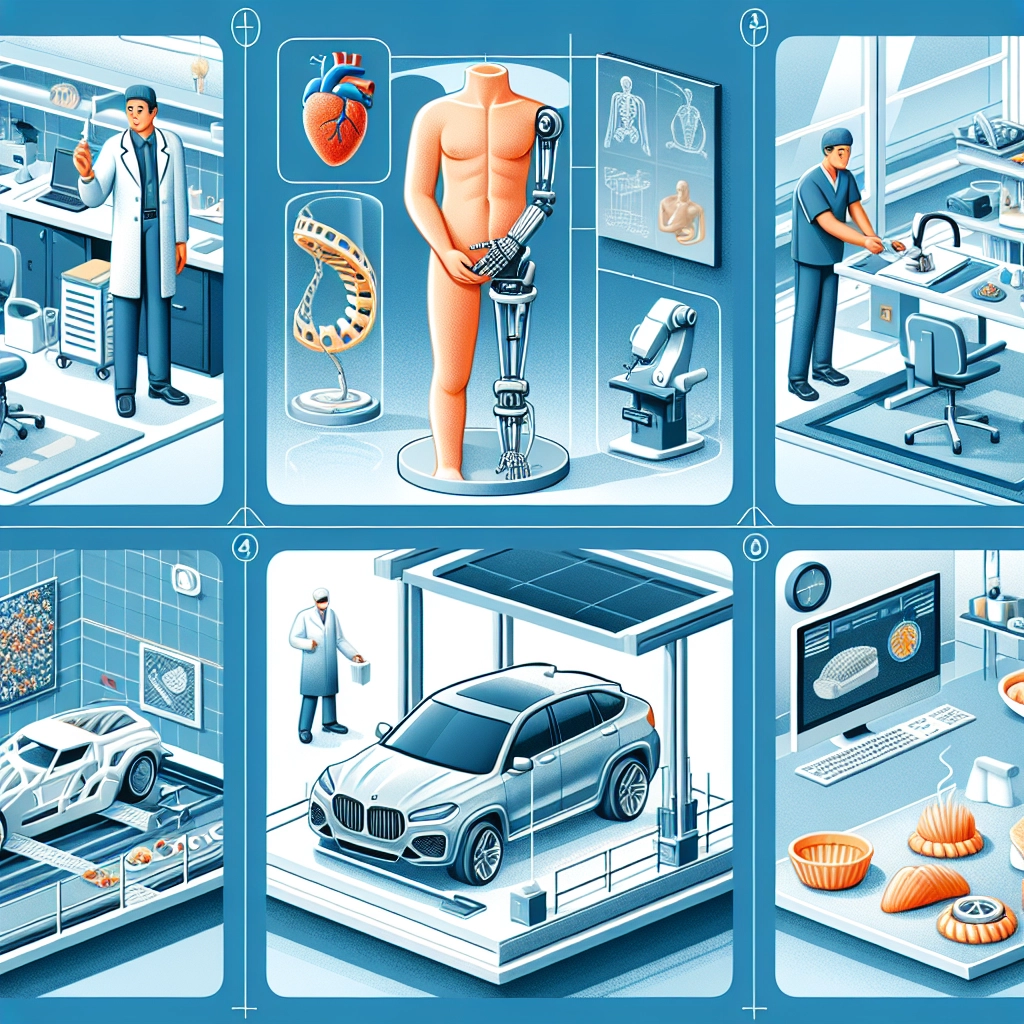

Top 5 Applications of 3D Printing in Various Industries
3D printing, also known as additive manufacturing, has evolved from a niche technology to a game-changer across multiple sectors. Whether you’re a tech enthusiast, an entrepreneur, or just someone interested in the future of innovation, understanding how 3D printing is transforming industries can be incredibly fascinating. Let’s dive into the top five applications of this versatile technology.
1. Healthcare: Revolutionizing Patient Care
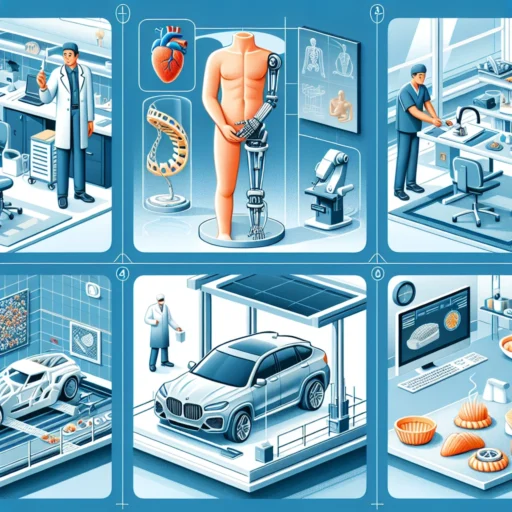
When it comes to healthcare, 3D printing is nothing short of groundbreaking. One of the most important uses is in the creation of customized prosthetics and implants. Traditionally, making prosthetics involves a lengthy and expensive process, but with 3D printing, customized solutions can be designed and produced in a fraction of the time and cost. For instance, children who need prosthetic limbs can benefit immensely from 3D-printed options that perfectly fit their unique anatomy and can be adjusted as they grow.
Additionally, the technology is being used to create patient-specific surgical models and even bioprinting of tissues and organs. Surgeons can practice on 3D-printed models before performing complex surgeries, significantly improving outcomes. The potential for 3D printing to create living tissues and potentially organs for transplantation is an exciting advancement that could change the face of medicine.
2. Automotive Industry: Design Innovation and Efficiency
The automotive industry has also jumped on the 3D printing bandwagon, reaping the benefits in design, prototyping, and production. Car manufacturers use this technology to create lightweight components and innovative designs that would be nearly impossible to achieve through traditional manufacturing processes.
For instance, companies like BMW and Ford are experimenting with 3D printing to create everything from small parts to entire vehicle structures. By printing components that are both lightweight and strong, they improve both fuel efficiency and performance. Additionally, rapid prototyping allows designers to test new ideas quickly and make real-time adjustments, significantly shortening the design cycle.
3. Aerospace: Ensuring Precision and Performance
In the aerospace sector, precision is everything. 3D printing is playing a pivotal role in the production of complex components that must withstand extreme conditions. Companies like Boeing and Airbus use 3D printing to manufacture parts that are lighter yet stronger than their traditional counterparts.
For example, 3D printing allows for the creation of intricate internal structures that reduce weight without compromising functionality. This not only saves money on materials but also leads to fuel efficiency and reduced emissions. Furthermore, in the event of a part failing or needing replacement, 3D printing can dramatically speed up the turnaround time, keeping aircraft in the air longer.
4. Fashion: Redefining Design and Customization
The world of fashion is also being transformed by 3D printing, offering designers unparalleled creative freedom. From intricate jewelry to avant-garde clothing, designers are leveraging this technology to push boundaries. Imagine wearing a dress that you can instantly adjust for fit or a pair of bespoke shoes that were tailored specifically to your foot’s measurements; this is already becoming a reality!
Brands like Adidas and Nike are using 3D printing to produce custom footwear that fits and supports the individual wearer’s foot. This customization not only enhances comfort but also minimizes waste, as shoes can be produced on demand. Fashion shows are even starting to feature 3D-printed garments, further blurring the lines between traditional fashion and technological innovation.
5. Education: Bringing Concepts to Life
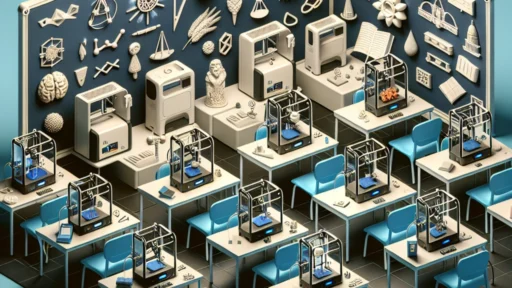
Finally, let’s not overlook the impact of 3D printing in the field of education. This technology is democratizing access to hands-on learning experiences. Schools and universities are incorporating 3D printers into classrooms, allowing students to design and create physical models of concepts they’re studying. Imagine biology students printing complex DNA structures or engineering students creating functional prototypes of their designs.
The ability to visualize and manipulate tangible objects enhances understanding and retention of information. Furthermore, it encourages creativity and innovation, skills that are increasingly vital in our fast-paced world. By integrating 3D printing into educational settings, we’re nurturing the next generation of thinkers and problem solvers.
As we move further into the 21st century, the applications of 3D printing continue to grow and innovate across various industries. Its capacity to bring ideas to life, improve efficiencies, and create personalized products is reshaping how we think about design and production. Whether in healthcare, automotive, aerospace, fashion, or education, it’s clear that 3D printing is not just a technological trend—it’s a transformative force that offers exciting possibilities for the future. As we continue to explore its potential, who knows what new applications and innovations await us just around the corner?