
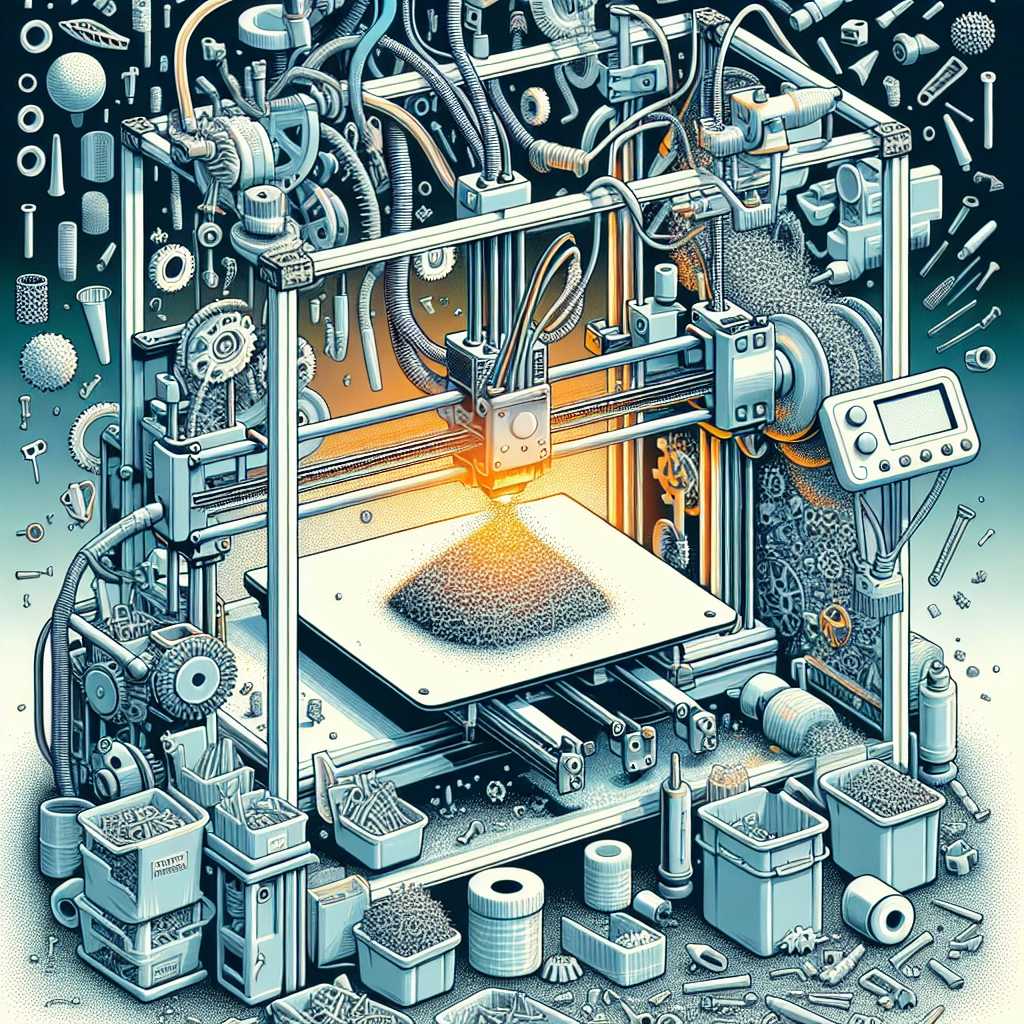

3D Printing: A Tool for Sustainability and Recycling
In today’s world, where climate change and environmental concerns dominate conversations, innovative solutions are more crucial than ever. One of the most exciting advancements in technology that can help address these issues is 3D printing. This remarkable process isn’t just about creating cool trinkets or designing prototypes; it’s carving out a vital role in the realms of sustainability and recycling.
The Basics of 3D Printing
For those new to the concept, 3D printing, or additive manufacturing, involves creating three-dimensional objects from a digital file. It works by layering material—often plastic or metal—until the desired shape is achieved. The beauty of 3D printing lies not just in its ability to fabricate items with relative ease, but also in its potential to revolutionize how we think about consumption and waste.
Reducing Waste in Manufacturing
Traditionally, manufacturing involves taking a large block of material and cutting away pieces to create a product. This process, known as subtractive manufacturing, often leads to substantial waste. 3D printing, on the other hand, can significantly reduce material wastage. Because it builds objects layer by layer, it uses only the material necessary for the final product, minimizing excess and unnecessary scraps.
Moreover, 3D printing technology allows for the creation of highly efficient designs that use less material without sacrificing strength or functionality. Engineers can optimize parts for weight and durability, keeping waste to an absolute minimum.
Recycling Plastics into New Shapes
One of the most compelling aspects of 3D printing is its ability to use recycled materials. A growing number of companies are developing filaments made from recycled plastics, transforming what would typically end up in landfills into valuable resources for 3D printing.
Imagine old water bottles, packaging materials, and even landfill-bound plastic debris being melted down and reformed into new, usable products! This not only diverts waste from our overflowing landfills but also reduces the demand for new plastic production, which is often an energy-intensive and environmentally damaging process.
Consider the potential impact this could have on our world—turning plastic waste into pencils, furniture, or even entire homes! Some innovative projects have even sought to print entire structures using concrete mixed with waste materials.
Localized Production: Less Transportation, Lower Carbon Footprint
3D printing also paves the way for localized production. Instead of manufacturing goods in far-off factories and shipping them around the globe, 3D printing allows businesses to produce items on-site. This reduces transportation emissions significantly, as products can be printed close to where they’re needed.
For example, imagine a small town that needs specific tools or parts. Instead of ordering from far away, a local 3D printer can produce these goods, cutting down on shipping costs and carbon footprints. This decentralization of production can support local economies and encourage sustainable practices by reducing reliance on mass-produced, imported goods.
Innovations in Sustainable Materials
As 3D printing technology evolves, so do the materials available for creating objects. Researchers are continually finding ways to create biodegradable or plant-based filaments that can break down naturally without harming the environment. For instance, materials made from cornstarch or other renewable resources are gaining traction, making 3D printing even more eco-friendly.
In addition, experiments with alternative materials—including recycled paper, metal, and even organic materials like mycelium—are underway, hinting at a future where the necessities of life can be printed sustainably, using what nature has to offer.
The Potential for Social Good
Beyond just environmental sustainability, 3D printing carries the potential for social impact. Educational institutions and non-profit organizations are already using this technology to create affordable prosthetics, medical supplies, and even housing for underserved communities.
These initiatives show that 3D printing can do more than just produce consumer goods; it can meet critical needs and contribute to a circular economy that values recycling and sustainability.
As we embrace these innovations, it’s essential to remember that the true power of 3D printing lies in the ideas it inspires. The possibilities are as limitless as our imagination.
From reducing waste and conserving resources to transforming industries and fostering social good, 3D printing is paving the way for a more sustainable future. As we continue to innovate and refine this technology, we can hope for a world that values not only what we can create but how we can do so responsibly, with an eye toward preserving our planet for future generations. So, let’s get excited about the potential of 3D printing—and, more importantly, let’s harness that potential to build a sustainable future!