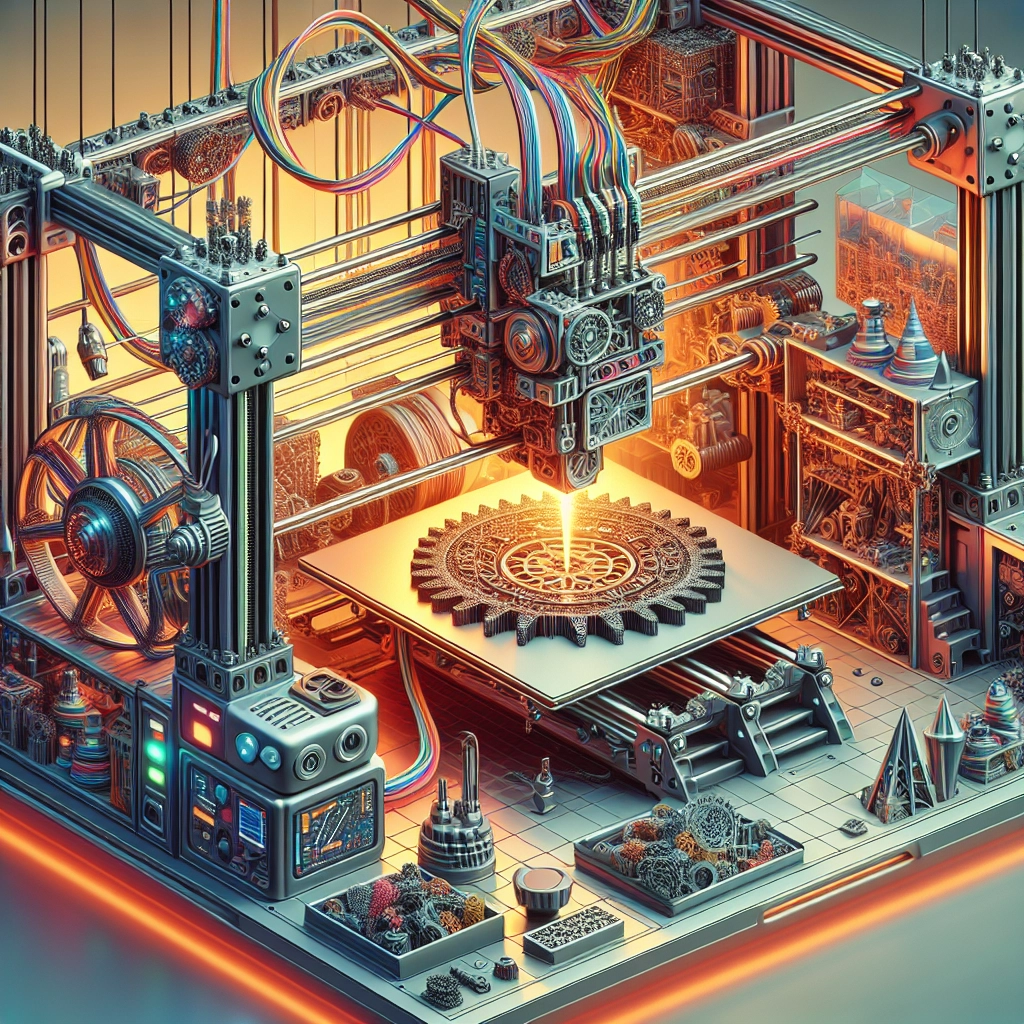

Exploring the Benefits of Dual Extrusion in 3D Printing
In recent years, 3D printing has evolved from a niche hobby into a groundbreaking technology that’s reshaping industries, from aerospace to healthcare. As this field continues to thrive, one innovation that has transformed the 3D printing landscape is dual extrusion. For those who may not be familiar, dual extrusion refers to the capability of a 3D printer to use two different filaments in a single print job. This approach opens up a realm of possibilities, breathing life into designs that would be challenging or impossible to achieve with single-material prints.
Unlocking Creative Potential
At the heart of dual extrusion is creativity. Imagine being able to print complex structures that include both rigid and flexible materials. Want to create a phone case with a hard exterior and a soft inner lining? Dual extrusion makes that not only possible but relatively straightforward. Designers can experiment with color combinations, textures, and mechanical properties, resulting in spectacular prints that stand out in both functionality and aesthetic.
For artists and creators, dual extrusion represents a new palette of capabilities. Can you envision a sculpture that changes color depending on the angle from which it’s viewed? With dual extrusion, multi-material prints can bring vivid ideas to life in ways that were previously confined to imagination.
Time-Saving and Efficient Designs
Beyond creativity, dual extrusion brings practical advantages. For instance, support structures made from a different material can significantly ease the printing process. Typically, when printing complex geometries, the printer generates support material that must be removed post-printing. With dual extrusion, you can use a water-soluble filament for support, allowing you to simply dissolve the support material away, leaving your intricate print looking immaculate. This not only saves time in post-processing but also ensures that your final product is free from the blemishes and imperfections that often accompany traditional support structures.
Additionally, the speed of production can be vastly improved. By combining materials, you can often shorten the time spent on assembly after printing. Think about it: rather than printing separate parts that require gluing or fastening together, dual extrusion enables you to produce a single cohesive part right out of the printer.
Enhancing Functional Properties
One of the standout features of dual extrusion is the ability to combine materials that serve different functional purposes. For example, you might create a gear that has a rigid outer surface for durability, paired with a flexible core that allows for resilience under stress. This layering of materials not only enhances performance but opens the door to innovations that can lead to new products altogether.
Consider medical applications; dual extrusion could be monumental in custom prosthetics or orthopedic devices. The ability to print with soft, flexible materials alongside stiffer ones provides a comfort level that is crucial for wearers. It enables designers to create user-specific solutions that move with the natural biomechanics of the human body.
Challenges Worth Considering
While the benefits are exciting, dual extrusion isn’t completely free of hurdles. The setup and calibration of dual extrusion printers can be more complex compared to their single-extruder counterparts. Users may face challenges in preventing oozing or “stringing” during prints where the second material inadvertently bleeds into the primary material environment. There’s also the need to fine-tune temperature settings for different materials, which requires a bit of experimentation and adjustment.
In addition, material compatibility is something to keep in mind; not all filaments play nicely together. It’s essential to research and ensure that the two materials used have compatible temperatures and adhesion properties to avoid prints that fail or delaminate.
The Future of Dual Extrusion
With advancements in technology and materials, the possibilities of dual extrusion are expanding and diversifying. As we continue to explore what dual extrusion can achieve, from personalized gadgets to more intricate architectural models, it’s clear that this technology isn’t just a passing trend; it’s a game-changer.
As we witness these advancements, the question remains: how will you harness the power of dual extrusion in your own printing projects? Whether you’re a professional designer, an enthusiast, or just someone intrigued by 3D printing, there’s an exciting journey ahead. Dive in, experiment with dual extrusion, and watch how your creations come to life in ways you never imagined!