
How 3D Printing is Transforming the Medical Field
Imagine a world where custom prosthetics can be printed overnight, surgical tools can be designed with pinpoint accuracy, and even complex organs can be manufactured. This isn’t science fiction; this is the rapidly evolving reality thanks to 3D printing. In recent years, the adoption of 3D printing technology has brought about a paradigm shift in the healthcare sector, proving to be a game changer in numerous ways. Let’s explore how this fascinating technology is reshaping the medical field.
Custom Prosthetics and Implants
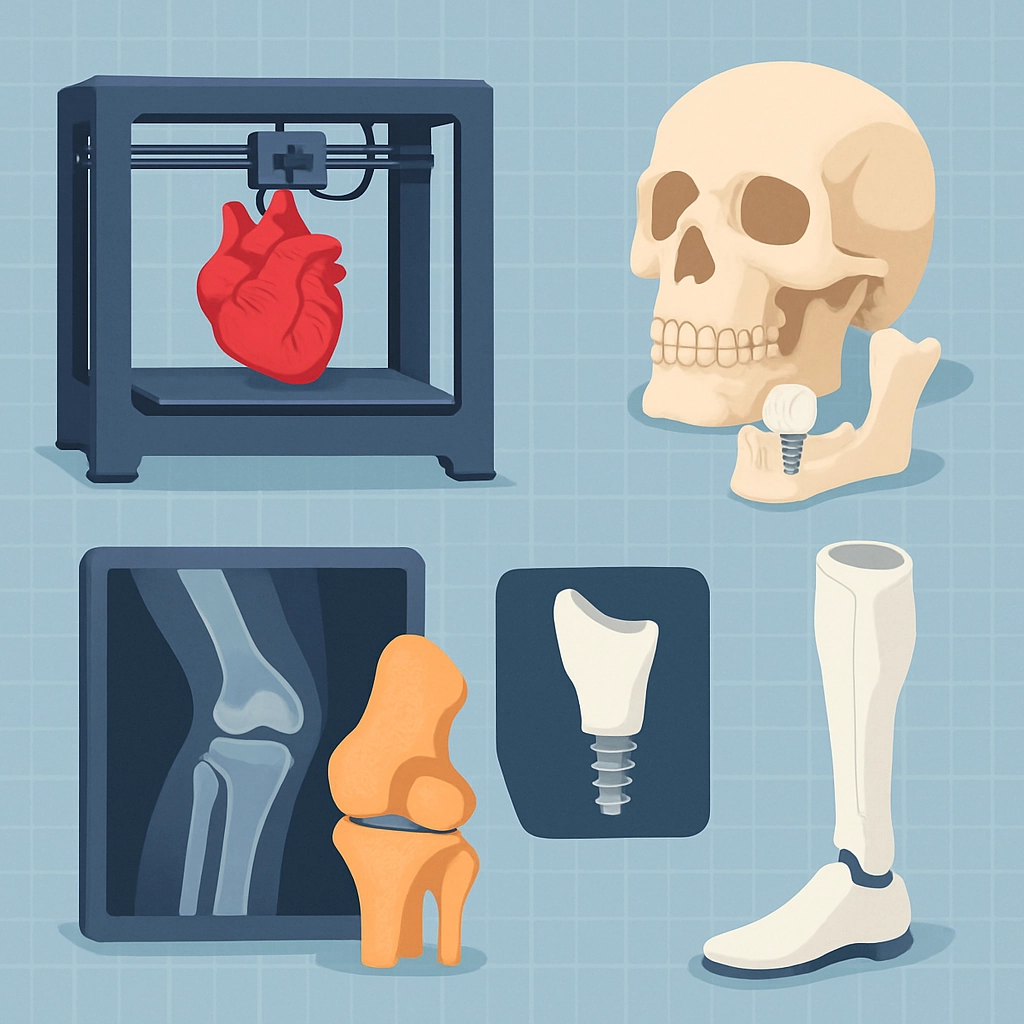
One of the most common applications of 3D printing in medicine is in creating prosthetics and implants. Traditional prosthetics can be costly and time-consuming to produce, often requiring multiple fittings and adjustments to ensure a good fit. With 3D printing, custom prosthetics can be designed and manufactured based on a patient’s specific anatomy, allowing for a perfect fit.
Take, for instance, a child who may quickly outgrow a standard prosthetic. With 3D printing, a new prosthetic can be designed and printed in just a fraction of the time compared to traditional methods, significantly reducing both the cost and time associated with these devices. The same principle applies to implants, such as dental crowns or joint replacements, where exact specifications are critical for functionality and comfort.
Surgical Models and Planning
Surgeons can often only rely on 2D scans like MRIs or CT scans when planning their operations, which sometimes limits their ability to visualize the best approach before going into surgery. Enter 3D printing, which allows for the creation of highly accurate, patient-specific surgical models from these scans.
By printing a 3D model of a patient’s anatomy, surgeons can practice the procedure beforehand, leading to more efficient and effective surgeries. This not only reduces operation time but can also lead to better outcomes, minimizing complications. Imagine the confidence a surgeon feels stepping into the operating room with a tangible model of the heart or a complex tumor!
Bioprinting for Tissue and Organ Regeneration
Bioprinting is another groundbreaking side of 3D printing that is paving the way for revolutionary advancements. This technology involves layering living cells to create tissue structures, with the potential to develop complex organs in the future. While we’re not quite at the stage where we can print fully-functioning organs, research is underway, and we’ve seen promising results in printing simpler tissues.
For patients waiting for organ transplants, bioprinting could one day mean the end of long waiting lists and the associated risks. Instead of relying on donor organs that may not be an exact match, doctors could use a patient’s own cells to print organs, greatly reducing the risks of rejection and complications.
Enhanced Medical Training
3D printing isn’t just about serving patients; it’s also transforming medical education. Medical students can benefit greatly from hands-on training with 3D-printed anatomical models. Instead of relying solely on textbooks and computer simulations, they can practice procedures on realistic models, which could lead to improved understanding and preparedness.
Additionally, specialized models can be printed to replicate rare conditions or anomalies that medical students might not otherwise encounter during their training. This exposure ensures that future healthcare professionals are well-equipped to handle a variety of real-world situations.
Cost-Effectiveness and Accessibility
As 3D printing technology advances, its cost-effectiveness becomes more apparent. The materials used in 3D printing are becoming less expensive, and as the technology continues to improve, we can expect more hospitals and clinics to adopt it. This opens up a world of possibilities, especially in developing countries where access to advanced medical devices and treatments can be limited.
By utilizing 3D printing, healthcare providers can alleviate some of these challenges, providing vital resources at a fraction of the cost of traditional manufacturing methods.
3D printing is not just an emerging tech fad; it’s a transformative force in medicine that is making remarkable strides in patient care, surgical practice, and medical training. As the technology continues to develop, there’s no telling how many more lives it will impact. From customized prosthetics to potentially printing organs, the implications for healthcare are profound. As we stand on the cusp of this new frontier, it’s exciting to think of the possibilities that lie ahead. The future of medicine is indeed being shaped, one layer at a time.