
Discovering Unique Color and Material Properties in 3D Filaments
3D printing has really revolutionized the way we think about manufacturing and creativity. It’s not just about producing objects; it’s about pushing the boundaries of what materials can do. One of the most fascinating aspects of this world is the diversity of 3D printing filaments available. From flashy colors to unique material properties, each filament offers its own set of characteristics that can significantly enhance your printing projects. Let’s dive in!
Beyond PLA and ABS: The Expanding Filament Family
Most people are familiar with the standard PLA (Polylactic Acid) and ABS (Acrylonitrile Butadiene Styrene) filaments, which are commonly used by hobbyists and professionals alike. However, the world of 3D printing has expanded exponentially, bringing a medley of unique filaments into the spotlight.
For instance, there are PETG (Polyethylene Terephthalate Glycol-Modified) filaments that offer the best of both PLA and ABS, providing durability while being easy to print. On the other hand, you have TPU (Thermoplastic Polyurethane), which can stretch and bend, making it great for creating flexible parts like phone cases and wearable gadgets.
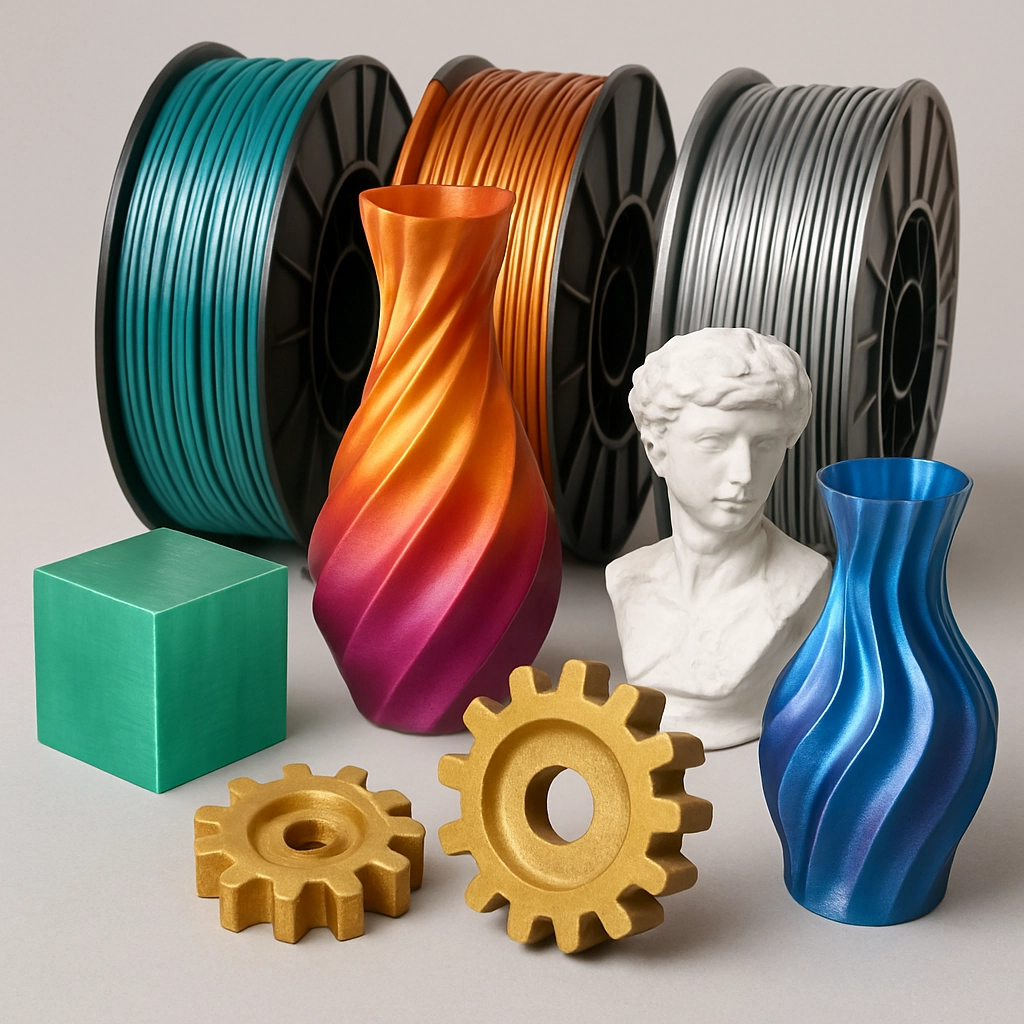
What really makes these filaments exciting is their color properties. Think about it: how cool is it to have a filament that shifts color as you print? There are filaments that change color under UV light or glow in the dark, adding an extra layer of creativity to your projects. These filaments not only serve functional purposes but also let your creativity shine through in ways you might not have thought possible.
The Science Behind Unique Properties
The unique properties of 3D filaments stem from their chemical makeup. Different polymers and additives influence not just color but also the strength, flexibility, and even the thermal properties of the prints. For instance, HIPS (High Impact Polystyrene) is a favorite among those looking for a strong support material; when combined with ABS, it can make even the most complex structures possible.
Another fascinating filament is wood filament, which contains real wood fibers mixed with PLA. This gives your prints a beautiful, textured finish that resembles actual wood, complete with its varying shades and patterns. The idea of creating an object that looks and even smells like wood opens up new avenues in design, especially for artisan and decorative projects.
Then there are specialty filaments like metal-infused options, which might contain fine metal powders mixed into the base plastic. These not only look stunning but also give your prints added weight and a touch of realism, perfect for crafting items like intricate jewelry or industrial design prototypes.
Exploring Custom Filament Options
A thrilling aspect of 3D printing is the rise of custom filament options. Companies are now allowing users to mix materials and colors to create something truly unique. Want a shade not found in the standard palette? Some manufacturers provide services where you can order filaments in bespoke colors or even combine two or more materials.
These bespoke options are a game changer, giving creatives the freedom to match colors precisely or to develop materials with unique behaviors that suit specific needs. Imagine designing a piece that not only looks exactly how you envision but also has the specific durability or flexibility you require. This kind of customization elevates the whole 3D printing experience, making it more personal and tailored to your artistic vision.
An Eco-Friendly Option
As we navigate further into eco-consciousness, more people are seeking sustainable materials for 3D printing. Filaments made from recycled plastics or biodegradable sources are becoming increasingly available, allowing you to explore your design ambitions while being mindful of the environment. Filaments made from natural sources, like hemp or seaweed-based materials, not only minimize waste but also offer unique textures and finishes.
The Future of 3D Filaments
The world of 3D printing filaments is constantly evolving, and it’s exciting to think about where we might head next. Whether it’s new materials that offer better strength, flexibility, or even entirely new applications in fields like medicine or construction, the possibilities are endless.
For those of us passionate about 3D printing, this journey is about exploration and innovation. As technologies advance, experimenting with unique color and material properties in 3D filaments can lead to amazing creations, expanding our artistry while also opening up new avenues for practical application. So whether you’re a seasoned maker or just dipping your toes into 3D printing, the colorful world of filaments is yours to discover!