

How to Print with Specialty Filaments: Tips for Success
3D printing has come a long way since its inception, and one of the most exciting developments has been the introduction of specialty filaments. These materials can bring your designs to life in ways traditional plastics just can’t. Whether you’re looking to create prints with enhanced properties or a unique aesthetic, working with specialty filaments can elevate your projects. But it’s not just plug-and-play; there are a few tips and tricks to keep in mind to achieve the best results. Let’s dive into those!
Know Your Specialty Filament Types
Before you start printing, it’s important to know what types of specialty filaments are available and how each behaves. Here are a few popular options:
-
Flexible Filaments (like TPU): Perfect for making soft, bendy objects. These can be great for phone cases, wearable items, or any design that needs to flex.
-
PETG: A great compromise between PLA and ABS, PETG offers strength and durability. It’s chemical-resistant and can be great for functional parts.
-
ASA: If you need UV resistance and outdoor durability, ASA is the way to go. It’s similar to ABS but has better weather resistance.
-
Nylon: Known for its strength and flexibility, nylon is perfect for functional prints but can be tricky when it comes to adhesion.
-
Metal-infused Filaments: These filaments contain a mix of metal powder, giving your prints a unique look and feel. However, they can be abrasive, so you’ll need a hardened nozzle.
Understanding the specific properties and requirements of these materials is key to successful prints.
Adjust Your Printer Settings
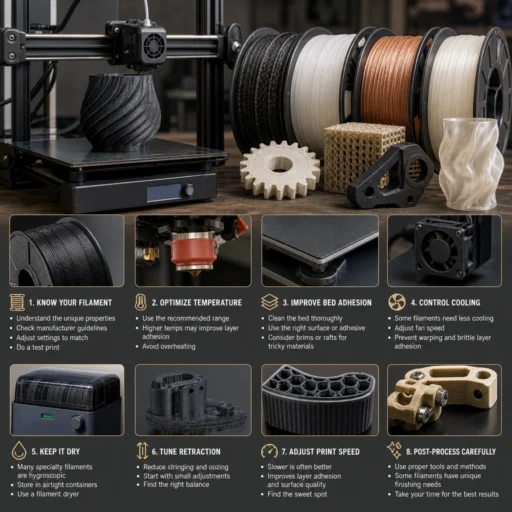
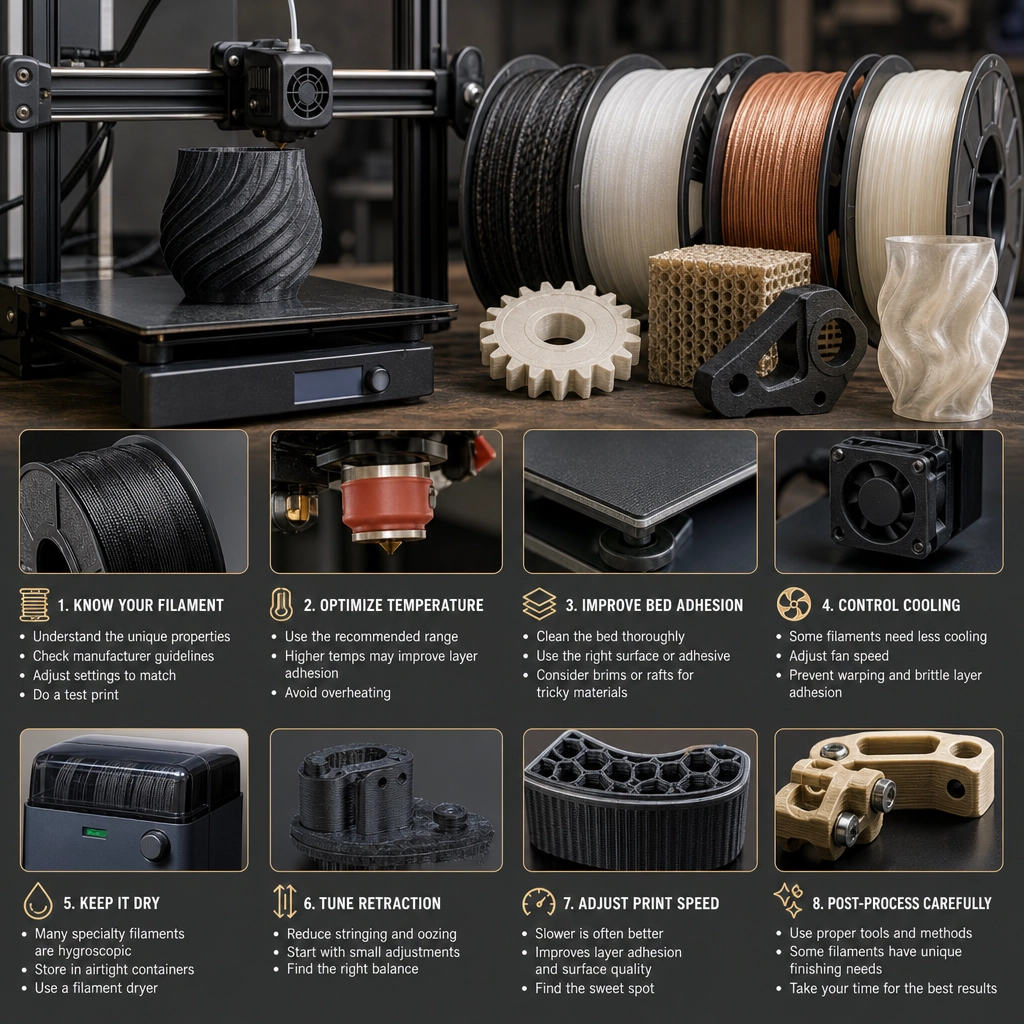
Once you’ve selected your filament, you’ll need to tweak your printer settings for optimal results. Different filaments have varying requirements when it comes to temperature, speed, and even cooling. Here are some general tips:
-
Temperature Settings: Specialty filaments often require unique nozzle temperatures. For example, TPU might need a lower temperature than ABS to avoid stringing, whereas nylon requires higher temperatures. Always refer to the manufacturer’s recommendations for best practices.
-
Print Speed: Slower print speeds can lead to better layer adhesion and allow for more intricate designs, especially with flexible filaments. If you’re working with something more rigid, like metal-infused filaments, you might want to experiment with a slightly faster speed.
-
Bed Adhesion: Specialty filaments can sometimes be finicky about sticking to the print bed. Use adhesives like a glue stick, painter’s tape, or a specific build surface (like PEI) designed for the filament type to improve adhesion and avoid warping.
Use the Right Equipment
Your favorite all-purpose 3D printer might struggle with some specialty filaments, especially if they require stringent conditions. Make sure your printer can handle the filament you’re using. For example:
- Nozzle Size: Thicker filaments, like those with metal particles, often require a larger nozzle (like 0.4mm or larger) to prevent clogging.
- Hardened Nozzle: If you’re planning on using abrasive materials, invest in a hardened steel or ruby-tipped nozzle. This will prolong the life of your equipment and provide better output.
Pay Attention to Drying and Storage
Many specialty filaments, particularly nylon and flexible types, are hygroscopic, meaning they attract moisture from the air. This can lead to poor print quality, so consider these storage solutions:
- Dry Box: Keep your filament in a dry box or vacuum-sealed bag with desiccants to absorb moisture.
- Pre-Dry Your Filament: If you’ve had the filament out for a while, consider drying it before printing. A filament dryer can do this, but you can also use an oven on a low setting.
Fine-Tuning Your Finishing Techniques
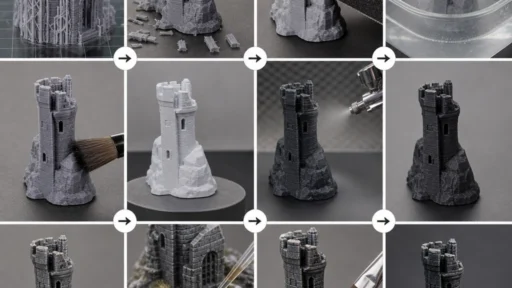
Once your print is complete, you may want to finish it extra special. Depending on the filament you’ve used, the finishing techniques can vary:
- For flexible filaments, avoid aggressive sanding and opt for chemical smoothing if needed.
- Metal-infused prints can be polished to enhance the metallic appearance, while ASA can be sanded and painted with UV-resistant finishes.
Exploring specialty filaments opens up a world of creativity and uniqueness in 3D printing. These materials can be temperamental, but with a bit of knowledge and some adjustments to your routine, you can successfully harness their potential. Remember, every printer and filament combination is a chance to explore and innovate. With patience and practice, you can create eye-catching projects that not only showcase your skills but also push the boundaries of what’s possible in 3D printing! Happy printing!