

Exploring 3D Printing Filament Materials: PLA, ABS, and More
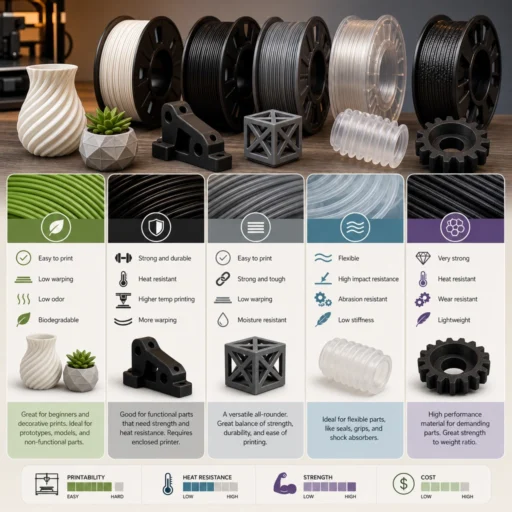
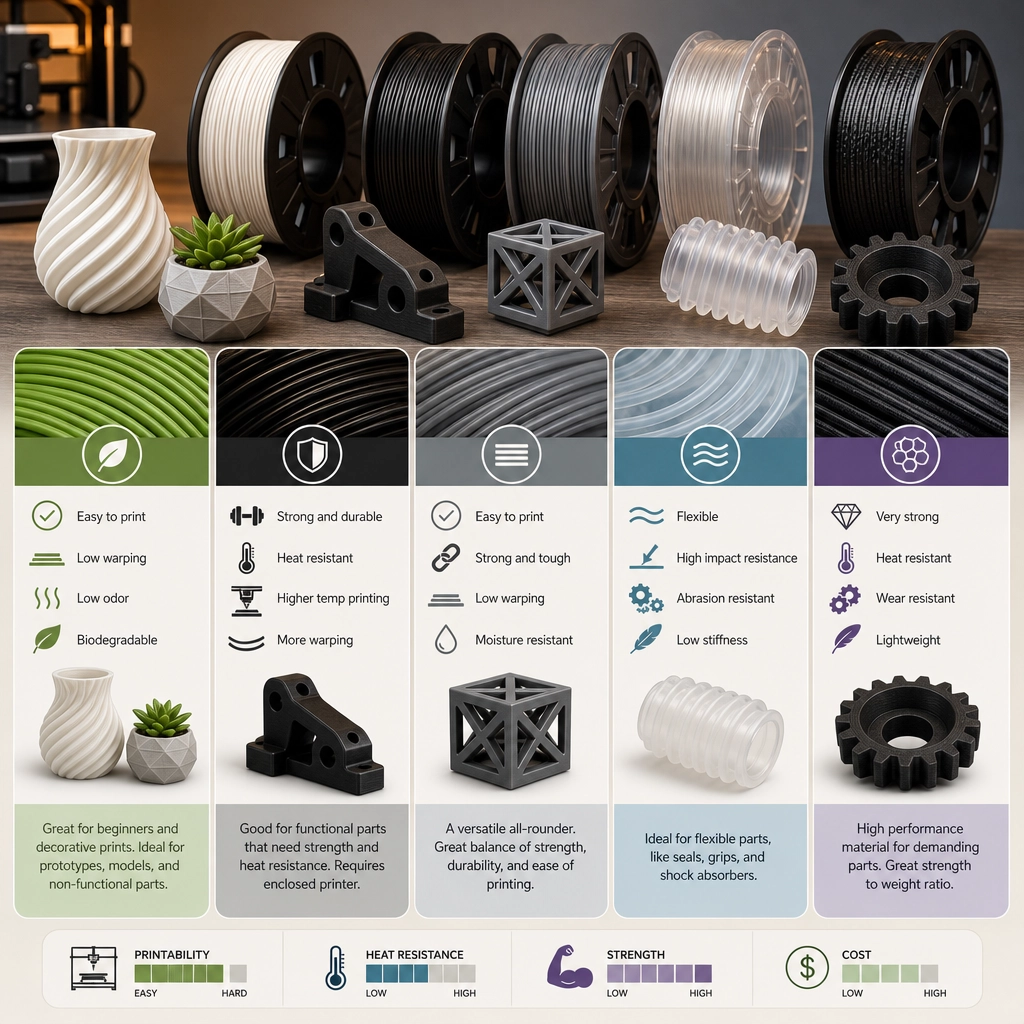
If you’ve embarked on the journey of 3D printing, you’ve likely been introduced to a colorful world of filament options, from the eco-friendly classic PLA to the durable ABS. Each type of filament comes with its own unique properties, making them suited for specific projects and applications. Let’s dive into the most common filament materials and uncover what makes them tick!
PLA (Polylactic Acid)
Let’s start with the superstar of the 3D printing world: PLA. This filament is derived from renewable resources, like corn starch or sugarcane, making it an eco-friendly option that appeals to many hobbyists and professionals alike.
Pros:
- Easy to Use: PLA is renowned for being user-friendly, especially for those just starting. It prints at lower temperatures and adheres well to various surfaces.
- Detail and Finish: It can produce stunning, high-quality prints thanks to its excellent layer adhesion and vibrant colors.
- Biodegradable: Since PLA is made from natural materials, it breaks down over time in specific compostable conditions, which is a nice touch for the environmentally conscious.
Cons:
- Durability Issues: While it’s fantastic for prototypes and detailed prints, PLA isn’t the strongest material. It can be brittle and may not withstand high temperatures. So, if you’re planning to print outdoor items or anything that might get hot, PLA might not be your best friend.
ABS (Acrylonitrile Butadiene Styrene)
Moving on to ABS, the tough guy in the filament family. This material is known for its strength and durability, making it a go-to for many industrial applications.
Pros:
- Robustness: ABS can handle stress and is less prone to breaking than PLA. If you need something sturdy, ABS has your back.
- Heat Resistance: This filament can handle higher temperatures, making it suitable for items that encounter warmth or might be used in direct sunlight.
- Post-Processing: ABS is super easy to sand and paint, allowing for fantastic customization options.
Cons:
- Fumes: During the printing process, ABS emits fumes that can be somewhat unpleasant. It’s best to use this filament in a well-ventilated area or invest in an enclosure with a filtration system.
- Warping: One downside is its tendency to warp as it cools, so you’ll want to ensure good bed adhesion and temperature control while printing.
PETG (Polyethylene Terephthalate Glycol)
Next up on our filament tour is PETG, a newer member of the 3D printing family that combines the best of both PLA and ABS. It’s gaining popularity quickly for good reasons.
Pros:
- Flexibility and Strength: PETG is more flexible than PLA but also more durable than PLA, striking a nice balance between ease of use and toughness.
- Less Warping: It has great layer adhesion and less warping than ABS, which means easier prints without worrying about your creations turning into pretzels.
- Food Safe Options: Some PETG filaments are food safe, making them ideal for kitchen gadgets or items that may come in contact with food.
Cons:
- Stringing and Oozing: One of the quirks of PETG is its tendency to ooze during printing, leading to stringing and the need for some fine-tuning in your settings. But once you get it right, it’s a solid performer!
TPU (Thermoplastic Polyurethane)
Let’s take a step into flexible territory with TPU, the go-to filament for prints that require some bend and stretch, like phone cases and gaskets.
Pros:
- Flexibility: TPU boasts incredible flexibility without sacrificing strength, making it perfect for parts that need to flex or stretch.
- Impact Resistance: It’s highly durable, maintaining its form even after bending. This makes it great for items that get frequent use.
Cons:
- Printing Challenges: Printing with TPU can be tricky due to its flexible nature. It often requires a direct drive extruder and specific settings to avoid issues like jamming.
Conclusion
Choosing the right filament for your 3D printing project can make all the difference, whether you’re creating intricate designs, durable parts, or flexible items. With PLA, ABS, PETG, and TPU, you have a toolbox full of options to explore!
As you venture deeper into the world of 3D printing, don’t hesitate to experiment with different materials. Each brings its own character and challenges, offering fantastic opportunities for creativity and innovation. Happy printing, and may your creations be as bold as your imagination!