
How to Host a 3D Printing Workshop: Tips for Educators
The world of 3D printing has exploded with possibilities, stirring excitement among educators and students alike. If you’re an educator looking to spark creativity, enhance learning, and introduce technology in a hands-on way, hosting a 3D printing workshop could be the perfect pathway. Whether you’re fostering a love of design in budding engineers or integrating technology into art curricula, getting started can feel a bit overwhelming. Fear not! Here are some tips to help you successfully host a 3D printing workshop that everyone will remember.
Know Your Audience
First and foremost, it’s crucial to know who you’re teaching. Are you working with high school students gearing up for college engineering programs, or are you encouraging younger kids to embrace their creativity? Tailoring your approach to fit your audience will not only help you engage them but also determine the complexity of the projects you choose to pursue.
If you’re working with younger students, keep projects simple and focused on fun designs. Maybe create personalized keychains or fun figurines that they can easily replicate. For older students, consider more complex designs, perhaps a small mechanical part or robotics-related projects that require problem-solving skills.
Gather Your Resources
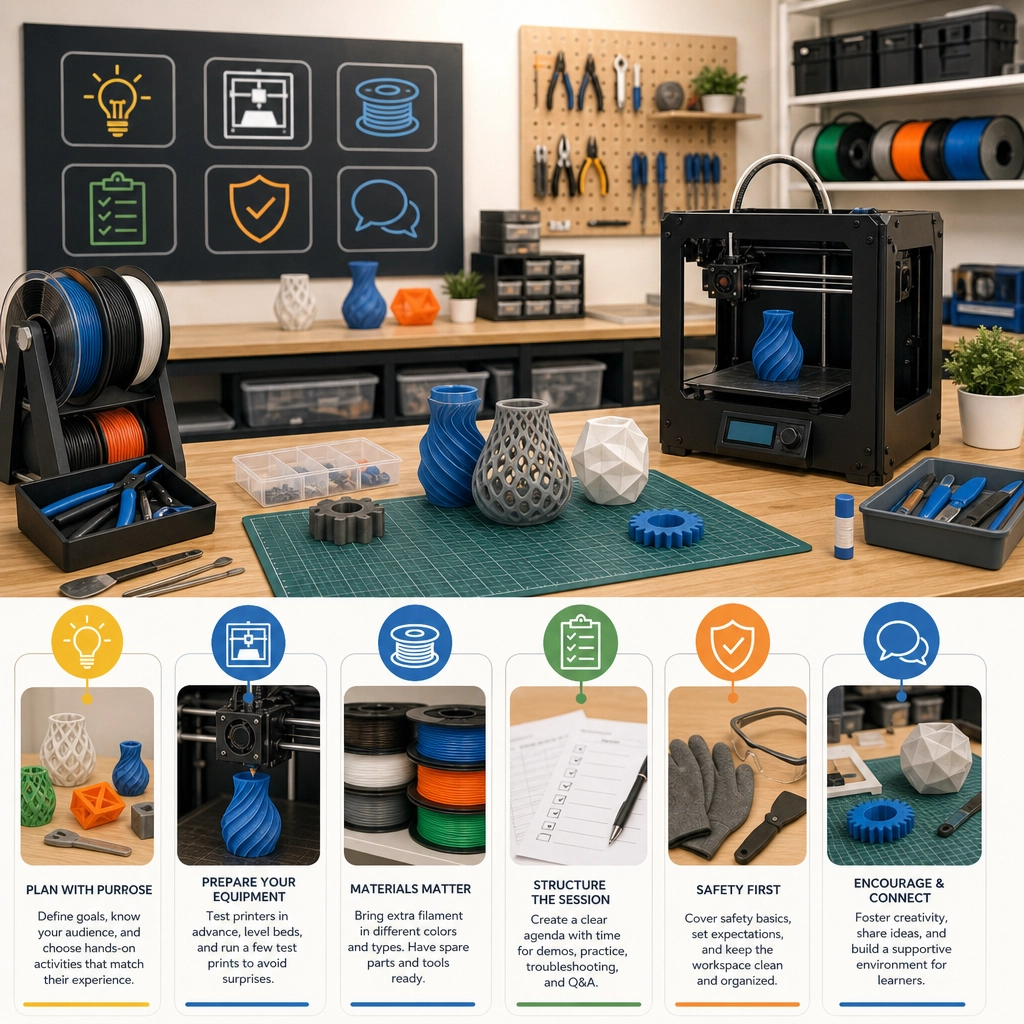
Before you dive into the workshop, ensure you have all the necessary resources. This means more than just 3D printers and filaments. Take stock of the tools you’ll need, such as:
- 3D Printers: Ensure they are functioning and calibrated properly.
- Software: Familiarize yourself with user-friendly design programs like Tinkercad or SketchUp that students can easily navigate.
- Materials: Stock up on various filaments—PLA is a great choice for beginners—and other supplies, like tools for post-printing cleanup.
- Space and Safety: Set up your workshop in a well-ventilated area with enough space for everyone to work comfortably. Don’t forget to stress safety—brief participants on how to use the machines properly and the importance of staying focused while printing.
Structure Your Workshop
Having a well-planned structure can really set the tone for your workshop. Start with an introduction that gives participants a basic understanding of what 3D printing is and how it works. A brief history helps set the stage; be sure to touch on how this tech has evolved and how it’s being applied in various fields today.
From there, consider including the following components in your workshop:
-
Demonstration: Show participants how to operate the printer, and perhaps print a simple item live to pique their interest.
-
Designing Phase: Let them create their designs in groups or individually. This stage should be collaborative, as students can share ideas and feedback.
-
Printing: Depending on the number of available printers, students may have to wait for their designs to print. Plan fun activities or discussions to keep them engaged during the wait—maybe a quick quiz on design principles, or a video about innovations in 3D printing they can watch together.
-
Post-Print Exploration: Once printing is complete, offer guidance on how to finish and clean their models. Discuss the challenges encountered in their designs and learn from each other’s experiences.
Foster an Environment of Creativity and Collaboration
3D printing is as much about creativity as it is about technology. Encourage participants to push their limits and think outside the box. Recognize unique designs and highlight innovative approaches. Collaboration can amplify creativity, so encourage students to team up, brainstorm, and critique each other’s designs with positivity and constructiveness.
Remember, mistakes are part of the learning process. Emphasize that not every print may turn out perfect, and that failure is often just a stepping stone toward success—a vital lesson in both technology and life.
Share and Reflect
After the printing and cleanup, don’t just let your students walk away with their creations. Set aside some time for students to share their work. This could be a casual show-and-tell where they explain their design choices, the challenges faced, and what they learned through the process. Such reflections reinforce learning by enabling students to articulate their experiences and connect with their peers.
As you wrap up your workshop, gathering feedback is essential. Provide a simple form where students can express what they enjoyed or how the workshop could be improved. This information will be invaluable for future workshops.
Hosting a 3D printing workshop doesn’t have to be daunting. With a bit of preparation and passion for sharing knowledge, you can open a new world of creativity and innovation for your students. By sharing the excitement of 3D printing, you’re giving them a tool to bring their imagination to life and fostering skills that will serve them in countless future endeavors. So roll up those sleeves, fire up those printers, and get ready for a fun-filled experience that ignites the minds of young creators!