
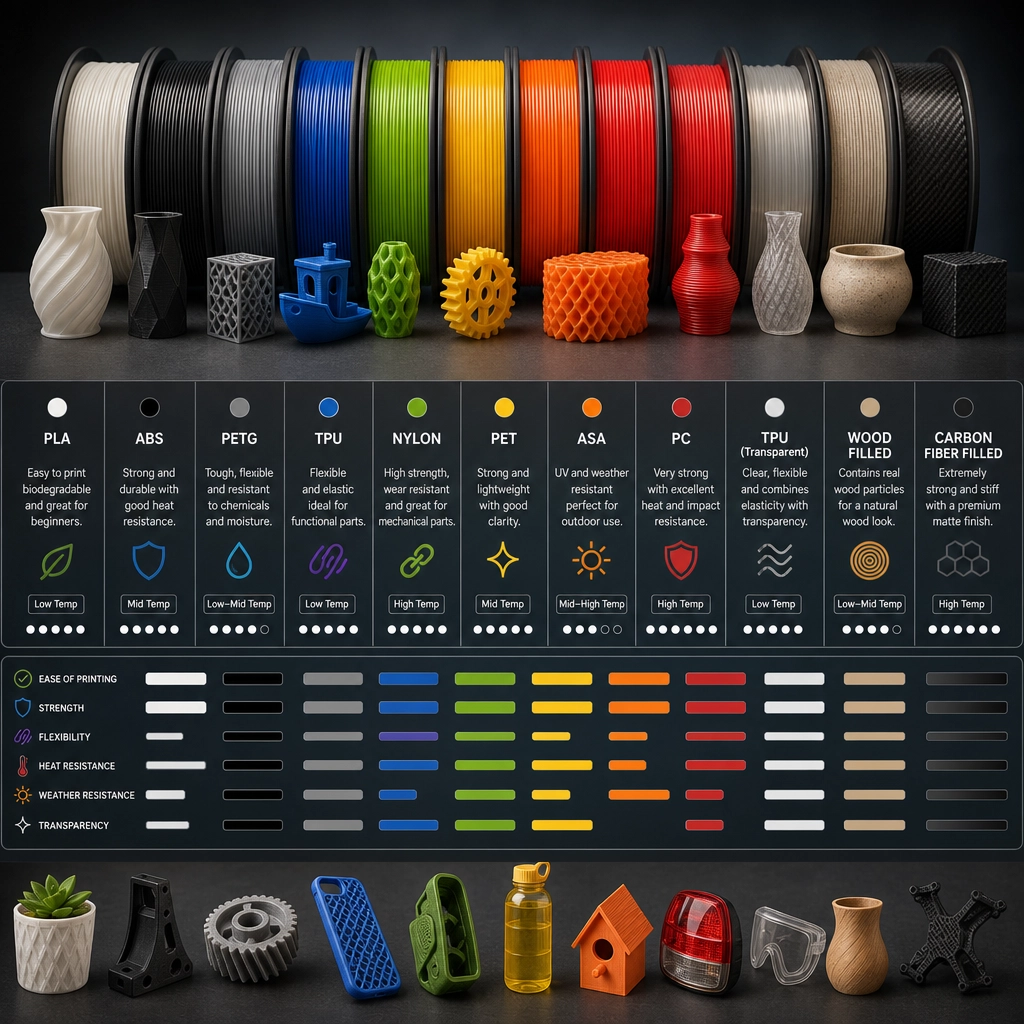

Understanding Different Types of 3D Filaments: A Comprehensive Overview
If you’ve recently ventured into the world of 3D printing, you’ve probably come across a dizzying array of filaments—each with its own unique characteristics and uses. The right filament can elevate your prints from good to extraordinary, so understanding your options is essential. Let’s dive into the most popular types of 3D filaments and what makes each one special.
PLA (Polylactic Acid)
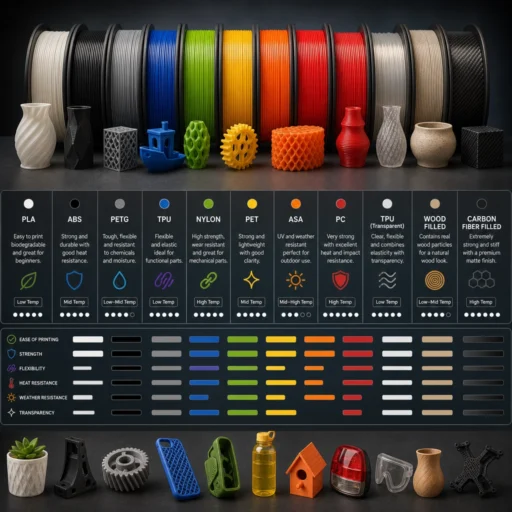
Starting with the most beginner-friendly filament, PLA is a bioplastic made from renewable resources like cornstarch and sugarcane. It’s known for its ease of use and pleasant, sweet smell when heated. PLA is perfect for newcomers because it adheres well to the print bed and minimizes warping, which can be a major headache for new users.
However, while PLA is great for aesthetic models or prototypes, it isn’t the best choice for functional parts that require durability. It has a lower heat resistance and can become brittle over time, especially if exposed to moisture.
ABS (Acrylonitrile Butadiene Styrene)
Next up is ABS, the sturdy workhorse of the 3D printing filament world. It’s often used for making durable parts, toys, and even automotive components. If you’ve ever played with LEGO bricks, you’ve handled ABS!
ABS has a higher impact resistance than PLA and can withstand higher temperatures, making it an excellent choice for functional parts. However, it can be tricky to print. It requires a heated bed to prevent warping and is known for its fumes, so ensure you have good ventilation when using it.
PETG (Polyethylene Terephthalate Glycol-Modified)
If you’re looking for something a little more user-friendly than ABS without sacrificing durability, PETG may be your go-to filament. PETG strikes a perfect balance between the ease of printing of PLA and the toughness of ABS. It’s more flexible than PLA, resistant to impact, and doesn’t require a heated bed (though it can benefit from one).
One of the highlights of PETG is its moisture resistance. Unlike PLA, which can absorb moisture from the air, PETG remains stable, making it great for functional prints that may be exposed to the elements.
TPU (Thermoplastic Polyurethane)
For those of you craving something flexible, TPU is the way to go. This filament is rubber-like in its properties, making it excellent for items like phone cases, soles for shoes, or gaskets.
Though it can be more difficult to print than the others due to its elasticity, the resulting prints are well worth the effort. Just remember to adjust your printer settings for slower speeds and possibly invest in a direct-drive extruder for optimal results.
Nylon
Nylon is a tough polymer that really shines in functional applications, especially when strength and flexibility are required. It’s a favorite among engineers and hobbyists alike, especially for creating items like gears, mechanical parts, and durable prototypes.
However, it does come with its challenges. Nylon is highly absorbent and can warp or bend during printing, necessitating precise temperature control and a good print enclosure to avoid drafts. Proper storage is also essential because nylon loves to soak up moisture from the air, affecting its quality.
ASA (Acrylonitrile Styrene Acrylate)
ASA is similar to ABS but comes with the added benefit of UV resistance, making it a popular choice for outdoor applications. If you need something to endure the elements without fading or breaking down, ASA is your filament.
It prints like ABS, which means you’ll need a heated bed, and although you’ll still want to provide good ventilation, it’s a solid choice for outdoor use—think garden tools or outdoor furniture parts.
Summary
In the ever-evolving world of 3D printing, understanding the different types of filaments available is crucial to making informed decisions about your projects. Each filament brings its unique properties to the table, so taking the time to explore them will only benefit your print quality and functionality. Whether you are creating decorative models or functional parts, there’s a filament out there that’s perfect for your needs.
As you embark on your 3D printing journey, remember that experimentation can lead to amazing discoveries. So grab your printer, pick a filament that piques your interest, and let your creativity run wild! Happy printing!