
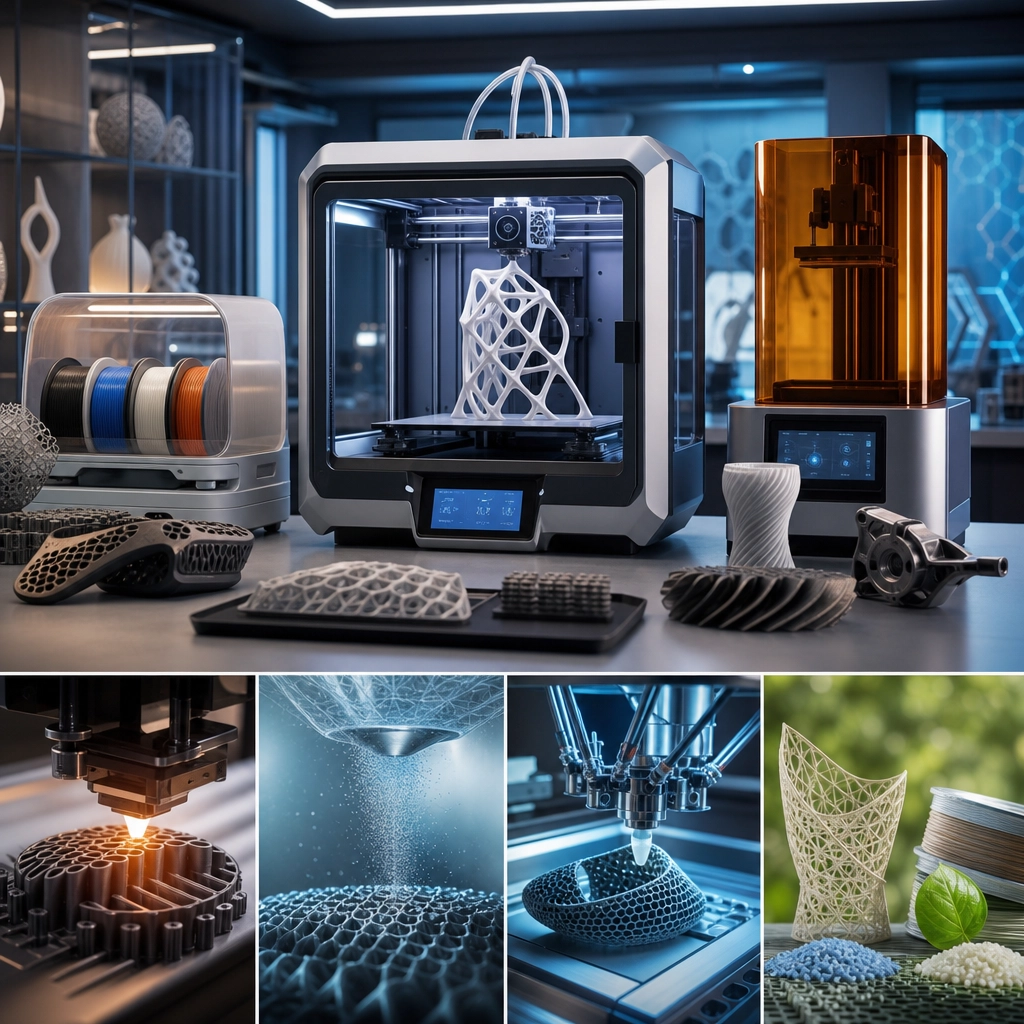

The Future of 3D Printing: Innovations to Watch Out For
3D printing has come a long way since its inception in the 1980s. Initially a tool for prototyping, it has evolved into a versatile technology that touches various industries, from healthcare to aerospace. As we look ahead, several innovations promise to redefine what we think is possible with 3D printing. So, let’s explore some of the most exciting advancements on the horizon and how they may shape our future.
Sustainable Solutions
One of the most pressing issues of our time is sustainability, and the world of 3D printing isn’t turning a blind eye. Traditional manufacturing processes often generate excess waste, but 3D printing can minimize that by using only the necessary material to create an object. Innovations in bio-based and recycled materials are gaining traction, allowing us to print with materials that are both environmentally friendly and high-performing. Imagine printers that could use local waste—like plastic bottles or leftover agricultural material—to print everything from furniture to building materials. This shift wouldn’t just create jobs; it would also foster a circular economy where resources are continuously reused.
Healthcare Revolution
When you think about healthcare, you might not immediately consider 3D printing, but that’s changing rapidly. With advancements in bioprinting, we’re getting closer to creating custom organs and tissues. Researchers are working on printing human tissues that can be used for testing drugs, which could revolutionize how we approach pharmaceuticals. This not only speeds up the testing process but could also significantly reduce the ethical concerns surrounding animal testing. In the near future, the idea of printing a pancreas to help a diabetic patient might not just be a vision but a reality.
Aerospace and Automotive Breakthroughs
3D printing is shaking things up in the aerospace and automotive sectors, too. Companies like Boeing and Airbus are exploring how 3D-printed parts can lighten their aircraft, leading to more fuel-efficient flights. Already, we see companies using metal 3D printing to produce lighter, stronger materials, drastically reducing both costs and production times.
Similarly, in the automotive world, manufacturers are experimenting with 3D-printed components that not only save weight but provide advanced design solutions. Imagine a car that can have its parts tailor-made with 3D printing, improving performance and safety. The implications of reduced waste and the ability to produce parts on-demand could shorten supply chains and make repairs much faster and more efficient.
Construction and Architecture
The construction industry has often been labeled as lagging in innovation, but not anymore! 3D-printed structures are beginning to pop up around the globe. Companies are experimenting with giant 3D printers capable of constructing homes in a fraction of the time, which could make a significant impact on affordable housing shortages. Moreover, these printed homes are not just quick—they can also be designed to withstand hazardous weather and are often cheaper to build than traditional homes.
The possibilities for architects are also expanding, as they can create intricate designs that might be difficult to achieve with conventional building methods. This could lead to stunning properties that push the boundaries of modern design while being more sustainable.
Food Printing
Yes, you read that right—food printing! As the world grapples with feeding an ever-growing population, 3D food printers are starting to emerge as a creative solution. These printers can create dishes tailored to individual nutritional needs and preferences. From chocolate to pizza, the parameters of food preparation are being entirely reevaluated. Imagine being able to design your gourmet meal from scratch, and having it printed in your kitchen! While this may sound like something out of a sci-fi movie, it is rapidly becoming a reality.
The Customization Revolution
Lastly, one of the most appealing aspects of 3D printing is its ability to provide unparalleled customization. From custom-fit shoes to personalized medical devices, the future is set to embrace individuality. As we incorporate AI and advanced algorithms into 3D printing software, the scope for customization will grow even further, catering to each person’s unique needs and preferences.
In conclusion, the future of 3D printing is promising, filled with innovation and creativity waiting to be unleashed. From healthcare to construction, the possibilities are endless, and as these technologies continue to develop, they hold the potential to revolutionize our economies, our lifestyles, and our planet. It’s an exciting time to keep an eye on this space, as the next big leap in 3D printing could very well be just around the corner. What will people dream up next? Only time will tell!