
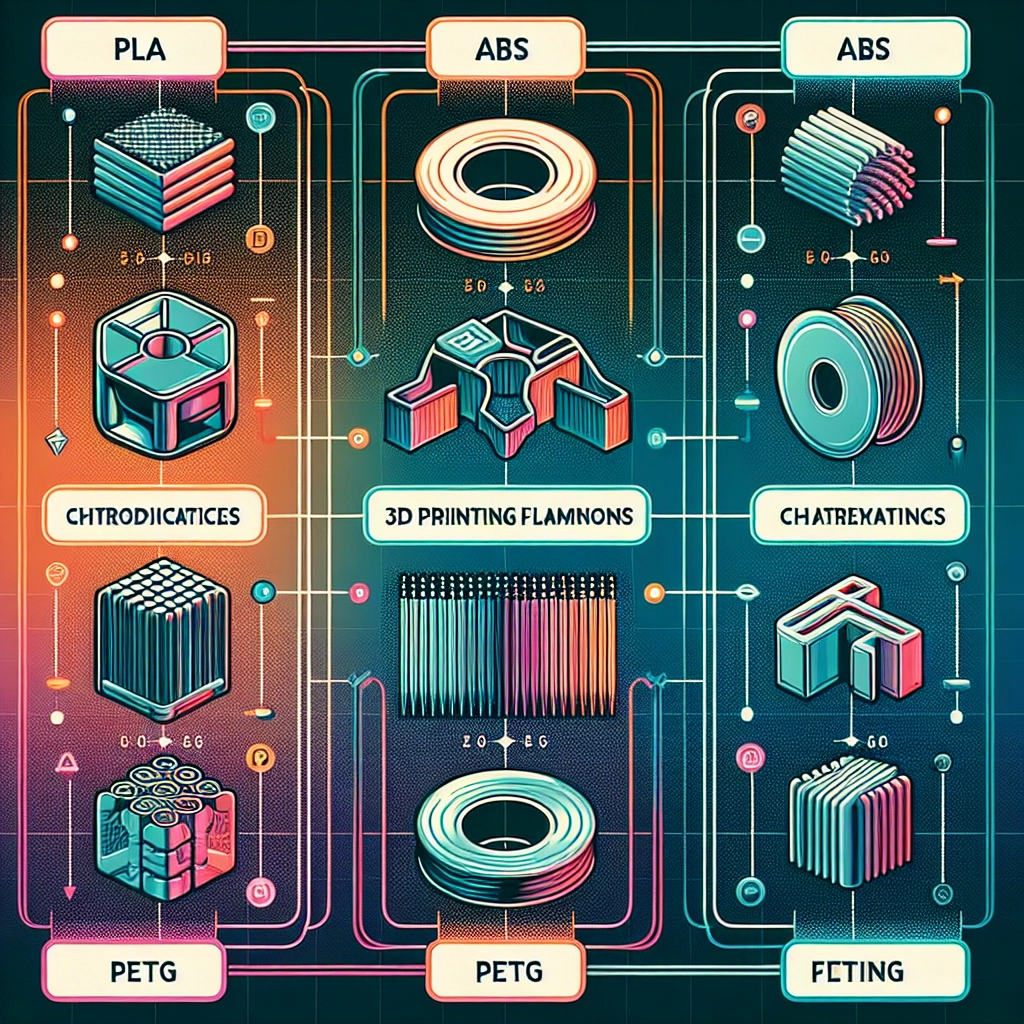

3D printing has become more accessible than ever, turning hobbyists into creators and innovators at the speed of light. One major factor that influences the quality of your 3D printed objects is the filament you choose. With so many different types available, it can be overwhelming to figure out which one is best for your project. So, let’s break down some of the most popular 3D filament types: PLA, ABS, and PETG. We’ll explore their properties, pros and cons, and the best applications for each.
PLA (Polylactic Acid)
PLA is often the go-to filament for those new to 3D printing. Made from renewable resources like cornstarch or sugarcane, it’s known for being eco-friendly. The appeal lies not just in its sustainability but also in its ease of use.
Pros:
- User-Friendly: PLA is forgiving. It adheres well to different surfaces, reducing the chances of warping, which is a common problem with many other filaments.
- Printing Temperature: Requires lower printing temperatures, typically between 180-220°C, which makes it perfect for beginners and also reduces wear on your printer.
- Variety of Finishes: PLA comes in a wide array of colors and finishes, including matte, glossy, and even transparent options, letting your creativity shine through.
Cons:
- Strength and Durability: While PLA is great for creating detailed models, it’s not the strongest material. It has a lower heat tolerance and can become soft at temperatures above 60°C.
- Brittleness: If you need something more flexible or durable, PLA might not cut it; it can break under stress.
Because of its ease of use, PLA is perfect for prototypes, toys, and intricate designs where detail is crucial.
ABS (Acrylonitrile Butadiene Styrene)
ABS is another popular choice, especially for functional parts and models that require additional strength. This plastic is what you typically find in Lego bricks. It’s rugged, making it suitable for items that need to stand up to wear and tear.
Pros:
- Durability: ABS is strong and impact-resistant, which makes it great for mechanical parts, tools, and functional prototypes.
- Higher Heat Resistance: With a glass transition temperature of about 105°C, ABS can handle higher temps better than PLA.
Cons:
- Warping: The downside to ABS is its tendency to warp when cooling, which can be a hassle for beginners. Using an enclosure can help mitigate this issue.
- Fumes: When heated, ABS emits fumes that some users find unpleasant. It’s important to print in a well-ventilated area or use an air filtration system.
ABS is ideal for creating durable and functional parts, automotive components, and items that need to endure significant wear.
PETG (Polyethylene Terephthalate Glycol-Modified)
Petg strikes a balance between PLA and ABS. It combines the best of both worlds: ease of use and durability. PETG is often touted for its impact resistance and clarity, which is why it’s a great choice for functional applications.
Pros:
- Strength and Flexibility: PETG is strong, durable, and has good layer adhesion. It’s less prone to warping than ABS and prints easily like PLA.
- Chemical Resistance: It’s resistant to chemicals and moisture, making it an excellent choice for outdoor applications, containers, or anything that might need to stand up to the elements.
Cons:
- Stringing: One common issue with PETG is stringing during printing, though tweaking settings can often help mitigate this.
- Adhesion: While it adheres well to itself, it doesn’t always stick to other surfaces as easily as PLA, which can pose challenges for first layers.
Ideal uses for PETG include functional parts, containers, and designs that require both durability and a bit of flexibility.
Other Filament Types
While PLA, ABS, and PETG cover a lot of ground, there are other specialized filaments—like Nylon, TPU (Thermoplastic Polyurethane), and composite filaments containing wood or metal particles—each with their unique characteristics. For example, Nylon is fantastic for flexibility and strength, while TPU is perfect for creating rubbery, flexible parts.
Final Thoughts
The choice of filament really shapes your 3D printing experience. Whether you’re crafting a delicate model with PLA, building rugged tools with ABS, or creating versatile containers out of PETG, understanding the properties of each material enables you to make informed decisions.
Ultimately, the best filament for you depends on your individual needs, project specifications, and personal preferences. As you experiment and gain more experience, you’ll develop a better sense of which material suits your style and the purpose of your project. Happy printing!