
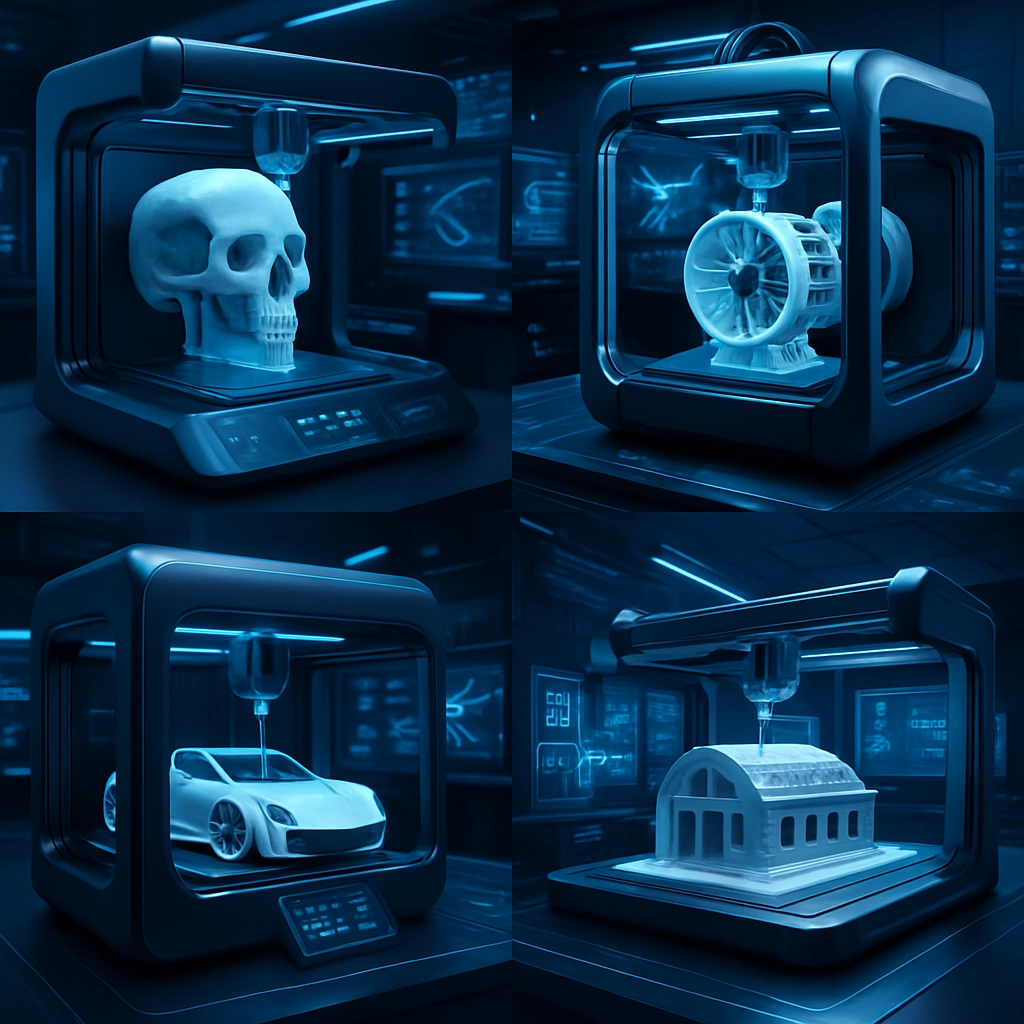

Futuristic Applications of 3D Printing in Various Industries
3D printing, also known as additive manufacturing, has come a long way since it burst onto the scene in the 1980s. What started as a niche technology used primarily for prototyping has transformed into a versatile and game-changing innovation, impacting industries from healthcare to aerospace. As we look toward the future, the applications of 3D printing promise to reshape our world in ways we can barely imagine. So, what does the future hold for this extraordinary technology across different sectors? Let’s dive in!
Healthcare: Revolutionizing Patient Care
One of the most exciting applications of 3D printing is its disruptive potential in the healthcare industry. Imagine a world where custom prosthetics and implants are made to fit each individual perfectly. Well, we’re already on that path! Companies are using 3D printing to create tailored prosthetic limbs that offer enhanced comfort and functionality.
Moreover, researchers are exploring bioprinting, where human tissues and organs could be built layer by layer. While it might sound like a scene from a sci-fi movie, organizations are experimenting with materials that mimic human cells. This could eventually lead to organ transplants becoming as straightforward as printing a 3D object! The potential for personalized medicine is vast—think tailored pharmaceuticals designed specifically for an individual’s genetic makeup.
Aerospace: Sky’s the Limit
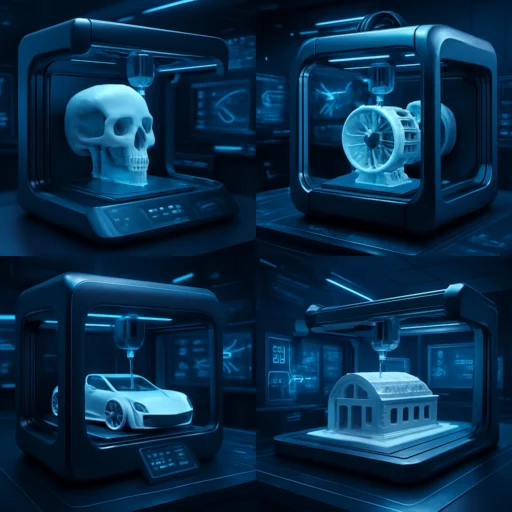
In the aerospace industry, weight reduction and efficiency are critical. 3D printing is proving to be a game changer here, too. Airplanes are engineering marvels, and manufacturers are continually looking for ways to reduce their weight without sacrificing safety. With additive manufacturing, companies can print complex components that are lighter yet stronger than traditional parts.
For instance, aerospace giants like Boeing and Airbus are already investing in 3D printing for the production of prototype components and even final production parts. They’re creating jet engine components and other critical parts that enhance performance while minimizing material waste. Imagine an airplane made almost entirely from 3D-printed parts—this isn’t just a theoretical idea; it’s becoming a reality.
Automotive: Driving Innovation
The automotive industry has also embraced 3D printing, and the future looks bright. Manufacturers are leveraging this technology for everything from designing parts to running entire production lines. One of the standout applications is rapid prototyping, allowing engineers to design and test car components at lightning speed. This accelerates the development process, making it easier to bring ideas to market faster.
Moreover, companies like Local Motors have even experimented with 3D printing entire vehicles, resulting in the world’s first 3D-printed car, the Strati. The future may hold customized vehicles that are designed to meet the specific needs and preferences of individual drivers—think personalized interiors and features crafted just for you!
Fashion and Retail: Wearable Design
In the world of fashion, 3D printing is leading to astonishing innovations in design and manufacturing. Designers are no longer limited by traditional production methods; they can create intricate and avant-garde clothing that pushes the boundaries of style. From intricately designed dresses to unique footwear, 3D printing is enabling designers to explore artistic concepts that were once impossible to realize.
Moreover, the sustainability factor plays a significant role here. With the potential to print clothing on-demand, the fashion industry can significantly reduce waste and overproduction—a huge issue in today’s fast-fashion world. Imagine shopping for a dress that is created just for you on the spot, tailored to your size and style. That’s not just a dream; it’s a glimpse into the future of retail.
Construction: Building the Future
3D printing is even making waves in the construction industry. Imagine entire houses being built using giant 3D printers that layer materials to form walls, roofs, and even furnishings. This isn’t just the wild imagination of a futurist; it’s happening now! Companies around the globe are beginning to experiment with 3D-printed homes that can be built in a fraction of the time and cost of conventional construction methods.
This approach has the potential to address housing shortages in areas where traditional building methods are too slow or expensive. Furthermore, as we face an increasing need for sustainable solutions, 3D printing can use eco-friendly materials, such as recycled plastics or even bio-based substances, to create structures that are as functional as they are sustainable.
The Dawn of a New Era
As we can see, the future of 3D printing is nothing short of astonishing. The technology is poised to disrupt various industries, leading us into an era where customization, efficiency, and sustainability reign supreme. From healthcare marvels to fashion statements and eco-friendly homes, the applications are as diverse as they are exciting.
While we may still be in the early stages of realizing the full potential of 3D printing, one thing is clear: this technology is not just shaping the future—it’s constructing it, one layer at a time. As we push the boundaries of what’s possible, who knows what exciting advancements await us just around the corner? The adventure is just beginning!