
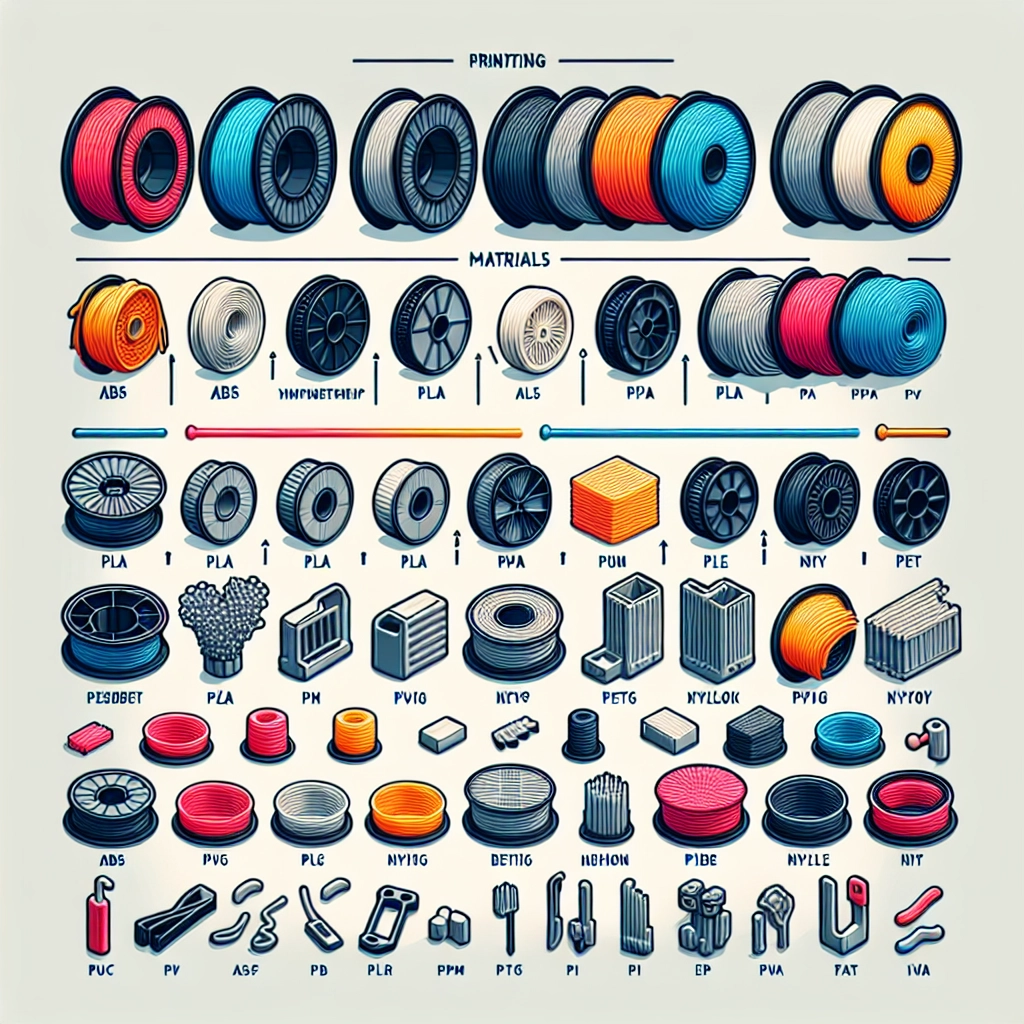

The Best 3D Printing Materials: Understanding the Filament Options
3D printing has revolutionized the way we think about design and manufacturing, allowing creativity to flow from imagination to reality in a matter of hours, sometimes even minutes! But if you’re just dipping your toes into the warm waters of 3D printing, you might be overwhelmed by the sheer number of filament options. What do they all mean? Which one should you choose? Don’t worry—we’re here to break it down for you!
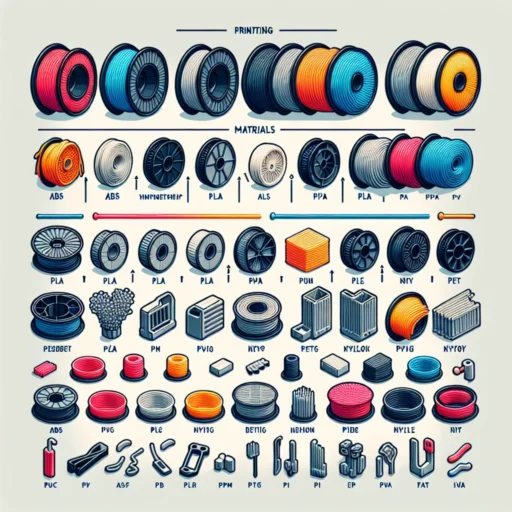
PLA (Polylactic Acid)
Let’s start with the reigning champion of beginner-friendly filaments: PLA. If you’re new to 3D printing, this is probably where you want to start. PLA is made from renewable resources like corn starch or sugarcane, making it a more eco-friendly option.
But what really makes PLA shine is how easy it is to print. It requires a lower printing temperature (about 180-220°C) and has minimal warping, meaning you won’t have to fuss as much with bed adhesion. PLA also comes in a rainbow of colors and finishes—from shiny to matte—to match your design visions perfectly. However, keep in mind that while PLA is great for prototypes and decorative pieces, it might not be the best choice for functional parts since it can be a bit brittle, especially under heat.
ABS (Acrylonitrile Butadiene Styrene)
If you need something a little tougher, ABS is your go-to filament. Think of it as the rugged cousin of PLA. It’s what many household items, like Lego bricks, are made of, and it’s known for its durability and impact resistance.
However, ABS does come with some caveats. It’s a bit more challenging to work with compared to PLA, largely because it requires a higher printing temperature (around 210-250°C) and tends to warp if not printed at the right settings. An enclosed printer can help mitigate this by keeping the ambient temperature consistent during printing. Plus, the fumes released while printing can be quite unpleasant, so make sure you’re in a well-ventilated area—or better yet, invest in some air filtering equipment.
PETG (Polyethylene Terephthalate Glycol)
Enter PETG, the middle ground between PLA and ABS. It combines some of the best features of both materials. If you’re looking for something durable yet easy to print, PETG has you covered.
This filament is resistant to moisture and UV rays, making it suitable for outdoor applications like garden tools and items that might be exposed to the elements. It has a higher temperature tolerance than PLA but is still relatively easy to print with, usually requiring settings between 220-250°C. Another impressive feature of PETG is that it’s less prone to warping than ABS, which many users appreciate.
TPU (Thermoplastic Polyurethane)
Now, let’s talk about flexible filaments! TPU is perfect for projects that require some stretch and flexibility, like phone cases, wearable tech, or even customized shoe insoles.
One of the key aspects of TPU is that it can withstand bending and flexing without cracking, giving it the edge for dynamic applications. Printing with TPU can be a little tricky, though. It generally requires a slower print speed and precise settings to ensure a perfect finish. If flexibility is your aim, though, then putting in the effort certainly pays off.
Nylon
For those looking for a super strong material, nylon could be your best friend. Known for its durability, toughness, and flexibility, nylon is often used in functional parts that need to withstand wear and tear—think gears, hooks, or even tooling. However, nylon is hygroscopic, meaning it absorbs moisture over time, which can affect its performance and print quality. You’ll want to keep it dry or invest in a filament dryer if you plan on using this material frequently.
Choosing the Right Material
Deciding on the right filament for your project depends on what you’re creating, your printer’s capability, and your comfort level as a maker. Each material has its unique strengths and weaknesses, so take the time to get familiar with them. While it may seem daunting at first, experimenting with different filaments is part of the fun and creativity of 3D printing.
As you explore, don’t hesitate to share your projects and experiences in the 3D printing community. Who knows, you might inspire someone else to start their printing journey! Remember, every great design starts with just an idea—and the right filament can help bring that idea to life in ways you’ve never imagined. Happy printing!