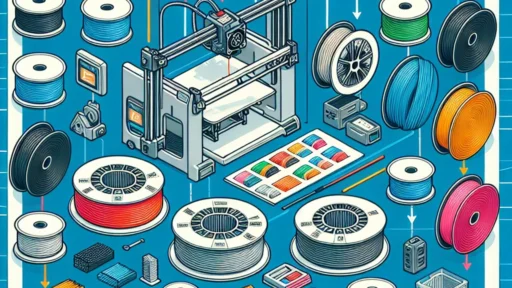




When it comes to 3D printing, the choice of filament is just about as crucial as the 3D printer itself. Filament is essentially the ink of 3D printing, and picking the right type can make all the difference in your printing experience. Among the myriad of options available, three filaments stand out: PLA, ABS, and PETG. Each has its own unique characteristics, benefits, and challenges. Let’s dive into the nitty-gritty of these popular materials.
PLA (Polylactic Acid)
PLA is the sweetheart of the 3D printing community, especially for beginners. It’s made from renewable resources like cornstarch or sugarcane, which gives it an eco-friendly edge. One of the biggest advantages of PLA is its ease of use; it prints at a relatively low temperature (approximately 180°C to 220°C) and sticks well to most print surfaces without the need for a heated bed.
This filament is fantastic for detailed prints, thanks to its excellent layer adhesion and ability to capture fine details. If you’re working on a project that involves intricate designs, PLA might just be your best bet. Plus, it comes in a staggering variety of colors and finishes, so you can really let your creativity shine.
However, it’s not all sunshine and rainbows. PLA is more brittle compared to other materials, meaning it can snap under stress rather than bend. It’s not the best choice for functional parts that need to withstand wear and tear. Additionally, while PLA is biodegradable in industrial composting facilities, it can still take a long time to break down in natural environments.
ABS (Acrylonitrile Butadiene Styrene)
If you’re looking for toughness, ABS is the filament for you. It’s the same material used for making LEGO bricks, so you know it can take a beating! ABS has a higher melting point (around 210°C to 250°C) and requires a heated bed to prevent warping during the printing process. While it’s a bit trickier to work with compared to PLA, the durability of ABS makes it a popular choice for functional parts and prototypes.
One of the standout features of ABS is its ability to withstand higher temperatures, making it suitable for items that might be exposed to heat. Additionally, it can be easily post-processed: you can smooth out the surface with acetone vapor, granting your prints a polished finish.
However, ABS isn’t without its downsides. It emits fumes during the printing process, which some users find unpleasant (and potentially toxic in poorly ventilated areas), so working in a well-ventilated space is essential. If you bump into warping issues, you might need to invest in an enclosure for your printer to maintain a stable temperature.
PETG (Polyethylene Terephthalate Glycol)
Now let’s talk about PETG, a newer player in the filament game that’s quickly gaining popularity. Combining the best of both PLA and ABS, PETG offers a unique blend of ease of use, strength, and flexibility. It prints at a slightly higher temperature (around 220°C to 250°C) but doesn’t require a heated bed, making it accessible for those who are newer to 3D printing.
One of the significant advantages of PETG is its resistance to impact and temperature variations. It’s also less brittle than PLA, providing the flexibility needed for parts that may bend rather than break. If you’re creating items that need to withstand outdoor elements or physical stress, PETG can be an excellent choice.
Another great perk? It’s typically very resistant to moisture – perfect for projects that may come into contact with water. Plus, it’s generally easy to learn how to print with, which is a big win for beginners and seasoned printmakers alike. However, be mindful of stringing; you may need to tweak your settings to minimize the faint strands that can form between parts.
The Right Choice for You
In the end, the best filament for your project depends on your specific needs. If you’re focused on detailed aesthetic prints, PLA is a go-to. For functional and durable items, consider ABS. And if you’re looking for a balance of strength and ease of printing, give PETG a shot.
Understanding the nuances of each filament can significantly enhance your 3D printing experience. Don’t be afraid to experiment and see which one resonates with your projects the most. Whichever filament you choose, the creative possibilities are endless!