

Common Challenges in 3D Printing and How to Overcome Them
3D printing—also known as additive manufacturing—has revolutionized various industries, from healthcare to automotive design. While it’s an exciting technology that allows users to create almost anything from digital models, it’s not without its challenges. If you’re new to 3D printing or even a seasoned pro, you may have run into some hiccups along the way. Let’s dive into some common challenges and find out how to overcome them.
1. Warping
Warping is a notorious problem in 3D printing, particularly with materials like ABS. Imagine you’ve spent hours setting up your print, only to discover that the corners have lifted off the print bed. Frustrating, right?
How to overcome it:
- Use a heated bed: A heated build platform helps maintain a consistent temperature, reducing the chances of warping.
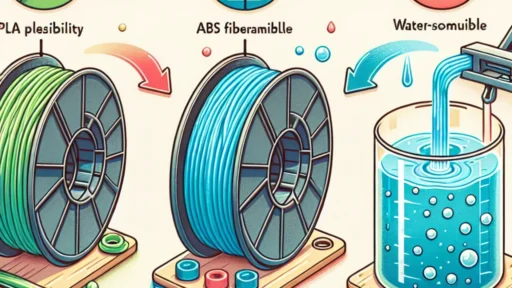
- Choose the right material: Some filaments are more prone to warping than others. PLA, for instance, is generally more stable than ABS.
- Brim or raft: Additions like a brim or raft can provide extra adhesion to the build plate, minimizing the risk of warping during printing.
2. Stringing
If you’ve ever noticed fine hair-like strands of plastic connecting different parts of your print, you’ve encountered stringing. This annoying issue pops up mostly when the printer’s nozzle drips filament while moving between parts.
How to overcome it:
- Adjust retraction settings: Increase retraction distance and speed in your slicer settings to pull the filament back into the nozzle when not printing.
- Optimize temperature: Sometimes, reducing the nozzle temperature can help reduce dripping.
- Use a different travel route: If your slicer allows, you can adjust the paths the print head takes to minimize travel over open spaces.
3. Layer adhesion problems
Good layer adhesion is essential for a strong and durable print. Problems in this area can lead to prints that break easily, especially under stress.
How to overcome it:
- Temperature adjustments: Make sure your printing temperature is set correctly for the filament you’re using. If the temperature is too low, layers may not bond well.
- Print speed: Sometimes, slowing down the print speed can enhance layer adhesion since the material has more time to bond properly.
- Material choice: Some materials naturally bond better than others. For instance, PLA often has better layer adhesion than PETG under similar conditions.
4. Clogged Nozzles
A clogged nozzle can bring your 3D printing process to a screeching halt. Unfortunately, when a nozzle gets clogged, it can be tricky to diagnose and solve.
How to overcome it:
- Regular maintenance: Cleaning the nozzle regularly can prevent clogs. You can use a nozzle cleaning tool or even a small piece of filament.
- Unclogging methods: If clogs occur, try extruding at a higher temperature or using “cold pulls” with nylon filament, which can help remove any debris stuck inside the nozzle.
- Filament quality: Poor-quality filament can contain debris or moisture that leads to jams. Using a trusted brand can go a long way.
5. Design Issues
Sometimes the problem lies not with the printer or materials but with the design itself. Inadequate support structures, overly complex designs, or geometry issues can all result in unsuccessful prints.
How to overcome it:
- Pre-print checks: Before sending your model to print, utilize software tools to check for errors in the design. Look particularly for non-manifold edges that can compromise printability.
- Design for 3D printing: Understand the limitations of your specific printing technology and adapt your designs accordingly. This could involve simplifying overhangs or adding necessary supports.
- Iterative testing: Sometimes the best way to find what works is through trial and error. Don’t hesitate to make small adjustments and test them out.
3D printing opens up a world of creativity and potential, but like any technology, it comes with its share of challenges. The key is not to get discouraged when you encounter problems but to see them as part of the learning process. With a bit of patience and willingness to experiment, you can overcome these common obstacles and continue creating incredible objects layer by layer. Embrace the journey, and happy printing!