
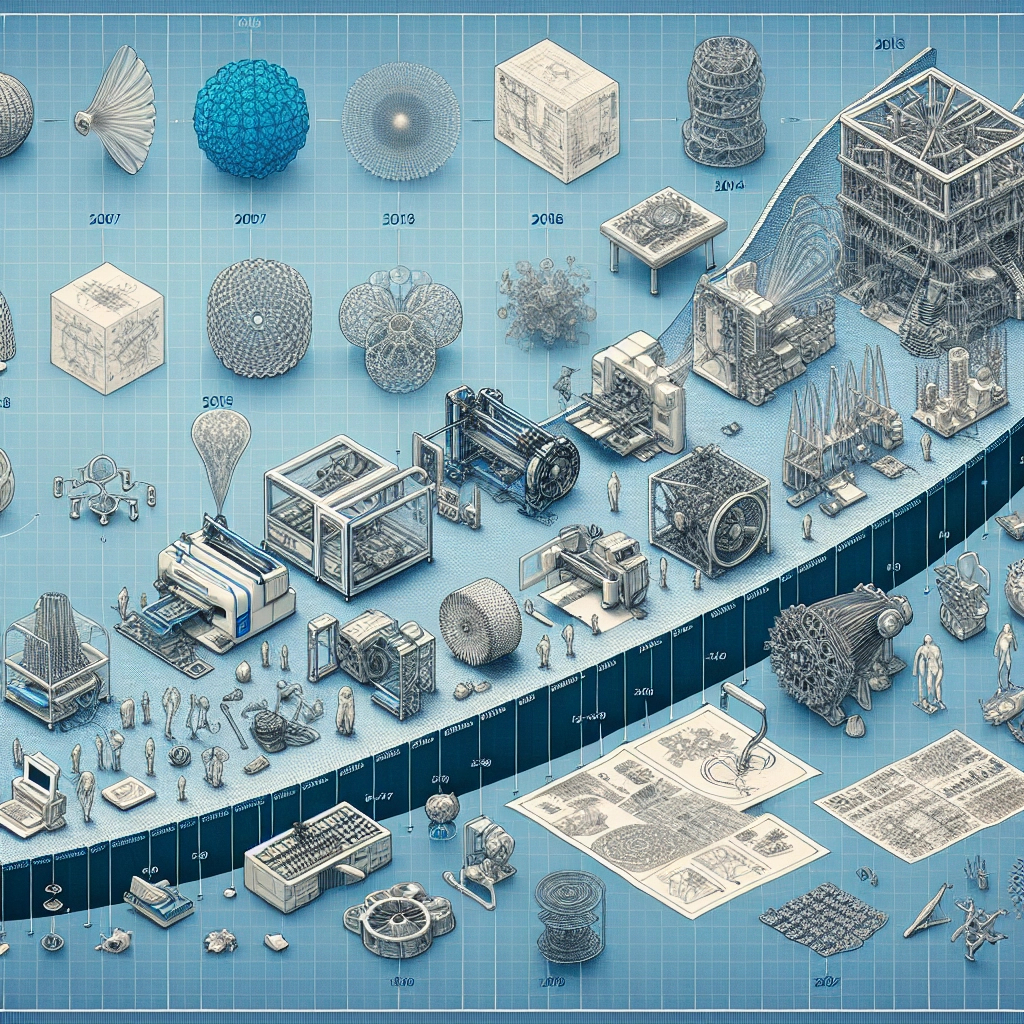

The Evolution of 3D Printing: From Concept to Reality
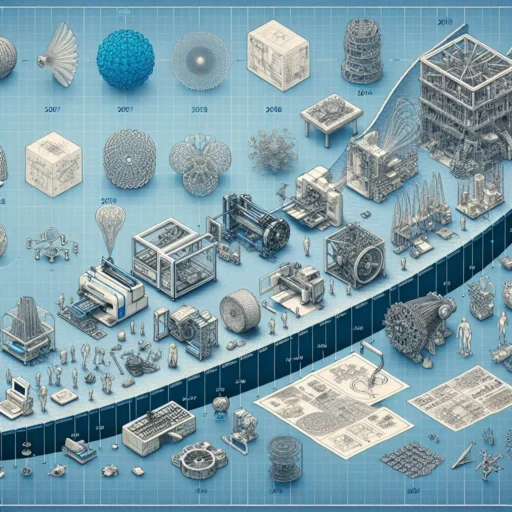
3D printing—once a futuristic concept only seen in sci-fi movies—has remarkably transformed from ambitious dreams into tangible realities that touch nearly every aspect of our lives. It’s hard to believe that just a few decades ago, this technology existed only in the realm of theoretical innovation. So, how did we get here? Buckle up as we take a journey through the fascinating evolution of 3D printing!
The Early Days: 1980s and 90s Beginnings
The concept of 3D printing first gained traction in the early 1980s, thanks to the groundbreaking work of Charles Hull. He patented the first 3D printing technology called stereolithography in 1986. This method involved using ultraviolet light to solidify liquid resin layer by layer—essentially “printing” a three-dimensional object. Hull also co-founded 3D Systems, which played a pivotal role in further advancing the technology.
As the 1990s rolled in, several other methods began to emerge, including selective laser sintering (SLS) and fused deposition modeling (FDM). Companies began to experiment with these technologies in various industries, but the high costs limited their reach primarily to manufacturing, prototyping, and specialized medical applications.
The 2000s: A Wave of Innovation
Fast-forward to the 2000s, and things began to change. The introduction of the RepRap project in 2005 marked a significant milestone. Driven by the vision of creating a self-replicating 3D printer that could produce its own components, RepRap made 3D printing more accessible. It led to a surge in DIY enthusiasts and hobbyists who began tinkering with their own designs and printers.
Around this time, patents from early technologies started to expire, leading to a rapid proliferation of 3D printing companies and technologies. As prices decreased, desktop 3D printers became more affordable, exploding onto the consumer market. This democratization allowed schools, artists, and innovators to jump in, unleashing a wave of creativity and experimentation like never before.
The 2010s: A Game Changer for Industries
The 2010s witnessed 3D printing emerging as a game-changer in many traditional sectors. In the medical field, for instance, we began to see printed prosthetics and even organ models for surgical planning. The concept of bioprinting—layering living cells to create tissues—was no longer just a dream. Hospitals began to adopt 3D printing for custom medical implants and dental applications, significantly improving patient care.
Meanwhile, industries like aerospace and automotive realized the potential of additive manufacturing in reducing material waste and creating lightweight parts. Companies like Boeing and Ford began incorporating 3D-printed parts into their production processes. As these applications took hold, the broader manufacturing sector started to see the value of transitioning from traditional methods to 3D printing.
The 2020s and Beyond: Expanding Horizons
With the 2020s, we’ve entered an even more exciting phase of 3D printing. The COVID-19 pandemic illustrated the technology’s adaptability, as companies pivoted to produce personal protective equipment (PPE) and ventilator parts with impressive speed. This demonstrated not only the versatility of 3D printing but also its critical role in emergency responsiveness.
Looking ahead, as more industries begin embracing digital twinning, artificial intelligence, and machine learning, 3D printing stands poised to integrate seamlessly into smart factories. Imagine a world where railroads, automobiles, and even homes are built using on-demand 3D printing technologies! The possibilities feel quite endless.
The Future Looks Bright
Today, millions of makers, innovators, and industry leaders are engaged with 3D printing, constantly pushing the boundaries of what’s possible. Whether it’s creating stunning art pieces, printing food, or even producing biologically compatible human organs, the journey of 3D printing from concept to reality demonstrates the incredible power of human ingenuity.
While we’re already nurturing a future that feels like science fiction, there’s so much more to come. As technology continues to evolve at a staggering pace, it’s essential to stay curious and engaged. With every new development, we’re reminded that the limits are not defined by our current understanding but by our imagination as we carve out a new frontier in manufacturing, creativity, and beyond. After all, the most exciting chapters of the 3D printing story are yet to be written!