

Exploring Specialty Filaments: Flexible, Glow-in-the-Dark, and More
3D printing has changed the way we create, design, and build things. Whether you’re a hobbyist, a small business owner, or an educator, the right filament can make all the difference in your projects. While standard filaments like PLA and ABS are well-known staples, there’s a whole world of specialty filaments out there that can elevate your prints to the next level. Today, let’s dive into some of the most exciting specialty filaments, including flexible, glow-in-the-dark, and more!
Flexible Filaments
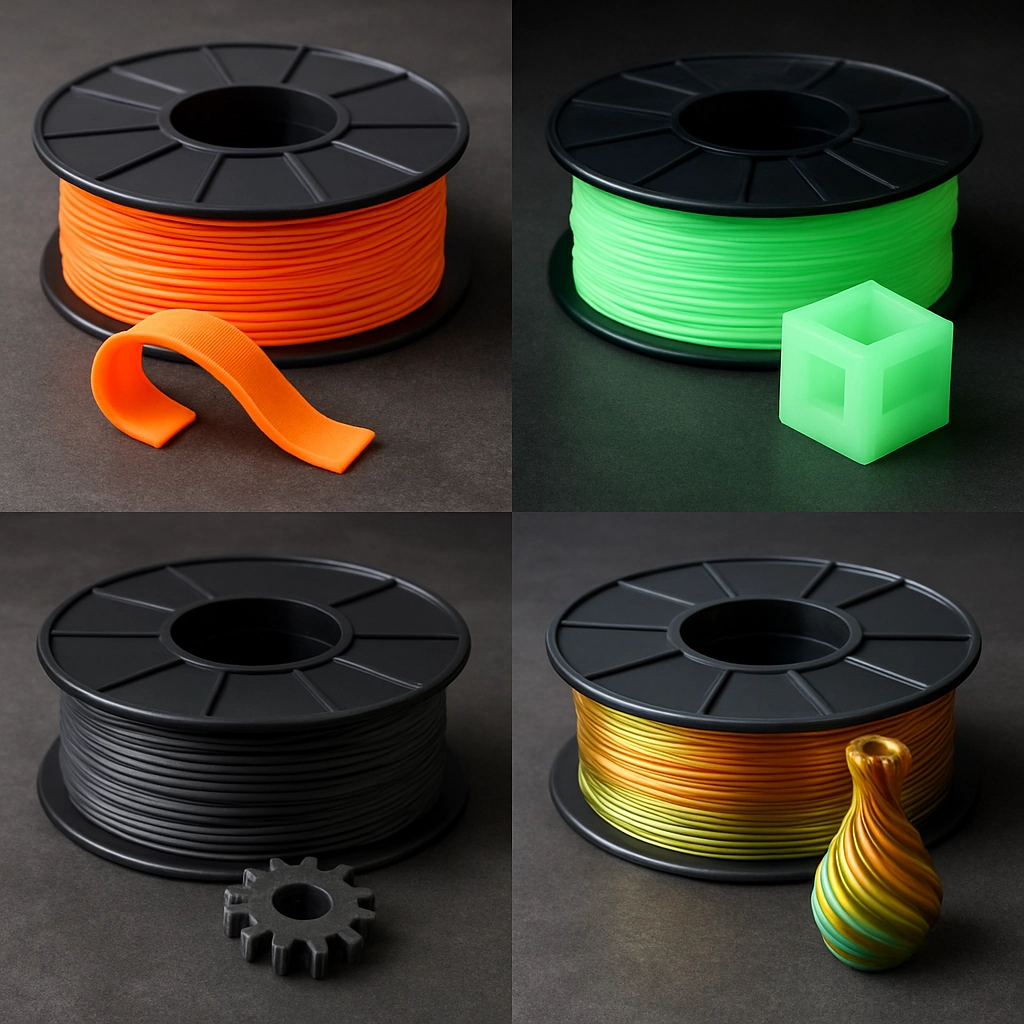
When it comes to making prints that can bend and stretch, flexible filaments are a game changer. Typically made from Thermoplastic Polyurethane (TPU) or Thermoplastic Elastomer (TPE), these materials allow you to create items like phone cases, toys, and wearable gear that need to withstand movement.
Imagine designing a custom phone case that not only fits your device perfectly but also has a bit of give to it. That’s the beauty of flexible filaments! The challenge lies in tweaking your printer settings since these materials require slower print speeds and special nozzle adjustments to prevent clogging. With some patience and practice, you can create some truly awesome flexible prints.
Glow-in-the-Dark Filaments
Who doesn’t love a little magic in their creations? Glow-in-the-dark filaments add an element of fun (and functionality) to your prints. Typically made of a blend of plastic and phosphorescent materials, these filaments absorb light and release it in a glowing display once the lights go out.
You might want to use these for decorative items, night lights, or even unique designs that stand out in the dark. From stars to intricate sculptures, the possibilities are endless. Just remember: these filaments usually require a good amount of light exposure prior to glowing, so be sure to put your prints under a lamp or in sunlight to maximize their glow effect!
Metallic Filaments
Ever wanted to impress your friends with a 3D-printed sculpture that looks like it’s made from solid metal? Metallic filaments can help you achieve that luxurious look without breaking the bank. These filaments—often based on PLA—are infused with tiny metal particles. Depending on the brand, you can find options that resemble bronze, copper, or even steel finishes.
Metallic filaments present some unique challenges. They can be abrasive to your printer’s nozzle, so consider using a hardened steel nozzle to avoid wear and tear. Additionally, the prints can be heavier than your standard PLA models, so be cautious with designs that require intricate support structures.
Carbon Fiber Reinforced Filaments
If you’re looking for strength without the weight, carbon fiber reinforced filaments are the way to go. These materials are typically composite blends, featuring either PLA or Nylon mixed with tiny carbon fibers. This combination results in remarkable stiffness and durability, making it a top choice for functional parts and engineering prototypes.
The printing process for these filaments can be slightly different as well. It’s usually best to use a high-temperature printhead and a hardened nozzle, much like with metallic filaments. The added strength means you can create intricate designs without compromising on durability, making them fantastic for demanding applications.
Water-Soluble Filaments
For those looking to create intricate designs with internal structures or support, water-soluble filaments are worth exploring. These materials, often made from PVA (Polyvinyl Alcohol), are ideal for 3D printing support structures that simply dissolve in water. This means you can print complex geometries that would typically be challenging with traditional support systems.
One word of caution—water-soluble filaments are sensitive to moisture and should be stored in airtight containers to preserve their printability. When used correctly, they can greatly streamline the post-processing phase of a print, allowing for cleaner and smoother final products.
Aroma-Infused Filaments
For an entirely different sensory experience, aroma-infused filaments are a delightful addition to the world of 3D printing. Infused with natural scents, these filaments release pleasant aromas during printing (and can continue to do so for a while after). Imagine creating a beautiful vase that not only looks good but also smells like fresh flowers or vanilla!
These filaments are generally derived from the same materials as standard PLA and typically don’t require any unique printing techniques. However, due to the scent additives, it’s essential to ensure proper ventilation while printing to avoid overwhelming aromas in your workspace.
Final Thoughts
The world of specialty filaments is blooming, opening new doors for creativity and innovation in the 3D printing landscape. Each type of filament brings something unique to the table, allowing you to tailor your projects precisely to your needs and desires.
Whether you’re crafting a flexible piece for enhanced functionality, a glowing object for nighttime charm, or a stunning metallic display that dazzles your friends, there’s a specialty filament out there just waiting for you to use it. So go ahead—experiment, create, and let your imagination run wild! You might just discover a new favorite material that takes your 3D printing game up a notch. Happy printing!